
This guide is for educational purposes only and isn’t medical advice. Medication choices and pricing vary by pharmacy, location, and insurance. If you have questions about what’s right for you, talk to a licensed clinician.
The fastest ways to save (start here)
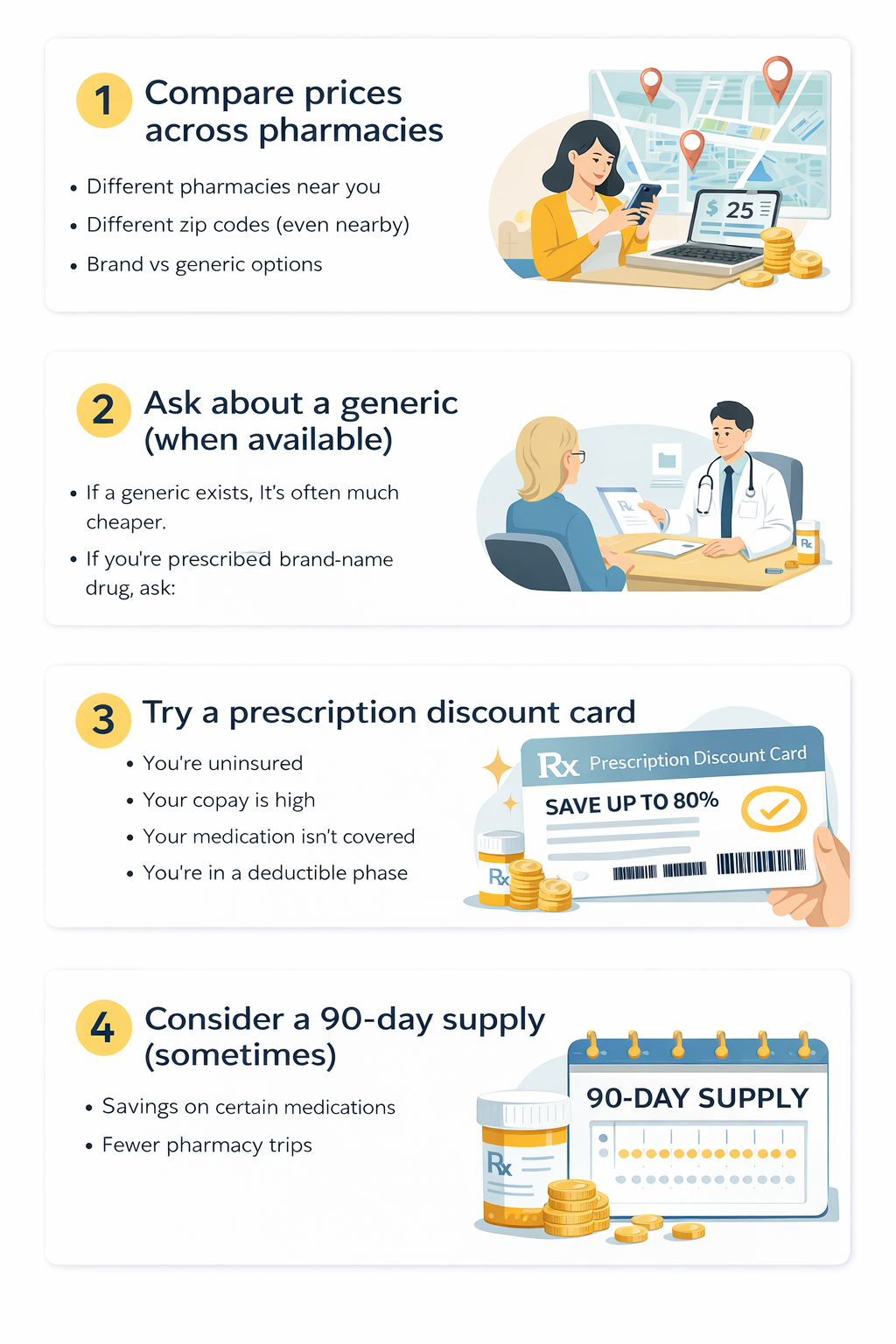
1) Compare prices across pharmacies
Prices can vary widely by pharmacy, location, and discount program. If you’re paying cash, always compare:
- Different pharmacies near you
- Different zip codes (even nearby)
- Brand vs generic options
Quick move: check the price at 2–3 pharmacies before you pick one. Use Rx.com to locate prices across your zip code and pharmacies.
2) Ask about a generic (when available)
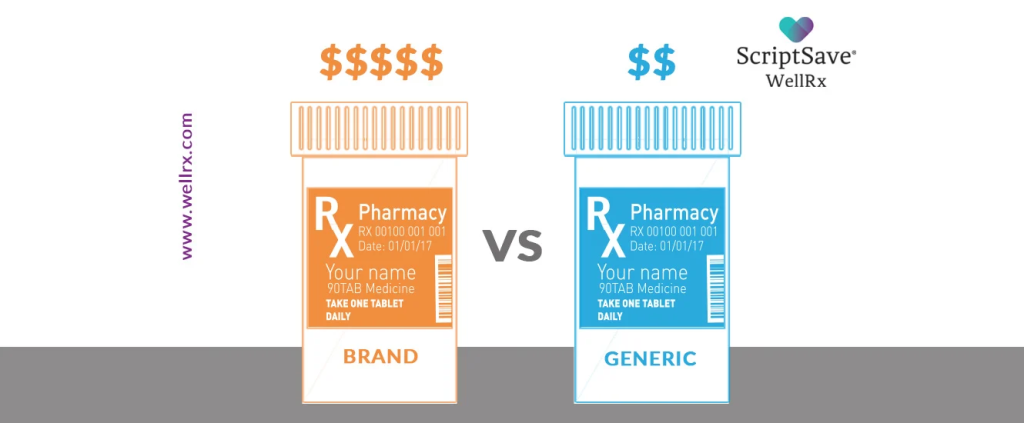
If a generic exists, it’s often much cheaper. If you’re prescribed a brand-name drug, ask:
- “Is there a generic equivalent?”
- “Is there a therapeutically similar alternative?”
3) Try a prescription discount card (cash price)
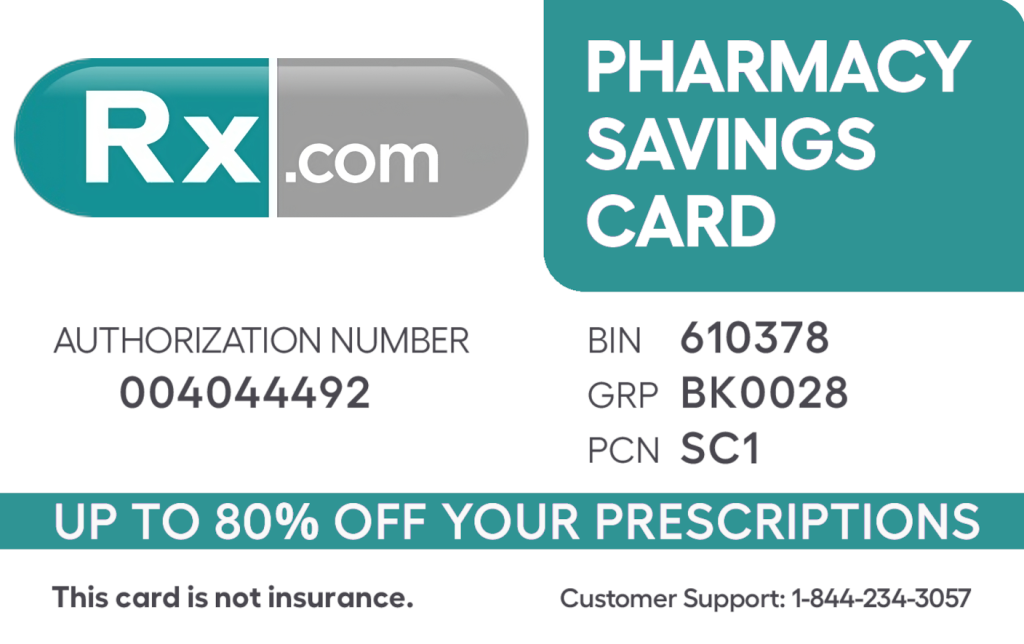
Discount cards can reduce the cash price at participating pharmacies. They usually work best when:
- you’re uninsured
- your copay is high
- your medication isn’t covered
- you’re in a deductible phase
Protip: Use Rx.com’s prescription discount card to save up to 80%.
4) Check if insurance coverage can be improved

If you have insurance but the cost is still high:
- confirm the drug is on your plan’s formulary
- ask if a different dosage/form is preferred
- ask your provider about a prior authorization (PA) when appropriate
- if you do not have insurance or need a new one, search for an insurance provider
5) Consider a 90-day supply (sometimes)
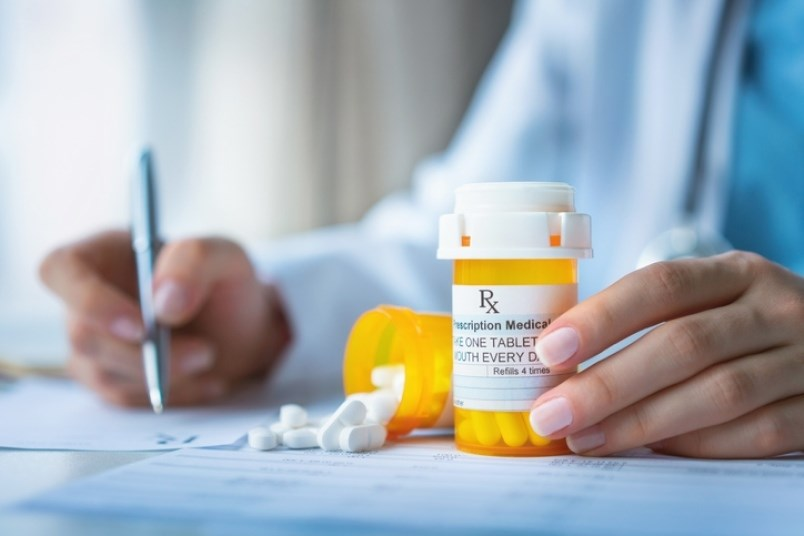
For certain medications, a 90-day supply can reduce cost and reduce pharmacy trips. Ask your pharmacy/insurer if it’s available and whether pricing changes.
Why prices change so much
Prescription pricing is affected by:
- pharmacy cash pricing policies
- drug supply and availability
- insurance formularies and tiers
- your deductible phase
- your location and local competition
This is why “the same drug” can be dramatically different from one pharmacy to the next.
Protip: Track pricing using Rx Watch.
Common questions
Do discount cards work with insurance?
Usually you use one or the other per fill (insurance copay or discount card cash price). Sometimes the discount card price can beat your insurance copay.
Will a discount card affect my deductible?
Typically cash purchases using a discount card don’t count toward your insurance deductible, but policies vary — confirm with your plan.
Is it worth switching pharmacies?
If the price difference is meaningful, yes. It’s common to find a lower price just a few miles away.
Bottom line
The most reliable approach is simple:
- Compare pharmacy prices
- Ask about generics/alternatives
- Use a discount card when it beats your copay
- Improve coverage when it doesn’t
Post 2 (Category: Savings & Coupons)
Title: Prescription Discount Cards: How They Work (and When They Help)
Slug: prescription-discount-cards
Intro
Prescription discount cards can lower the cash price you pay at the pharmacy. They’re not insurance — but they can be helpful if your medication is expensive, not covered, or you’re paying cash.
What a discount card is (and isn’t)
A discount card is: a way to access a discounted cash price at participating pharmacies.
A discount card is not: health insurance, a pharmacy membership, or a coupon that applies everywhere.
When a discount card helps most
Discount cards often help when:
- you’re uninsured
- your prescription isn’t covered
- your insurance copay is higher than the cash price
- you’re in a deductible phase
- you need a one-off fill and want the lowest immediate price
How to use a discount card at the pharmacy
- Tell the pharmacy you want to pay cash using a discount card
- Provide the card details (digital, email, SMS, or print)
- Ask the pharmacist to compare:
- your insurance copay vs
- the discount card cash price
- Choose whichever is lower
Things that can change your price
Even with a discount card, price can vary by:
- pharmacy location
- dosage/form (tablet vs capsule, brand vs generic)
- manufacturer availability
- pharmacy cash pricing policies
FAQs
Can I use a discount card with Medicare or Medicaid?
Rules can vary. Many people still use discount cards for cash pricing, but you should confirm what’s allowed for your situation.
Does a discount card mean I’m signing up for a subscription?
No — a discount card doesn’t require a subscription.
Is the price guaranteed?
Prices can change. It’s always smart to re-check occasionally if you refill monthly.
Bottom line
Discount cards are a practical way to reduce cash prices — especially when insurance doesn’t help, or when your copay is high.
Ways to save on your prescription
- Check pharmacy prices: Prices can vary widely by location and pharmacy.
- Use a free RX.com discount card: See potential savings at checkout (no subscription required).
- Track prices with RxWatch: Get updates when prices change for medications you care about.