
This guide is for educational purposes only and isn’t medical advice. Medication choices and pricing vary by pharmacy, location, and insurance. If you have questions about what’s right for you, talk to a licensed clinician.
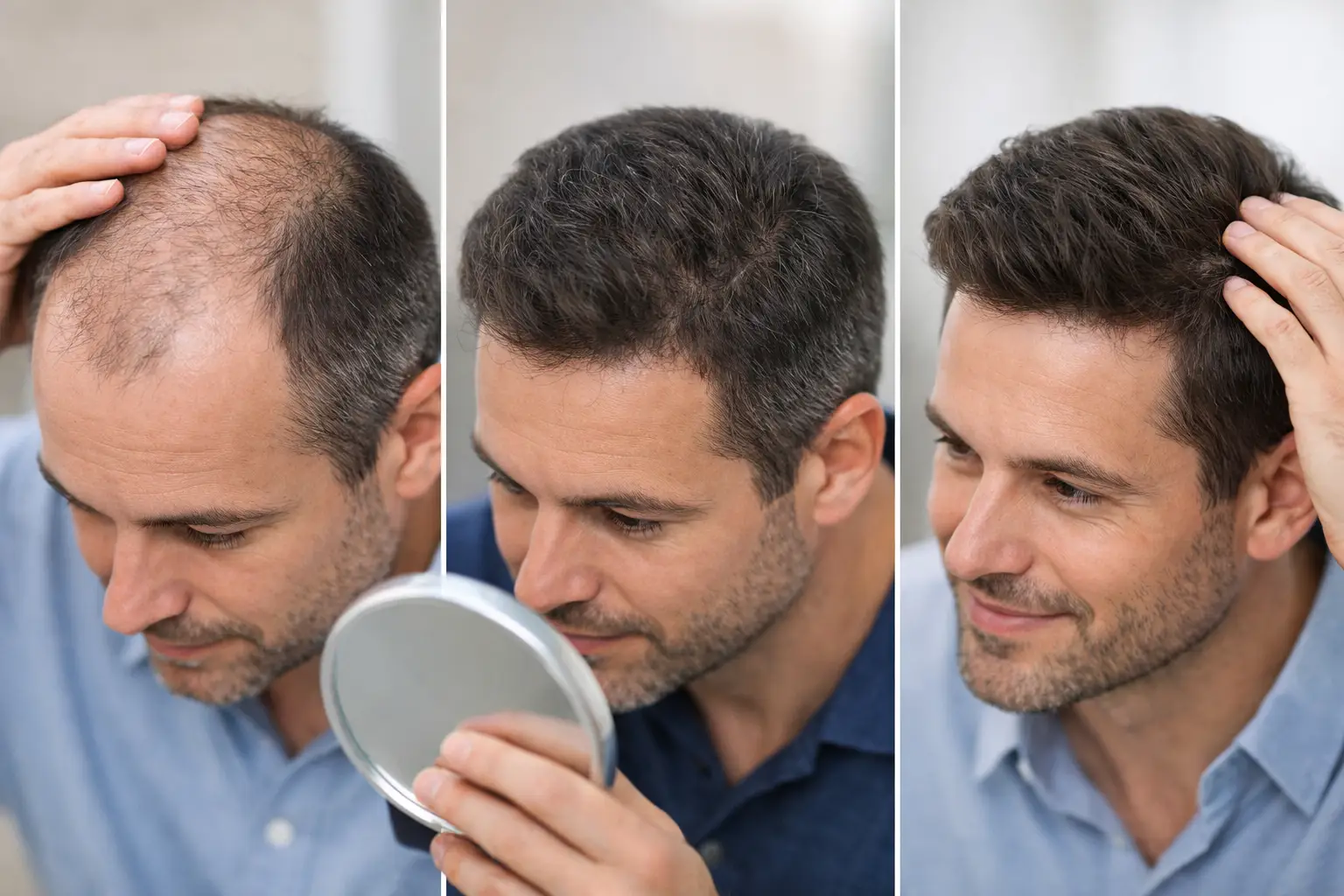
If you started treatment and keep checking the mirror for instant change, you are not alone. A hair regrowth treatment results timeline can feel slower than expected, especially because hair grows in cycles, not all at once, and early progress is often subtle before it becomes visible.
That delay does not mean treatment is failing. In many cases, the first signs of progress happen beneath the surface, long before photos show a clear difference. Knowing what is normal month by month can help you stay consistent, avoid quitting too early, and spot when it may be time to adjust your plan.
Why the hair regrowth treatment results timeline varies
Hair regrowth does not follow a single calendar. Your timeline depends on the cause of hair loss, how long it has been happening, your age, genetics, stress levels, and the treatment you are using. Someone with early thinning may notice improvement faster than someone with more advanced loss or multiple contributing factors.
The type of treatment matters too. Topical minoxidil, oral minoxidil, finasteride, dutasteride, low-level laser devices, platelet-rich plasma, and hair transplant procedures all work differently. Some help protect existing hair first. Others stimulate new growth more directly. That is why comparing your progress to someone else’s can be frustrating and misleading.
Consistency matters as much as the treatment itself. Missing doses, stopping after a few weeks, switching products too often, or using a treatment incorrectly can all stretch the timeline. Hair restoration is usually a long game, and the people who see the best results are often the ones who stay with a medically appropriate plan long enough to judge it fairly.
What to expect in the first 1 to 3 months
This is the phase where many people get discouraged. For most non-surgical treatments, visible improvement is limited in the first few months. In fact, some people notice more shedding early on, especially with minoxidil.
That early shedding can be alarming, but it is not always a bad sign. Treatment may push weaker hairs out of the resting phase so newer hairs can begin growing. It is temporary for many people, though not everyone experiences it.
During this window, the most realistic goal is stabilization. That may mean less hair on the pillow, a slower widening of the part, or reduced shedding in the shower. Those changes count, even if they are not dramatic. Stopping further loss is often the first win.
If you are using prescription treatment, this is also the time to watch for side effects and talk with your provider if something feels off. A timeline is helpful, but comfort and safety matter just as much as speed.
Early progress is usually easier to feel than see
In the first few months, many people notice their hair feels different before it looks different. Hair may seem a little fuller when styled, or the scalp may feel less exposed in certain lighting. Those are small signals, but they can be meaningful.
Photos help here. Memory is unreliable, especially when you look at your hair every day. Taking pictures under the same lighting and angle once a month gives you a much better sense of whether treatment is doing anything.
Months 3 to 6: when visible changes may begin
This is where the hair regrowth treatment results timeline starts to feel more rewarding for many people. If a treatment is working, you may begin seeing reduced shedding, thicker strands, or small areas of increased density. The hairline may look a little stronger, or the crown may appear less thin in bright light.
Results at this stage are often modest rather than dramatic. You might notice baby hairs, improved texture, or better coverage when your hair is dry and styled. Friends or family may not notice yet, but side-by-side photos often show real change.
This period is also when patience still matters. Some treatments are more effective at preserving hair than regrowing it, and preserving what you have is a meaningful outcome. If you expected a full reversal of hair loss in a few months, this is usually where expectations need a reset.
Different treatments show progress differently
With finasteride or dutasteride, a common pattern is less ongoing loss first, then gradual thickening over time. With minoxidil, you may see more obvious regrowth in some areas, but the response varies. Hair transplants follow a different path entirely. Transplanted hairs often shed before new growth starts, which can make the early months feel like a step backward before improvement arrives.
If you are combining treatments, you may see better results than with one treatment alone, but the timeline can still be gradual. More treatment does not always mean faster change. It often means a better chance of steady improvement over time.
Months 6 to 12: clearer results and better judgment
By the six-month mark, many people have enough progress to judge whether a treatment is helping. That does not mean final results are in, but there should usually be some signal by now, whether that is less shedding, better density, thicker hair shafts, or a slower rate of loss.
Between six and twelve months, changes often become easier to see in photos and day-to-day styling. Hair may look fuller at the crown, the part may appear narrower, and overall volume may improve. For some people, this is the point where treatment starts to feel worth the effort.
At the same time, not everyone responds the same way. Some people see clear regrowth. Others mainly maintain what they have. Both can be successful outcomes, depending on the starting point. If your goal is to keep existing hair and avoid rapid progression, maintenance is not a minor result.
When slower progress may still be normal
If you had significant thinning before starting treatment, slower improvement does not automatically mean the plan is ineffective. Areas with long-standing loss may take longer to respond, and some follicles may no longer be active enough to produce meaningful regrowth.
That is why realistic expectations matter. Treatment can often improve density and slow loss, but it may not restore the exact hairline or fullness you had years ago. A good plan is about progress, not perfection.
After 12 months: maintenance, plateau, or next steps
For many non-surgical hair loss treatments, one year is a key checkpoint. You and your provider can usually assess whether the treatment is delivering enough benefit to continue as is, whether it needs adjustment, or whether another option should be added.
Some people continue to improve beyond 12 months, especially with consistent treatment. Others reach a plateau where results level off. Plateau does not mean failure. It may simply mean the treatment is maintaining gains and protecting against further loss.
This is also where staying consistent matters most. Many treatments only work while you keep using them. If you stop, the benefits may fade over time and shedding can return.
Signs your treatment may need a closer look
A slow timeline is common, but there are situations where follow-up makes sense. If you have been consistent for six to twelve months with little to no improvement, or if shedding is clearly worsening, it may be time to revisit the diagnosis or the treatment approach.
That is especially true if the cause of hair loss is not straightforward. Pattern hair loss is common, but so are thyroid issues, iron deficiency, postpartum changes, autoimmune conditions, scalp inflammation, and medication-related shedding. If the root cause is off, the timeline will be too.
A provider may recommend changing the dose, combining therapies, checking for underlying health issues, or confirming that the treatment matches your type of hair loss. Convenience matters, but so does getting the right plan for your situation.
How to track results without overthinking them
The best way to judge progress is with a mix of patience and simple tracking. Monthly photos in the same lighting are more useful than daily mirror checks. So is paying attention to practical changes, like less shedding, easier styling, or improved coverage at the crown.
Try not to assess your hair every day. Day-to-day variation in lighting, hair length, product use, and stress can make normal changes feel more dramatic than they are. Looking less often usually gives you a clearer picture.
If you are using a telehealth or in-person treatment plan, regular check-ins can help keep expectations realistic and catch problems early. That kind of support can make it easier to stay on track, especially when progress is slow but still moving in the right direction.
Hair regrowth rarely happens on the schedule people want, but that does not mean you are stuck. With the right diagnosis, a consistent plan, and enough time to judge real change, progress is often more visible than it first appears.
Ways to save on your prescription
- Check pharmacy prices: Prices can vary widely by location and pharmacy.
- Use a free RX.com discount card: See potential savings at checkout (no subscription required).
- Track prices with RxWatch: Get updates when prices change for medications you care about.