
This guide is for educational purposes only and isn’t medical advice. Medication choices and pricing vary by pharmacy, location, and insurance. If you have questions about what’s right for you, talk to a licensed clinician.
If you’ve ever stood at the pharmacy counter wondering why the same prescription costs $18 at one store and $72 at another, you’re asking the right question: where can I compare prescription drug prices? The short answer is yes, and you should. Prescription pricing in the US is messy, and comparing options before you fill can make a real difference in what you pay out of pocket.
For many people, the biggest surprise is that drug prices are not fixed. The cash price for the same medication can vary by pharmacy, neighborhood, discount program, and whether you’re using insurance. That means a little comparison shopping can save you money without changing your prescription at all.
Where can I compare prescription drug prices online?
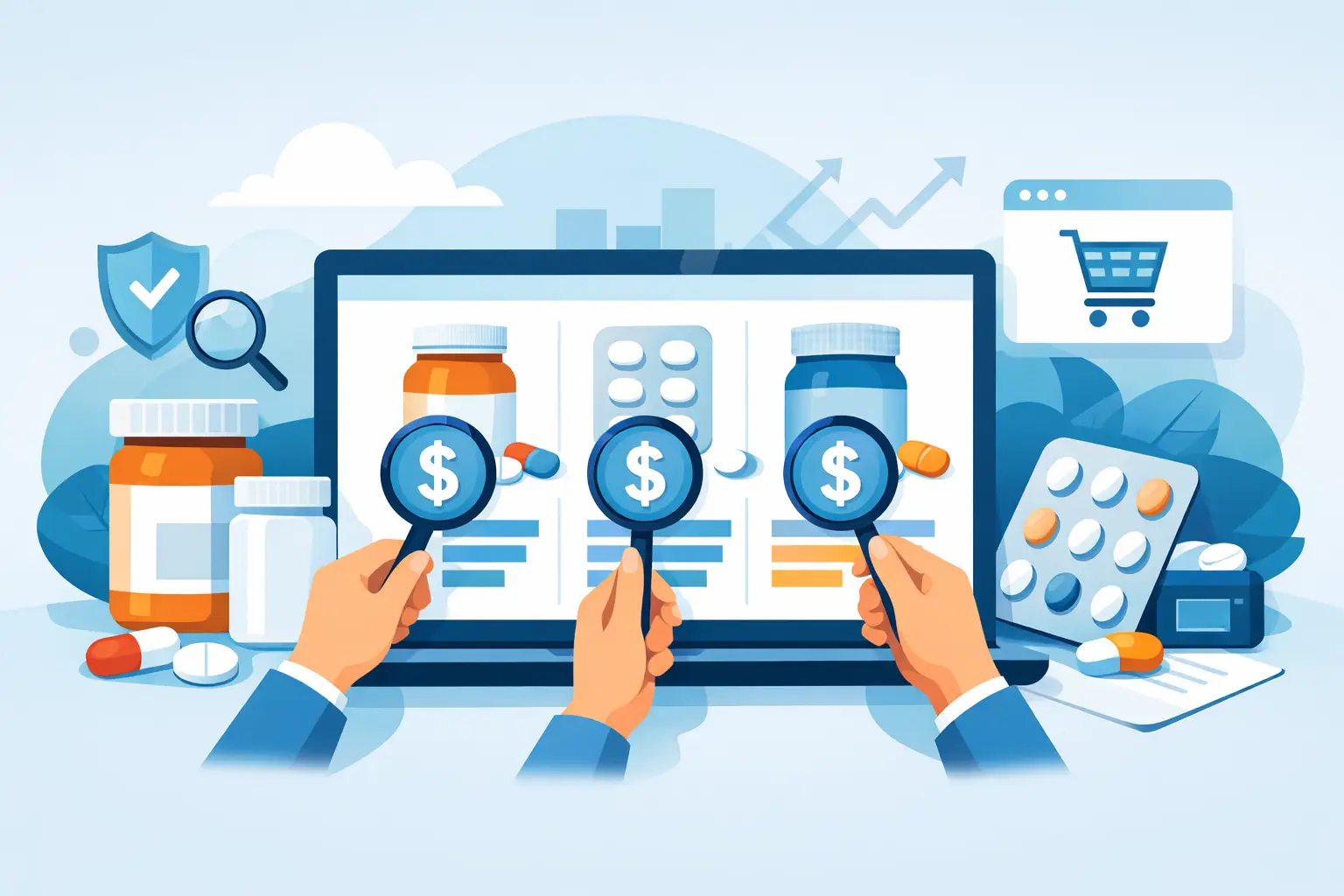
The easiest place to start is with an online prescription price comparison tool. These tools let you search by medication name, dosage, quantity, and location so you can see what different pharmacies may charge. In a few seconds, you can compare nearby options instead of calling stores one by one.
This matters most if you’re uninsured, have a high deductible, or regularly pay cash for medications. But even if you have insurance, a comparison tool can still help. In some cases, a pharmacy discount price is lower than your insurance copay. That happens more often than people expect, especially for common generic drugs.
A good comparison tool should show clear pricing, nearby pharmacy options, and available savings offers without making the process feel complicated. If you need a simple place to check prices and savings options, a platform like Rx.com can help you compare costs and look for discounts in one place.
Why prescription prices vary so much
Drug pricing feels inconsistent because it is. Pharmacies negotiate different rates. Discount programs have separate pricing agreements. Insurance plans set their own copays and formularies. Even two locations of the same pharmacy chain may not always produce the exact same result for every prescription.
Generic versus brand-name status also plays a big role. Generic medications are usually cheaper, but the exact price still depends on the pharmacy and discount available. Brand-name drugs tend to have less pricing flexibility, though savings programs and manufacturer offers can sometimes help.
There is also the insurance factor. Using insurance is not automatically the cheapest route. If your deductible has not been met, or if your plan places a drug in a higher cost tier, the price you pay with insurance could be more than a cash discount price. That does not mean insurance is useless. It just means it is worth checking both paths before you fill.
How to compare prescription drug prices the smart way
Start with the exact prescription details. You will get the most accurate comparison if you search the medication name, strength, form, and quantity exactly as written. A 30-day supply may price differently than a 90-day supply, and tablets may cost something different than capsules or liquids.
Next, compare several local pharmacies, not just the one you usually use. Big chains, grocery store pharmacies, and independent pharmacies can all have different prices. Convenience matters, but so does cost. If a nearby alternative saves you a meaningful amount, it may be worth switching.
Then check whether a discount price beats your insurance price. You usually cannot combine insurance and a pharmacy discount on the same transaction, so you are comparing one route against the other. Ask the pharmacy to tell you both if possible. That one question can save you from overpaying.
It also helps to compare refill quantities. Sometimes a 90-day supply is cheaper per pill than a 30-day fill. Other times, especially with discount pricing, the difference is smaller than expected. It depends on the medication and the pharmacy, so it is worth checking instead of assuming.
What to watch for when comparing prices
Not every low number you see online will match perfectly at the counter. Prices can change, and quoted rates may depend on using a specific coupon or discount card. Before you head to the pharmacy, make sure you understand whether the listed price requires a savings offer and whether the pharmacy participates.
You should also pay attention to the exact drug version. Some medications come in different manufacturers, release types, or closely related forms. A price for immediate-release tablets is not the same as a price for extended-release capsules. If the details do not match your prescription, the quote may not apply.
Another common issue is limited stock. A pharmacy may offer a good price but not have your medication available that day. If you need a prescription urgently, convenience and timing may matter more than chasing the lowest possible price across town.
Should you use insurance or a discount card?
This is where a lot of patients get stuck, and the answer is simple: compare both whenever you can. Insurance can be the better deal for expensive medications, ongoing chronic treatment, or drugs that count toward your deductible or out-of-pocket maximum. But discount cards and coupons can be a better fit for generic medications, short-term prescriptions, or drugs with unusually high copays.
There are trade-offs. If you use a discount instead of insurance, that purchase may not count toward your deductible. For someone managing several health expenses, that could matter. On the other hand, if the discount price is dramatically lower than your insured price, the immediate savings may be worth it.
For Medicare patients, the decision can be a little more sensitive. Medicare rules and plan structures vary, and some savings routes may work differently than they do for commercial insurance. If you are on Medicare, it helps to compare your current plan price, preferred pharmacy options, and any available cash pricing before deciding how to fill.
When comparing prices can lead to bigger savings
Price comparison is not only about finding the cheapest pharmacy today. It can also help you spot patterns that lower your medication costs over time. If one pharmacy consistently has better prices on your maintenance medications, moving all eligible refills there may simplify your routine and cut your monthly spending.
It can also prompt useful questions for your prescriber. If a brand-name drug is far outside your budget, ask whether there is a lower-cost generic or therapeutic alternative. If a 30-day supply is expensive, ask whether a 90-day option makes sense. If a medication is prescribed in one form, ask whether another equivalent form might cost less. You are not trying to second-guess your care. You are trying to make the treatment plan affordable enough to follow.
That matters because a prescription only works if you can actually pick it up and keep taking it. Cost-related nonadherence is common, and it often starts with sticker shock at the pharmacy. Comparing prices early gives you more control before that happens.
Where can I compare prescription drug prices if I need privacy too?
For many people, privacy matters almost as much as price. That is especially true for medications tied to sensitive health needs like erectile dysfunction, hair loss, mental health, hormone therapy, or weight management. In those cases, an online comparison tool can be helpful because it lets you review options quietly, on your own time, without having to ask multiple pharmacies for quotes.
If you are also exploring treatment options, not just medication pricing, it helps to use a platform that connects those pieces in a straightforward way. That can save time and reduce the back-and-forth that often comes with managing healthcare decisions across separate websites and providers.
The best way to start today
If you’re still asking where can I compare prescription drug prices, the best answer is: start online, use the exact prescription details, and compare more than one path. Look at nearby pharmacies, check discount pricing, and see how that stacks up against your insurance cost. A few minutes of checking can lead to savings that add up every month.
You do not need to become an expert in drug pricing to make a smarter choice. You just need a clear view of your options and the confidence to ask one more question before you fill. When healthcare prices are unpredictable, comparison is not extra effort. It is one of the simplest ways to keep your medication affordable.
Ways to save on your prescription
- Check pharmacy prices: Prices can vary widely by location and pharmacy.
- Use a free RX.com discount card: See potential savings at checkout (no subscription required).
- Track prices with RxWatch: Get updates when prices change for medications you care about.