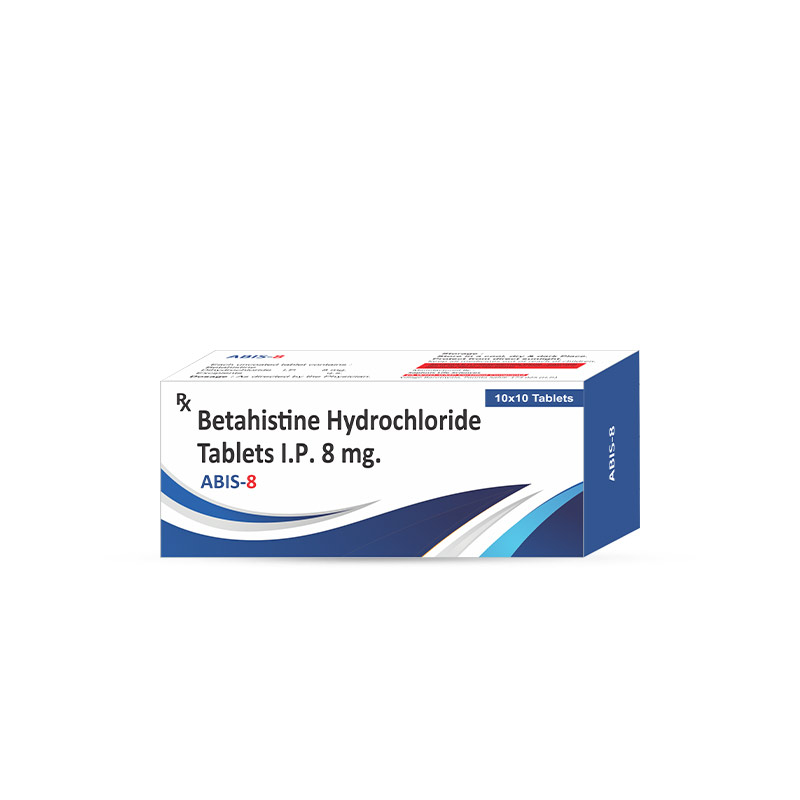
Betahistine Dihydrochloride
Betahistine Dihydrochloride
What is Betahistine Dihydrochloride?
Betahistine dihydrochloride is a synthetic analogue of histamine commonly used to treat Ménière's disease and its associated symptoms including vertigo, tinnitus, hearing loss, and nausea. It functions primarily by improving blood flow in the inner ear, thus reducing fluid buildup and pressure. Additionally, it may also facilitate vestibular compensation, enhancing central nervous system adaptation processes to alleviate symptoms.
Side Effects
- Headache
- Nausea
- Dyspepsia
Warnings
- Consult your doctor if you have asthma, peptic ulcer, or pheochromocytoma as Betahistine may aggravate these conditions.
- May cause drowsiness or dizziness, avoid driving or engaging in activities requiring alertness until you know how this medication affects you.
- Inform your healthcare provider about all medications you are taking, as Betahistine can interact with other drugs.
- Not recommended during pregnancy or breastfeeding unless clearly needed. Consult your doctor for advice.
Prescription savings · · · ·
What is Betahistine Dihydrochloride ?
Betahistine dihydrochloride is a synthetic analogue of histamine commonly used to treat Ménière's disease and its associated symptoms including vertigo, tinnitus, hearing loss, and nausea. It functions primarily by improving blood flow in the inner ear, thus reducing fluid buildup and pressure. Additionally, it may also facilitate vestibular compensation, enhancing central nervous system adaptation processes to alleviate symptoms.
- Headache
- Nausea
- Dyspepsia
- Indigestion
- Bloating
- Diarrhea
- Vomiting
- Abdominal pain
- Consult your doctor if you have asthma, peptic ulcer, or pheochromocytoma as Betahistine may aggravate these conditions.
- May cause drowsiness or dizziness, avoid driving or engaging in activities requiring alertness until you know how this medication affects you.
- Inform your healthcare provider about all medications you are taking, as Betahistine can interact with other drugs.
- Not recommended during pregnancy or breastfeeding unless clearly needed. Consult your doctor for advice.
Betahistine Dihydrochloride Coupons & Prices
Betahistine Dihydrochloride
Weight-loss medication, prescribed online
Licensed U.S. providers · No insurance needed · Shipped to your door
Betahistine Dihydrochloride prices by dosage
Lowest cash price with a free Rx.com coupon vs. the average retail price.
| Dosage | Quantity | Retail price | Rx.com price |
|---|---|---|---|
| 1gm of · Bottle | 90 | — | $7,051.73 |
| 5gm of · Bottle | 90 | — | $336.87 |
| 10gm of · Bottle | 90 | — | $249.96 |
| 25gm of · Bottle | 90 | — | $190.95 |
| 100gm of · Bottle | 90 | $483.29 | $153.61 |
| 1000gm of · Bottle | 1,000 | $7,675.99 | $7,174.16 |
Cash prices near ZIP 77433; updated regularly. Actual pharmacy price may vary.
Looking for a betahistine dihydrochloride coupon? Rx.com compares cash prices across more than 60,000 pharmacies so you can find today's lowest price on this anti-vertigo medicine. Betahistine dihydrochloride is the salt form of betahistine, a histamine-analog drug used in more than 80 countries to ease the vertigo, dizziness, ringing in the ears, and hearing trouble of Meniere's disease. It is not FDA-approved in the United States, so it is filled only by compounding pharmacies here. Enter your ZIP above to see current pricing near you.
What is betahistine dihydrochloride and how does it work?
Betahistine dihydrochloride is a histamine analog used as an anti-vertigo agent. It acts as a histamine H1-receptor agonist and an H3-receptor antagonist, and it works in part as an inner-ear vasodilator, improving blood flow in the inner ear. This is thought to help relieve the vertigo, dizziness, tinnitus (ringing in the ears), and hearing disturbance linked to Meniere's disease, and it is also used more broadly for vestibular vertigo such as vestibular neuritis and benign paroxysmal positional vertigo. Outside the United States it is sold under brand names including Serc, Betaserc, and Vertin.
Typical dosing abroad is 24 to 48 mg per day of the dihydrochloride salt, taken in divided doses. Your own dose should always come from your prescribing provider. This information is educational and is not a substitute for medical advice.
Betahistine dihydrochloride cost and coupons
Because betahistine is not FDA-approved in the US, it is not stocked as a standard generic at ordinary retail pharmacies; it is prepared by compounding pharmacies, and there is no manufacturer savings card for it. Cash prices for compounded medicines can vary widely from one pharmacy to another, which is exactly why comparing before you fill matters. Rx.com checks prices across more than 60,000 pharmacies so you can see where the medicine costs less in your area.
If you do not have insurance, or if your plan does not cover a compounded drug, a discount price can be lower than the standard cash price. Prices change often and are shown live, so enter your ZIP above to see today's price near you.
Alternatives and related medicines
Betahistine dihydrochloride is one salt form of the same active drug covered on our betahistine page. Because betahistine is not FDA-approved in the US, many people here are prescribed FDA-approved medicines for dizziness and motion-related vertigo instead. Two common ones are:
- meclizine — an antihistamine widely used for vertigo and motion sickness.
- dimenhydrinate — an antihistamine used for nausea, vomiting, and dizziness from motion sickness.
These medicines are not identical to betahistine and are not always interchangeable, so ask your provider which option fits your diagnosis. You can compare pharmacy prices on each of these on Rx.com.
Safety, side effects, and who should not take it
Betahistine has no FDA boxed warning because the drug is not FDA-approved. Common side effects are usually mild and can include nausea, upset stomach or indigestion (dyspepsia), and headache. It should not be used by people with pheochromocytoma or by anyone with a known allergy to betahistine. Because it is a histamine analog, it should be used with caution in people with bronchial asthma and in those with a history of, or active, peptic ulcer disease, as it may worsen these conditions.
Betahistine is not recommended for children, and its safety in pregnancy or breastfeeding has not been established. Keep in mind that a US-compounded product is not FDA-verified for quality. This is general information, not medical advice; talk with your doctor or pharmacist about whether betahistine is right for you and about any other medicines you take.
This Betahistine Dihydrochloride information was written and reviewed against authoritative U.S. medical sources — MedlinePlus (U.S. National Library of Medicine), DailyMed, and FDA prescribing information — and checked for accuracy. It is provided for education and is not a substitute for professional medical advice.
Verify the official label: Betahistine Dihydrochloride on DailyMed (FDA)
Reviewed against FDA labeling · Last reviewed July 2026
Related Drugs
Browse more medications: starting with B · full A-Z directory · by condition · common drugs
Medical disclaimer: This information is provided for general educational purposes only and is not medical advice. It is not a substitute for professional diagnosis or treatment. Always consult a licensed physician, pharmacist, or other qualified healthcare provider before starting, stopping, or changing any medication or treatment. Never disregard professional medical advice or delay seeking it because of something you read here. If you think you may have a medical emergency, call your doctor or 911 immediately.


