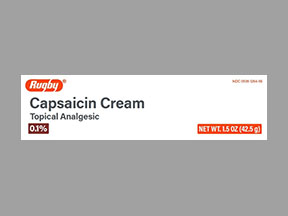
Capsaicin
Capsaicin 42.5GM of 0.1%
What is Capsaicin?
Capsaicin is a naturally occurring compound derived from chili peppers, known for its characteristic heat and analgesic properties. It is commonly used in topical creams and patches to relieve muscle and joint pain by desensitizing sensory neurons and reducing the transmission of pain signals. Capsaicin is also studied for its potential benefits in managing conditions like neuropathic pain and arthritis.Side Effects
- Burning sensation at the application site
- Redness or swelling
- Itching or dryness
Warnings
- Do not apply to broken or irritated skin
- Avoid contact with eyes, mouth, and other sensitive areas
- Wash hands thoroughly after application
- Consult a physician if pregnant, nursing, or taking other medications
- Stop use and ask a doctor if unusual redness, blistering, or pain occurs
Prescription savings · · ·
- Burning sensation at the application site
- Redness or swelling
- Itching or dryness
- Cough or sneezing if inhaled
- Runny nose when applied near the nostrils
- Do not apply to broken or irritated skin
- Avoid contact with eyes, mouth, and other sensitive areas
- Wash hands thoroughly after application
- Consult a physician if pregnant, nursing, or taking other medications
- Stop use and ask a doctor if unusual redness, blistering, or pain occurs
Capsaicin Coupons & Prices
Capsaicin 42.5GM of 0.1%
What is Capsaicin ?
Capsaicin is a naturally occurring compound derived from chili peppers, known for its characteristic heat and analgesic properties. It is commonly used in topical creams and patches to relieve muscle and joint pain by desensitizing sensory neurons and reducing the transmission of pain signals. Capsaicin is also studied for its potential benefits in managing conditions like neuropathic pain and arthritis.
Capsaicin — Articles & Guides
Related Drugs
Browse more medications: starting with C · full A-Z directory · by condition · common drugs
Medical disclaimer: This information is provided for general educational purposes only and is not medical advice. It is not a substitute for professional diagnosis or treatment. Always consult a licensed physician, pharmacist, or other qualified healthcare provider before starting, stopping, or changing any medication or treatment. Never disregard professional medical advice or delay seeking it because of something you read here. If you think you may have a medical emergency, call your doctor or 911 immediately.