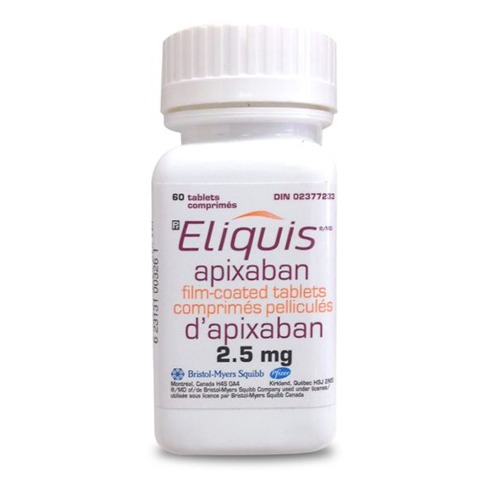
Eliquis
Eliquis 5MG
What is Eliquis?
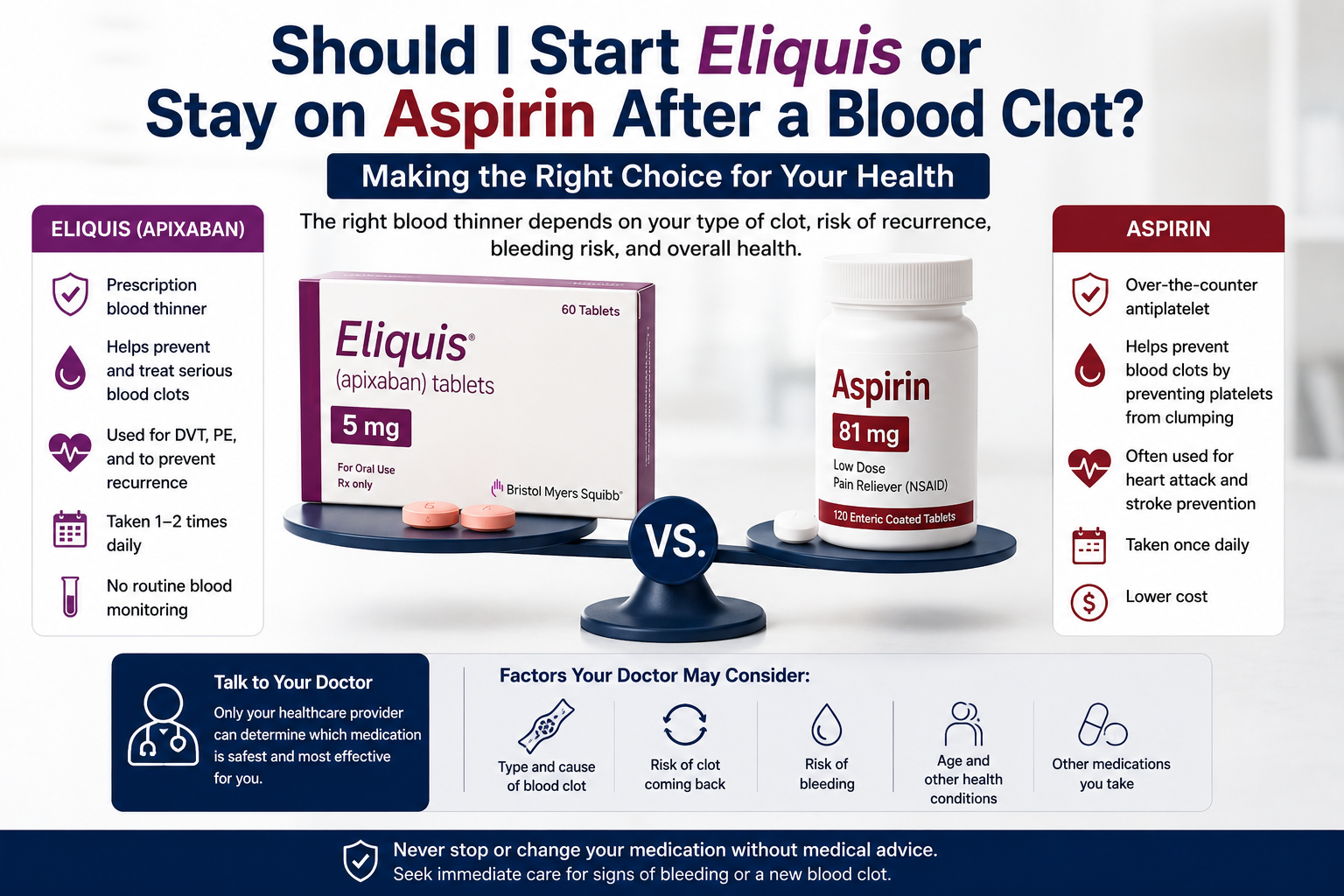
Eliquis (apixaban) is a prescription blood thinner used to help prevent and treat blood clots, including deep vein thrombosis (DVT), pulmonary embolism (PE), and stroke in people with atrial fibrillation not caused by a heart valve problem. By reducing the blood's ability to clot, Eliquis helps lower the risk of serious cardiovascular complications. Learn about Eliquis uses, dosage, side effects, cost, and how it compares to other anticoagulant medications. Get a prescription for Eliquis online at Rx.com or use the Rx.com Eliquis coupon for discounts in pharmacy.
Side Effects
- Red or black, tarry stools
- Numbness, tingling, or muscle weakness in your legs or feet
- Change in how much or how often you urinate, red or pink urine
Warnings
- Tell your doctor if you are pregnant or breastfeeding, or if you have kidney disease, liver disease, bleeding problems, antiphospholipid syndrome, or an artificial heart valve.
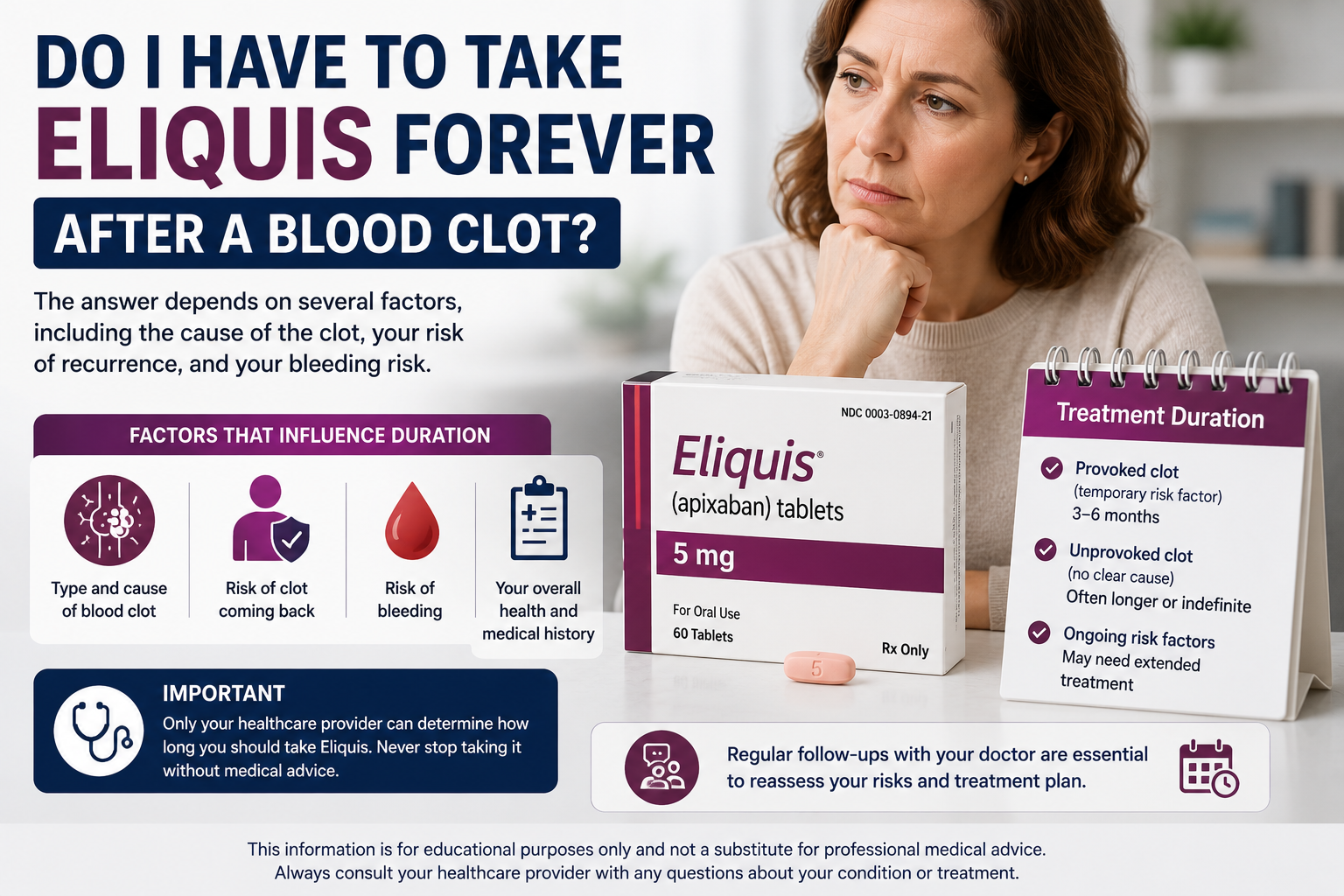
- Do not stop using this medicine suddenly without asking your doctor. You might have a higher risk of stroke for a short time after you stop using this medicine.
- This medicine increases your risk for bleeding that can become serious if not controlled. You may also bruise easily, and it may take longer than usual for bleeding to stop.
- This medicine may increase your risk for a hematoma (blood clot) in your spine or back if you undergo an epidural or spinal puncture. This could lead to paralysis. Tell your doctor if you ever had spine problems or back surgery.
- Tell any doctor or dentist who treats you that you are using this medicine. With your doctor's supervision, you may need to stop using this medicine several days before you have surgery or medical tests.
Prescription savings · · · ·
What is Eliquis?
Eliquis (apixaban) is a prescription blood thinner used to help prevent and treat blood clots, including deep vein thrombosis (DVT), pulmonary embolism (PE), and stroke in people with atrial fibrillation not caused by a heart valve problem. By reducing the blood's ability to clot, Eliquis helps lower the risk of serious cardiovascular complications. Learn about Eliquis uses, dosage, side effects, cost, and how it compares to other anticoagulant medications. Get a prescription for Eliquis online at Rx.com or use the Rx.com Eliquis coupon for discounts in pharmacy.
- Red or black, tarry stools
- Numbness, tingling, or muscle weakness in your legs or feet
- Change in how much or how often you urinate, red or pink urine
- Unusual bleeding, bruising, or weakness
- Allergic reaction: Itching or hives, swelling in your face or hands, swelling or tingling in your mouth or throat, chest tightness, trouble breathing
- Coughing up blood, vomiting blood or material that looks like coffee grounds
- Chest pain, trouble breathing
- Tell your doctor if you are pregnant or breastfeeding, or if you have kidney disease, liver disease, bleeding problems, antiphospholipid syndrome, or an artificial heart valve.
- Do not stop using this medicine suddenly without asking your doctor. You might have a higher risk of stroke for a short time after you stop using this medicine.
- This medicine increases your risk for bleeding that can become serious if not controlled. You may also bruise easily, and it may take longer than usual for bleeding to stop.
- This medicine may increase your risk for a hematoma (blood clot) in your spine or back if you undergo an epidural or spinal puncture. This could lead to paralysis. Tell your doctor if you ever had spine problems or back surgery.
- Tell any doctor or dentist who treats you that you are using this medicine. With your doctor's supervision, you may need to stop using this medicine several days before you have surgery or medical tests.
- Your doctor will do lab tests at regular visits to check on the effects of this medicine. Keep all appointments.
- Keep all medicine out of the reach of children. Never share your medicine with anyone.
Eliquis Coupon, Savings Card & Prices
Eliquis 5MG
4 ED medications in one dose
Sildenafil, tadalafil, apomorphine & L-Citrulline · Works in ~15 min · Lasts up to 36 hours
Eliquis prices by dosage
Lowest cash price with a free Rx.com coupon vs. the average retail price.
| Dosage | Quantity | Retail price | Rx.com price |
|---|---|---|---|
| 2.5mg · Tablet | 28 | — | $158.92 |
| 5mg · Tablet | 28 | $170.81 | $158.92 |
Cash prices near ZIP 77433; updated regularly. Actual pharmacy price may vary.
Looking for an Eliquis coupon? Eliquis (apixaban) is a brand-name blood thinner with no generic on the U.S. market yet, so out-of-pocket costs can run high. The Rx.com free cash coupon can lower the price you pay at the pharmacy counter, and it works even if you are uninsured, on Medicare, or your manufacturer savings card is declined. Enter your ZIP above to see today's Eliquis price at pharmacies near you.
What is Eliquis (apixaban) and how does it work?
Eliquis is the brand name for apixaban, an anticoagulant (blood thinner) in the direct oral anticoagulant (DOAC) class. It works as a factor Xa inhibitor, blocking a key protein in the clotting cascade so that dangerous blood clots are less likely to form. Unlike older blood thinners such as warfarin, it is taken at a fixed dose and does not require routine blood-level (INR) monitoring.
Eliquis is FDA-approved to reduce the risk of stroke and systemic embolism in adults with nonvalvular atrial fibrillation; to treat deep vein thrombosis (DVT) and pulmonary embolism (PE) and lower the risk they come back after initial treatment; to help prevent DVT/PE after hip or knee replacement surgery; and to treat and prevent recurrence of venous thromboembolism (VTE) in pediatric patients from birth after at least 5 days of initial injectable anticoagulation.
Eliquis cost: manufacturer savings card vs. Rx.com cash coupon
Bristol Myers Squibb and Pfizer offer an official Eliquis manufacturer savings card. In most cases these commercial copay cards are limited to people with private (commercial) insurance and cannot be used if you are uninsured or covered by a government program like Medicare, Medicaid, or Tricare. Terms and eligibility vary, so check the current details on the official page: Eliquis Savings & Support. That same site also has information on the manufacturer's patient support and assistance options for those who qualify.
The Rx.com coupon is a different tool: it is a free cash-price discount you can use instead of insurance. That makes it useful when the manufacturer card does not apply to you, for example if you are uninsured, on Medicare, or your commercial card is declined. You do not have to choose blindly. Enter your ZIP above to see today's Eliquis cash price at nearby pharmacies, then compare that with what your insurance or the manufacturer card would charge and use whichever is lower.
Is there a generic for Eliquis? Alternatives and comparisons
Apixaban is the active ingredient in Eliquis, but a generic apixaban is not yet widely available at U.S. pharmacies, so for now the brand is typically what you will fill. You can still track the apixaban listing to watch for generic availability and compare cash prices as the market changes.
Eliquis is one of several DOAC blood thinners. Depending on your condition and your prescriber's judgment, alternatives may include:
- Xarelto (rivaroxaban) — another once- or twice-daily factor Xa inhibitor
- Pradaxa (dabigatran) — a direct thrombin inhibitor
- Savaysa (edoxaban) — a factor Xa inhibitor
- Warfarin — an older, low-cost generic that needs regular INR blood tests
These medicines are not interchangeable. Only your prescriber can decide which blood thinner is right for you, and you should never switch on your own.
Eliquis safety and side effects
The most common and most serious risk with Eliquis is bleeding, which can be severe or, rarely, fatal, and there is no simple way to reverse it (a reversal agent, andexanet alfa, exists for emergencies). Your bleeding risk goes up if you also take antiplatelet drugs, NSAIDs, or other anticoagulants. Eliquis carries two boxed warnings: stopping it early raises the risk of clots and stroke, so it should not be stopped without medical guidance; and it can rarely cause a spinal or epidural blood clot (hematoma) in people having spinal procedures or anesthesia, which may lead to lasting paralysis.
Eliquis should be avoided with certain strong medications that affect the CYP3A4 and P-gp pathways, and it is not recommended for people with mechanical prosthetic heart valves or antiphospholipid syndrome. Serious allergic reactions can occur. This is general information, not medical advice. Tell your provider about all the medicines and supplements you take, and talk with them or your pharmacist before starting, stopping, or changing Eliquis.
This Eliquis information was written and reviewed against authoritative U.S. medical sources — MedlinePlus (U.S. National Library of Medicine), DailyMed, and FDA prescribing information — and checked for accuracy. It is provided for education and is not a substitute for professional medical advice.
Verify the official label: Eliquis on DailyMed (FDA)
Reviewed against FDA labeling · Last reviewed July 2026
Eliquis — Articles & Guides
6 articles
Related Drugs
Browse more medications: starting with E · full A-Z directory · by condition · common drugs
Medical disclaimer: This information is provided for general educational purposes only and is not medical advice. It is not a substitute for professional diagnosis or treatment. Always consult a licensed physician, pharmacist, or other qualified healthcare provider before starting, stopping, or changing any medication or treatment. Never disregard professional medical advice or delay seeking it because of something you read here. If you think you may have a medical emergency, call your doctor or 911 immediately.


