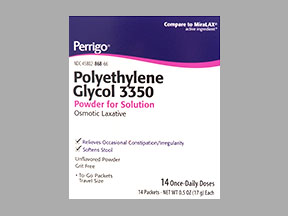
Polyethylene Glycol 3350
Polyethylene Glycol 3350 14 Packet
What is Polyethylene Glycol 3350?
Polyethylene Glycol 3350 is an osmotic laxative used to treat occasional constipation by retaining water in the stool to soften it and increase the number of bowel movements. It is typically administered orally in a powder form that is dissolved in a liquid, providing effective relief within 1 to 3 days. This compound is generally well-tolerated but should be used according to healthcare professional guidance.Side Effects
- Nausea
- Abdominal bloating
- Cramping
Warnings
- Allergic reactions like rash, itching, or swelling
- Severe or persistent abdominal pain
- Kidney problems
- Ongoing nausea or vomiting
- Electrolyte imbalances
Prescription savings · · ·
- Nausea
- Abdominal bloating
- Cramping
- Diarrhea
- Gas
- Upset stomach
- Dizziness
- Increased bowel frequency
- Allergic reactions like rash, itching, or swelling
- Severe or persistent abdominal pain
- Kidney problems
- Ongoing nausea or vomiting
- Electrolyte imbalances
- Ask a doctor before using if you have kidney disease
- Should not be used long-term or as a substitute for a healthy diet
- Not recommended for children under certain ages without medical advice
Polyethylene Glycol 3350 Coupons & Prices
Polyethylene Glycol 3350 14 Packet
What is Polyethylene Glycol 3350 ?
Polyethylene Glycol 3350 is an osmotic laxative used to treat occasional constipation by retaining water in the stool to soften it and increase the number of bowel movements. It is typically administered orally in a powder form that is dissolved in a liquid, providing effective relief within 1 to 3 days. This compound is generally well-tolerated but should be used according to healthcare professional guidance.
Related Drugs
Browse more medications: starting with P · full A-Z directory · by condition · common drugs
Medical disclaimer: This information is provided for general educational purposes only and is not medical advice. It is not a substitute for professional diagnosis or treatment. Always consult a licensed physician, pharmacist, or other qualified healthcare provider before starting, stopping, or changing any medication or treatment. Never disregard professional medical advice or delay seeking it because of something you read here. If you think you may have a medical emergency, call your doctor or 911 immediately.