How Many mg Is 40 Units of Tirzepatide?
It's one of the most-searched questions — and the honest answer is "it depends." Here's how units and milligrams really relate, the simple math, and why your own label is the only source that matters.
What "units" actually measure
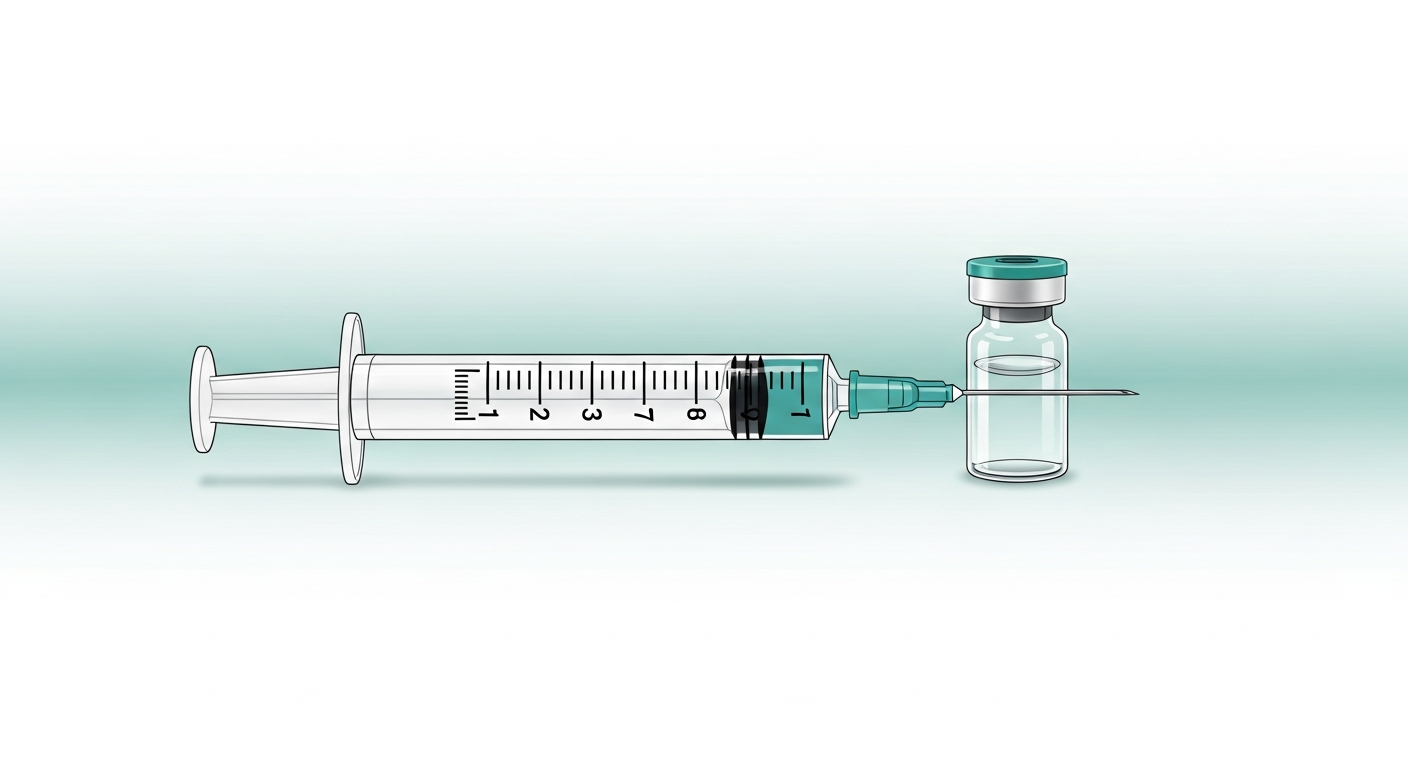
This is the key to the whole question. The "units" marked on an insulin syringe measure volume (how much liquid you draw up) — not the strength of the medicine inside. On a standard U-100 insulin syringe, 100 units = 1 milliliter (mL). So:
- 1 unit = 0.01 mL
- 40 units = 0.4 mL
- 50 units = 0.5 mL (half the syringe)
Because units only tell you the amount of liquid, the same 40 units can hold very different amounts of actual drug depending on how concentrated that liquid is.
The simple conversion math
To turn units into milligrams, you need two numbers: the volume and the concentration printed on your vial.
For 40 units: mg = 0.4 mL × concentration
40 units in mg, by concentration
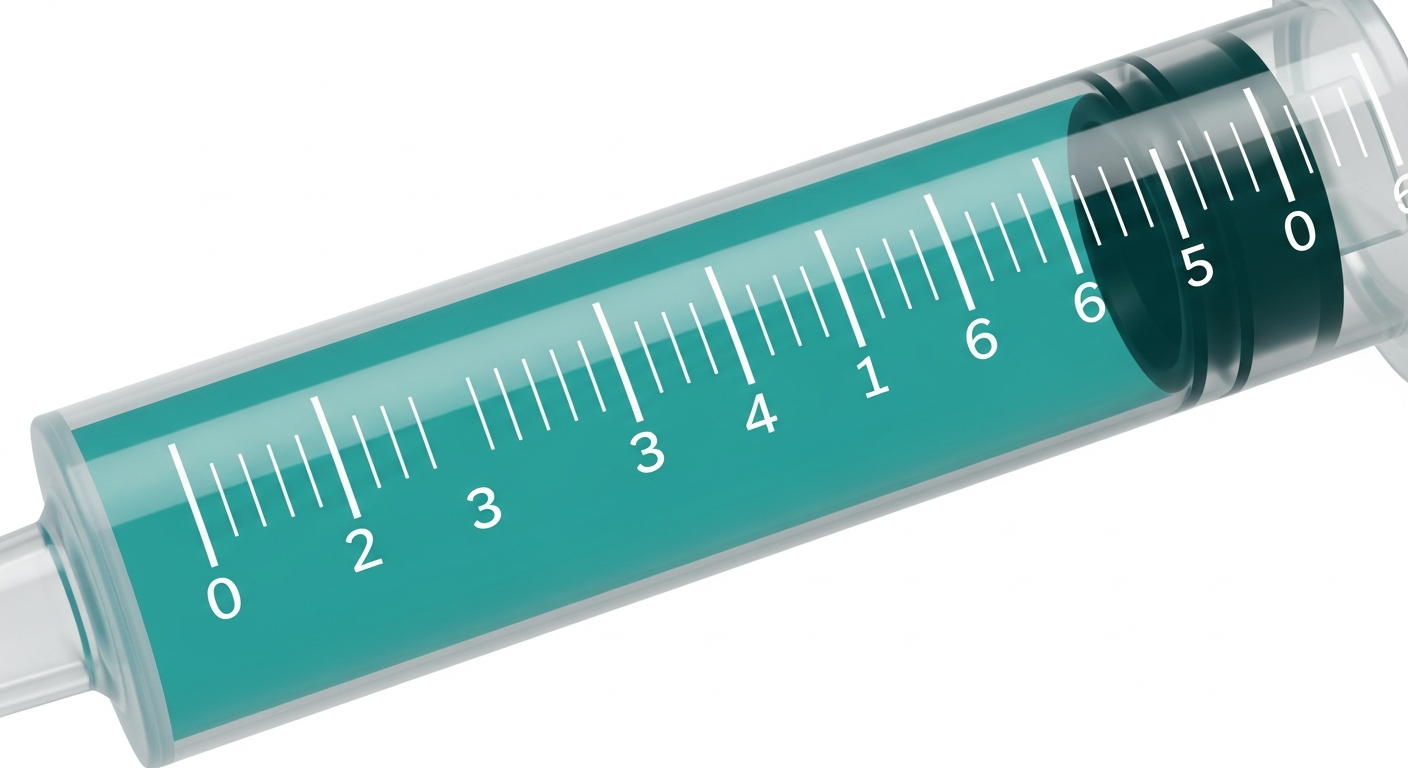
Here's how the same 40 units (0.4 mL) works out across common concentrations. These are math examples only — not a dose recommendation.
| Vial concentration | 40 units (0.4 mL) equals |
|---|---|
| 5 mg/mL | 2 mg |
| 10 mg/mL | 4 mg |
| 15 mg/mL | 6 mg |
| 20 mg/mL | 8 mg |
| 25 mg/mL | 10 mg |
As you can see, the answer ranges widely. That's exactly why "40 units" alone cannot tell you the milligrams.
Why compounded vials differ
Brand-name tirzepatide (such as Mounjaro and Zepbound) comes in pre-set doses, so you don't measure units. The "units" question almost always comes up with compounded tirzepatide, which is mixed by a pharmacy and can come in different concentrations. Two people could both draw "40 units" and receive completely different milligram amounts. That's why your own vial's label and your prescriber's instructions are the only reliable source.
Please read this before you dose
Never guess your dose, and never copy someone else's units. Using the wrong concentration can lead to a serious dosing error. Always follow the exact dose, concentration, and instructions from your prescriber and pharmacy. If your label, dose, or syringe markings are unclear in any way, stop and contact your provider or pharmacist before injecting.
The one rule that keeps you safe
If you remember nothing else: units measure liquid, milligrams measure medicine, and only your vial's concentration connects the two. Use the numbers on your specific prescription — not a general chart from the internet — and lean on your healthcare team whenever you're unsure.
Want a prescription handled properly?
Connect with a licensed provider who can prescribe the correct dose and explain exactly how to measure it.
Frequently asked questions
Units to mg — Complete Conversion Reference Table
Check your vial label for its concentration (mg/mL) before using this table. Never dose from here without your provider's written instructions for your specific vial.
| Units drawn | @ 2.5 mg/mL | @ 5 mg/mL | @ 10 mg/mL | @ 20 mg/mL |
|---|---|---|---|---|
| 5 units (0.05 mL) | 0.125 mg | 0.25 mg | 0.5 mg | 1.0 mg |
| 10 units (0.1 mL) | 0.25 mg | 0.5 mg | 1.0 mg | 2.0 mg |
| 15 units (0.15 mL) | 0.375 mg | 0.75 mg | 1.5 mg | 3.0 mg |
| 20 units (0.2 mL) | 0.5 mg | 1.0 mg | 2.0 mg | 4.0 mg |
| 25 units (0.25 mL) | 0.625 mg | 1.25 mg | 2.5 mg | 5.0 mg |
| 30 units (0.3 mL) | 0.75 mg | 1.5 mg | 3.0 mg | 6.0 mg |
| 40 units (0.4 mL) | 1.0 mg | 2.0 mg | 4.0 mg | 8.0 mg |
| 50 units (0.5 mL) | 1.25 mg | 2.5 mg | 5.0 mg | 10.0 mg |
| 60 units (0.6 mL) | 1.5 mg | 3.0 mg | 6.0 mg | 12.0 mg |
| 80 units (0.8 mL) | 2.0 mg | 4.0 mg | 8.0 mg | 16.0 mg |
Not sure what concentration is in your vial? Check the label — it will read "mg/mL." If you cannot find it, contact your prescribing provider or compounding pharmacy before drawing any dose.
How many mg is 40 units of tirzepatide?
There's no single answer, because "units" measure volume on an insulin syringe, not the amount of drug. On a standard U-100 insulin syringe, 40 units equals 0.4 mL. The milligrams depend entirely on the concentration of your specific vial — for example, at 5 mg/mL it's 2 mg, at 10 mg/mL it's 4 mg, at 20 mg/mL it's 8 mg. Use your own label and your prescriber's exact instructions.
What does "units" mean on an insulin syringe?
Units are the markings that measure volume, not medication strength. On a U-100 syringe, 100 units equals 1 milliliter (mL), so 1 unit equals 0.01 mL and 40 units equals 0.4 mL. Because units measure liquid, the same number of units can contain very different amounts of drug depending on the concentration.
Why can't you convert units to mg without the concentration?
Because units measure how much liquid you draw up, while mg measures how much drug is in that liquid. The mg you get equals the volume (in mL) multiplied by the concentration (in mg/mL). Without the concentration printed on your specific vial, it's impossible — and unsafe — to say how many mg a number of units contains.
Is it safe to dose tirzepatide in units myself?
You should only ever use the exact dose, concentration, and instructions provided by your prescriber and pharmacy. Compounded tirzepatide can come in different concentrations, and guessing or copying someone else's units can lead to a serious dosing error. If anything is unclear, stop and contact your provider or pharmacist before injecting.
Last updated: June 10, 2026


