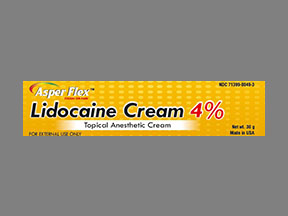
Asperflex Lidocaine
Asperflex Lidocaine 30GM of 4%
What is Asperflex Lidocaine?
Lidocaine is a local anesthetic and antiarrhythmic medication used to numb tissue in a specific area and to treat certain types of abnormal heart rhythms. By blocking sodium channels, it effectively reduces pain sensation and stabilizes the neuronal membrane, inhibiting the conduction of nerve impulses. Lidocaine can be administered topically, via injection, or intravenously, depending on the medical requirement.Side Effects
- Redness, swelling, or irritation at the application site
- Nausea
- Dizziness
Warnings
- Use with caution in patients with a history of drug allergies
- Do not apply to broken, inflamed, or irritated skin
- Avoid contact with eyes
- Overuse or misuse can result in increased systemic absorption and serious side effects
- May interact with certain heart medications
Prescription savings · · · ·
What is Asperflex Lidocaine ?
Lidocaine is a local anesthetic and antiarrhythmic medication used to numb tissue in a specific area and to treat certain types of abnormal heart rhythms. By blocking sodium channels, it effectively reduces pain sensation and stabilizes the neuronal membrane, inhibiting the conduction of nerve impulses. Lidocaine can be administered topically, via injection, or intravenously, depending on the medical requirement.- Redness, swelling, or irritation at the application site
- Nausea
- Dizziness
- Headache
- Numbness
- Tingling or burning sensation
- Use with caution in patients with a history of drug allergies
- Do not apply to broken, inflamed, or irritated skin
- Avoid contact with eyes
- Overuse or misuse can result in increased systemic absorption and serious side effects
- May interact with certain heart medications
- Not recommended for use in patients with severe liver disease
Asperflex Lidocaine Coupons & Prices
Asperflex Lidocaine 30GM of 4%
4 ED medications in one dose
Apomorphine, sildenafil, tadalafil & vardenafil · One sublingual dose · Free express shipping
Asperflex Lidocaine prices by dosage
Lowest cash price with a free Rx.com coupon vs. the average retail price.
| Dosage | Quantity | Retail price | Rx.com price |
|---|---|---|---|
| 5gm of 4% · Tube | 25 | $24.82 | $15.12 |
| 15gm of 4% · Tube | 30 | $26.21 | $20.38 |
| 30gm of 4% · Tube | 30 | $18.83 | $14.73 |
| 100gm of 4% · Tube | 100 | — | $9.93 |
Cash prices near ZIP 77433; updated regularly. Actual pharmacy price may vary.
Related Drugs
Browse more medications: starting with A · full A-Z directory · by condition · common drugs
Medical disclaimer: This information is provided for general educational purposes only and is not medical advice. It is not a substitute for professional diagnosis or treatment. Always consult a licensed physician, pharmacist, or other qualified healthcare provider before starting, stopping, or changing any medication or treatment. Never disregard professional medical advice or delay seeking it because of something you read here. If you think you may have a medical emergency, call your doctor or 911 immediately.


