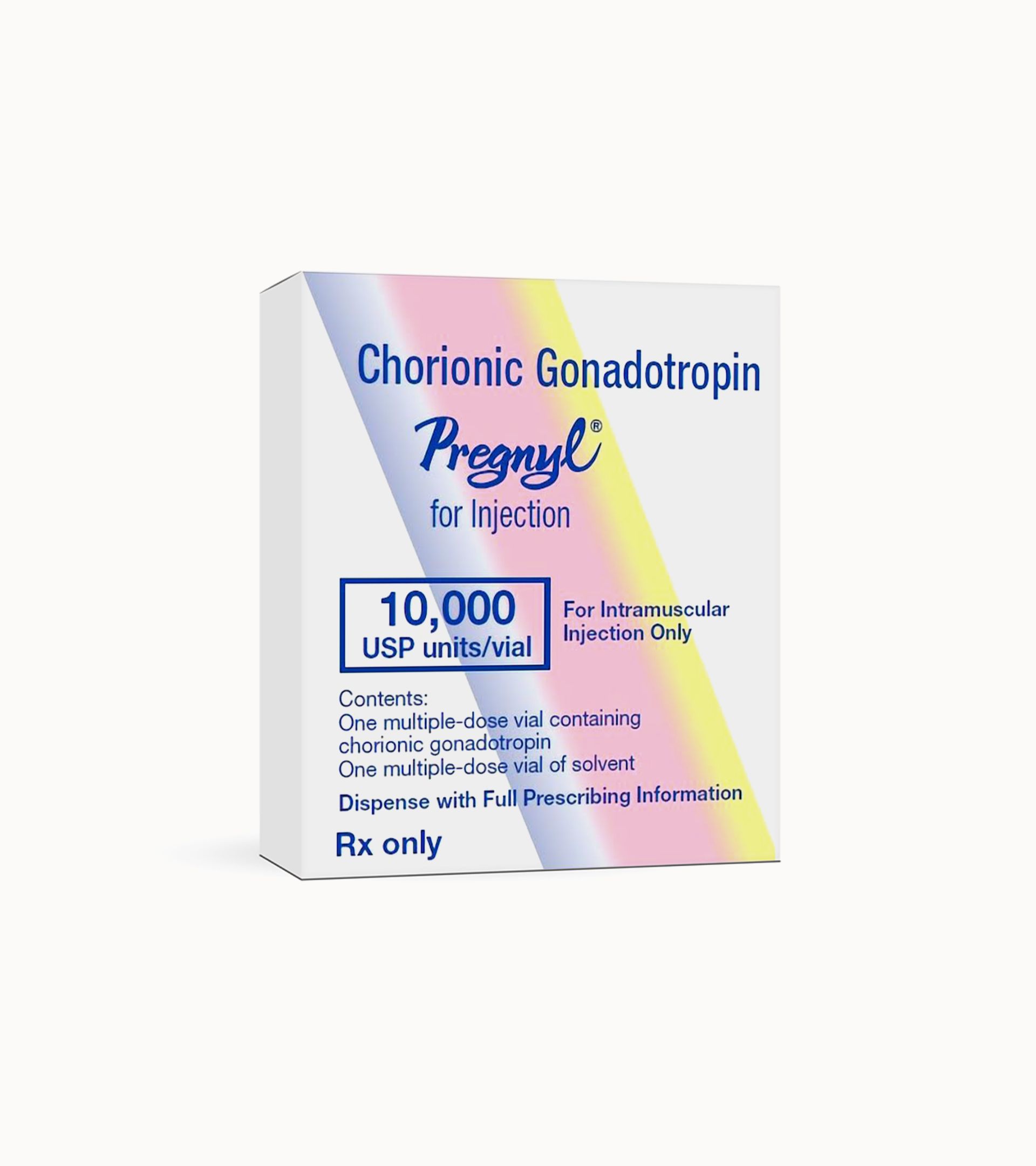
Chorionic Gonadotropin
Chorionic Gonadotropin 10000UNIT
What is Chorionic Gonadotropin?
Chorionic Gonadotropin, commonly known as Human Chorionic Gonadotropin (hCG), is a hormone produced by the placenta during pregnancy. Medicinally, it is used to treat fertility issues in both men and women, and in boys when their testicles have not dropped down into the scrotum normally. It functions by mimicking the luteinizing hormone, thereby stimulating ovulation and testosterone production.Side Effects
- Headache
- Fatigue
- Pain at injection site
Warnings
- May cause multiple pregnancies
- Not recommended for use in individuals with prostate cancer or other hormone-sensitive cancers
- Possibility of ovarian hyperstimulation syndrome
- Avoid use if allergic to gonadotropins
- Consult healthcare provider if experiencing severe pain or abdominal swelling
Prescription savings · · · ·
What is Chorionic Gonadotropin ?
Chorionic Gonadotropin, commonly known as Human Chorionic Gonadotropin (hCG), is a hormone produced by the placenta during pregnancy. Medicinally, it is used to treat fertility issues in both men and women, and in boys when their testicles have not dropped down into the scrotum normally. It functions by mimicking the luteinizing hormone, thereby stimulating ovulation and testosterone production.- Headache
- Fatigue
- Pain at injection site
- Mood swings
- Edema (swelling)
- May cause multiple pregnancies
- Not recommended for use in individuals with prostate cancer or other hormone-sensitive cancers
- Possibility of ovarian hyperstimulation syndrome
- Avoid use if allergic to gonadotropins
- Consult healthcare provider if experiencing severe pain or abdominal swelling
Chorionic Gonadotropin Coupons & Prices
Chorionic Gonadotropin 10000UNIT

4 ED medications in one dose
Apomorphine, sildenafil, tadalafil & vardenafil · One sublingual dose · Free express shipping
Browse more medications: starting with C · full A-Z directory · by condition · common drugs
Medical disclaimer: This information is provided for general educational purposes only and is not medical advice. It is not a substitute for professional diagnosis or treatment. Always consult a licensed physician, pharmacist, or other qualified healthcare provider before starting, stopping, or changing any medication or treatment. Never disregard professional medical advice or delay seeking it because of something you read here. If you think you may have a medical emergency, call your doctor or 911 immediately.


