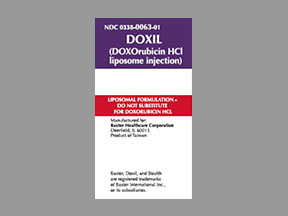
Doxil
Doxil 10ML of 2MG/ML
What is Doxil?
Doxil, also known as liposomal doxorubicin, is a chemotherapy drug enclosed in a specialized liposome used primarily for treating various cancers, including ovarian cancer, multiple myeloma, and Kaposi's sarcoma. It functions by intercalating DNA and inhibiting topoisomerase II, leading to disrupted cell replication and ultimately causing cancer cell death.Side Effects
- Painful sores or white patches on your lips, mouth, or throat
- Unusual bleeding, bruising, or weakness
- Redness, swelling, burning, or pain where the needle is placed
Warnings
- Injection routeThis medicine may cause birth defects if either partner is using it during conception or pregnancy. Tell your doctor right away if you or your partner becomes pregnant. Use an effective form of birth control while you are receiving this medicine and for 6 months after treatment ends.
- Tell your doctor if you are breastfeeding, or if you have liver disease or heart disease. Tell your doctor if you have received previous cancer medicine or radiation treatment.
- This medicine may cause the following problems:Heart damageInfusion reaction, which may be life-threateningHand-foot syndromeCancer of the mouth
- This medicine could cause infertility. Talk with your doctor before using this medicine if you plan to have children.
- Your urine color may change to red or orange after you receive the injection. This is normal and nothing to worry about.
Prescription savings · · · ·
What is Doxil ?
Doxil, also known as liposomal doxorubicin, is a chemotherapy drug enclosed in a specialized liposome used primarily for treating various cancers, including ovarian cancer, multiple myeloma, and Kaposi's sarcoma. It functions by intercalating DNA and inhibiting topoisomerase II, leading to disrupted cell replication and ultimately causing cancer cell death.- Painful sores or white patches on your lips, mouth, or throat
- Unusual bleeding, bruising, or weakness
- Redness, swelling, burning, or pain where the needle is placed
- Allergic reaction: Itching or hives, swelling in your face or hands, swelling or tingling in your mouth or throat, chest tightness, trouble breathing
- Blistering, peeling, redness, numbness, pain, or swelling of the palms, hands, and bottoms of the feet
- Fever, chills, cough, sore throat, and body aches
- Headache; dizziness; trouble breathing; warmth or redness in your face, neck, arms, or upper chest
- Slow or uneven heartbeat, rapid weight gain, swelling in your hands, ankles, or feet
- Injection routeThis medicine may cause birth defects if either partner is using it during conception or pregnancy. Tell your doctor right away if you or your partner becomes pregnant. Use an effective form of birth control while you are receiving this medicine and for 6 months after treatment ends.
- Tell your doctor if you are breastfeeding, or if you have liver disease or heart disease. Tell your doctor if you have received previous cancer medicine or radiation treatment.
- This medicine may cause the following problems:Heart damageInfusion reaction, which may be life-threateningHand-foot syndromeCancer of the mouth
- This medicine could cause infertility. Talk with your doctor before using this medicine if you plan to have children.
- Your urine color may change to red or orange after you receive the injection. This is normal and nothing to worry about.
- Injection routeCancer medicine can cause nausea or vomiting, sometimes even after you receive medicine to prevent these effects. Ask your doctor or nurse about other ways to control any nausea or vomiting that might happen.
- Your doctor will check your progress and the effects of this medicine at regular visits. Keep all appointments.
- Unusual bleeding, bruising, or weakness
Doxil Coupons & Prices
Doxil 10ML of 2MG/ML
Weight-loss medication, prescribed online
Licensed U.S. providers · No insurance needed · Shipped to your door
Doxil prices by dosage
Lowest cash price with a free Rx.com coupon vs. the average retail price.
| Dosage | Quantity | Retail price | Rx.com price |
|---|---|---|---|
| 10ml of 2mg/ml · Vial | 30 | — | $944.34 |
| 25ml of 2mg/ml · Vial | 25 | — | $1,651.95 |
Cash prices near ZIP 77433; updated regularly. Actual pharmacy price may vary.
Browse more medications: starting with D · full A-Z directory · by condition · common drugs
Medical disclaimer: This information is provided for general educational purposes only and is not medical advice. It is not a substitute for professional diagnosis or treatment. Always consult a licensed physician, pharmacist, or other qualified healthcare provider before starting, stopping, or changing any medication or treatment. Never disregard professional medical advice or delay seeking it because of something you read here. If you think you may have a medical emergency, call your doctor or 911 immediately.


