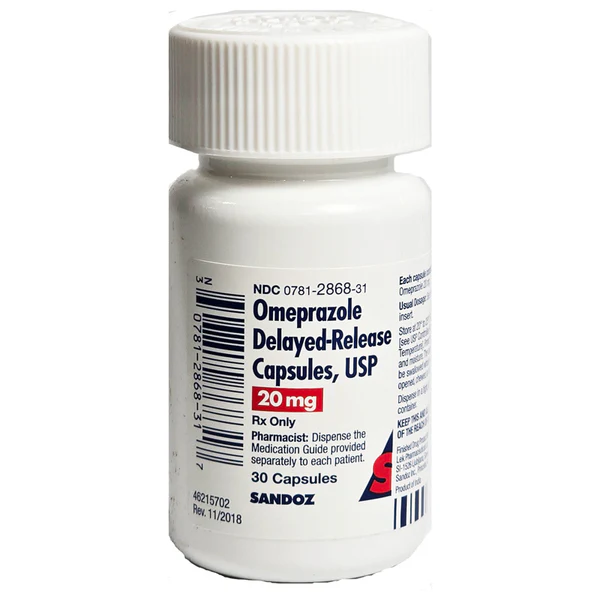
Aspirin-Omeprazole
Aspirin-Omeprazole
What is Aspirin-Omeprazole?
Aspirin-Omeprazole is a combination medication used to reduce the risk of strokes and heart attacks in patients who are at risk for these events and require aspirin for prevention. Omeprazole is included to decrease the risk of developing gastric ulcers associated with prolonged aspirin use. This dual-action formulation ensures the benefits of aspirin’s antiplatelet effects while protecting the stomach lining with omeprazole's acid-reducing properties.
Side Effects
- Nausea
- Stomach pain
- Heartburn
Warnings
- Risk of gastrointestinal bleeding
- May increase the risk of heart attack or stroke
- Do not use in the last three months of pregnancy; may harm the baby
- Avoid taking with alcohol as it increases the risk of stomach ulcers
- Can cause low magnesium levels with long-term use
Prescription savings · · · ·
What is Aspirin-Omeprazole ?
Aspirin-Omeprazole is a combination medication used to reduce the risk of strokes and heart attacks in patients who are at risk for these events and require aspirin for prevention. Omeprazole is included to decrease the risk of developing gastric ulcers associated with prolonged aspirin use. This dual-action formulation ensures the benefits of aspirin’s antiplatelet effects while protecting the stomach lining with omeprazole's acid-reducing properties.
- Nausea
- Stomach pain
- Heartburn
- Headache
- Drowsiness
- Dizziness
- Diarrhea
- Constipation
- Risk of gastrointestinal bleeding
- May increase the risk of heart attack or stroke
- Do not use in the last three months of pregnancy; may harm the baby
- Avoid taking with alcohol as it increases the risk of stomach ulcers
- Can cause low magnesium levels with long-term use
- Not recommended for individuals with asthma, kidney or liver disease without doctor's advice
- May reduce effectiveness of other medications such as diuretics and ACE inhibitors
- Consult with a healthcare provider if used together with other NSAIDs
Aspirin-Omeprazole Coupons & Prices
Aspirin-Omeprazole
Weight-loss medication, prescribed online
Licensed U.S. providers · No insurance needed · Shipped to your door
Aspirin-Omeprazole prices by dosage
Lowest cash price with a free Rx.com coupon vs. the average retail price.
| Dosage | Quantity | Retail price | Rx.com price |
|---|---|---|---|
| 81-40mg · Tablet Delayed Release | 30 | $400.99 | $335.08 |
Cash prices near ZIP 77433; updated regularly. Actual pharmacy price may vary.
If you have been prescribed aspirin and omeprazole delayed-release tablets (brand name Yosprala), an aspirin-omeprazole coupon from Rx.com can lower what you pay at the pharmacy counter when you are paying cash or your insurance does not cover it. This combination tablet pairs delayed-release aspirin, taken to help prevent another heart attack or stroke, with immediate-release omeprazole, which is there to lower the risk of aspirin-related stomach ulcers. A non-brand (authorized generic) version of the combination tablet is available, but it is supplied under the brand's original FDA approval rather than by competing generic manufacturers, so the non-brand label is not automatically the cheaper option. Prices vary by pharmacy, and it is worth checking both the brand and the non-brand version. Enter your ZIP code above to see today's price at pharmacies near you and print, text, or email your free coupon.
What is aspirin-omeprazole and how does it work?
Aspirin and omeprazole delayed-release tablets are a fixed-dose combination product sold under the brand name Yosprala. Each tablet has two parts. The core is delayed-release aspirin (81 mg or 325 mg), a salicylate/NSAID that works as an antiplatelet, making blood platelets less likely to clump and form a clot. The outer layer is immediate-release omeprazole 40 mg, a proton pump inhibitor (PPI) that reduces stomach acid. The omeprazole layer releases first so that acid is already suppressed by the time the aspirin is absorbed further down.
It is FDA-approved for people who need aspirin for secondary prevention of cardiovascular and cerebrovascular events and who are also at risk of developing aspirin-associated stomach ulcers. In the label, the aspirin component covers people who have had an ischemic stroke or TIA, a prior heart attack or unstable angina, or chronic stable angina, and people who have had a revascularization procedure such as bypass surgery (CABG) or coronary angioplasty (PTCA) when there is a pre-existing condition for which aspirin is already indicated. The omeprazole component is there to decrease the risk of an aspirin-associated gastric ulcer in people at risk because of age 55 and older or a documented history of gastric ulcer. It is not for treating a heart attack or an acute coronary syndrome that is happening now, not for primary prevention in people who have never had an event, and not for everyday pain or fever. Take it once daily, at least 60 minutes before a meal, and swallow the tablet whole. Do not split, crush, or chew it, because that destroys the delayed-release design.
Aspirin-omeprazole cost and coupon savings without insurance
Paying cash for this prescription is common. One thing to understand before you shop: the non-brand product labeled "aspirin and omeprazole delayed-release tablets" is an authorized generic. It is marketed under the same original FDA new drug application as the brand, Yosprala, rather than as an FDA-approved ANDA generic from a competing manufacturer. Because there is no field of rival generic makers competing on price, the non-brand version is not automatically less expensive than the brand, and in some cases it costs more. Do not assume the word "generic" on the label means the lower price here. Compare both, and ask your pharmacist what each one would cost you.
Rx.com compares cash prices across more than 60,000 pharmacies, including the large chains, grocery and warehouse pharmacies, and independents. Enter your ZIP code above to see today's price near you, then use the free Rx.com discount coupon at the counter. There is no membership, no fee, and no insurance needed, though a coupon cannot be combined with insurance on the same fill. The brand's manufacturer also lists a savings card on the official Yosprala website; eligibility and terms are set by the manufacturer, so check the current terms directly with them. If cost is still a problem, ask your prescriber whether taking aspirin and a separate PPI would work for you. Note that the label itself says not to substitute the combination tablet with the single-ingredient products on your own, so this is a change only your prescriber can make.
Alternatives and how they compare
The most common alternative is simply the two ingredients taken separately: over-the-counter or prescription aspirin plus a generic proton pump inhibitor such as omeprazole, pantoprazole, or esomeprazole. Those components are widely available as multi-source generics, and many people do fine with that approach, though what you would actually pay depends on your pharmacy and your coverage, so compare before you decide. The combination tablet's advantage is convenience and its specific delayed-release/immediate-release design, which is not identical to swallowing two ordinary tablets at the same time. The label carries a limitation of use telling patients not to substitute the combination tablet with the single-ingredient aspirin and omeprazole products, so this is a decision to make with your prescriber, not on your own.
One comparison matters more than the rest: if you take clopidogrel (Plavix), omeprazole reduces how much clopidogrel your body activates, so combined use should be avoided. Your prescriber may choose a different acid-reducing medicine, or a different antiplatelet plan, in that situation. The 325 mg/40 mg strength should also be avoided with ticagrelor. Bring your full medication list to that conversation.
Safety, side effects, and who should not take it
There is no boxed warning on this product, but both ingredients carry real risks and this page is not medical advice. The aspirin component can cause serious stomach or intestinal ulcers, bleeding, and perforation, and these can happen without any warning symptoms. Bleeding risk goes up with clotting disorders, hemophilia, liver disease, or heavy alcohol use (three or more drinks a day). It should not be used in severe kidney failure or in any degree of liver impairment. Aspirin also interacts with warfarin, methotrexate, and other NSAIDs, and the acid-lowering omeprazole layer can change how medicines that need stomach acid are absorbed. Long-term PPI use has been linked to hip, wrist, and spine fractures, C. difficile diarrhea, low magnesium, low vitamin B12, acute interstitial nephritis, lupus (skin and systemic), and fundic gland polyps beyond a year of use.
Do not take it if you are allergic to aspirin or other NSAIDs, have the aspirin triad (asthma with rhinitis and nasal polyps), are hypersensitive to omeprazole or other benzimidazoles, or take a rilpivirine-containing HIV medicine. It should not be given to children or teenagers with a suspected viral illness because of the risk of Reye's syndrome. The label says to avoid NSAIDs, including this product, in pregnancy starting at 30 weeks of gestation, because of the risk of premature closure of the fetal ductus arteriosus; tell your prescriber if you are pregnant or planning to be. Call your doctor right away about black or bloody stools, vomit that looks like coffee grounds, or unusual bruising or bleeding. Never stop aspirin prescribed after a heart attack, stroke, or stent without talking to your prescriber first.
This Aspirin-Omeprazole information was written and reviewed against authoritative U.S. medical sources — MedlinePlus (U.S. National Library of Medicine), DailyMed, and FDA prescribing information — and checked for accuracy. It is provided for education and is not a substitute for professional medical advice.
Verify the official label: Aspirin-Omeprazole on DailyMed (FDA)
Reviewed against FDA labeling · Last reviewed July 2026
Related Drugs
Browse more medications: starting with A · full A-Z directory · by condition · common drugs
Medical disclaimer: This information is provided for general educational purposes only and is not medical advice. It is not a substitute for professional diagnosis or treatment. Always consult a licensed physician, pharmacist, or other qualified healthcare provider before starting, stopping, or changing any medication or treatment. Never disregard professional medical advice or delay seeking it because of something you read here. If you think you may have a medical emergency, call your doctor or 911 immediately.


