
Testosterone
Testosterone 75GM of 1.62%
What is Testosterone?
Testosterone is a steroid hormone primarily synthesized in male testes and female ovaries, playing key roles in both sexes. It regulates and promotes the development of secondary sexual characteristics, such as muscle and bone mass, and it is also involved in maintaining sexual function, mood, and overall physical health. In medical settings, synthetic testosterone is prescribed for conditions including hypogonadism and certain types of breast cancer, as well as to support gender affirming therapy.Side Effects
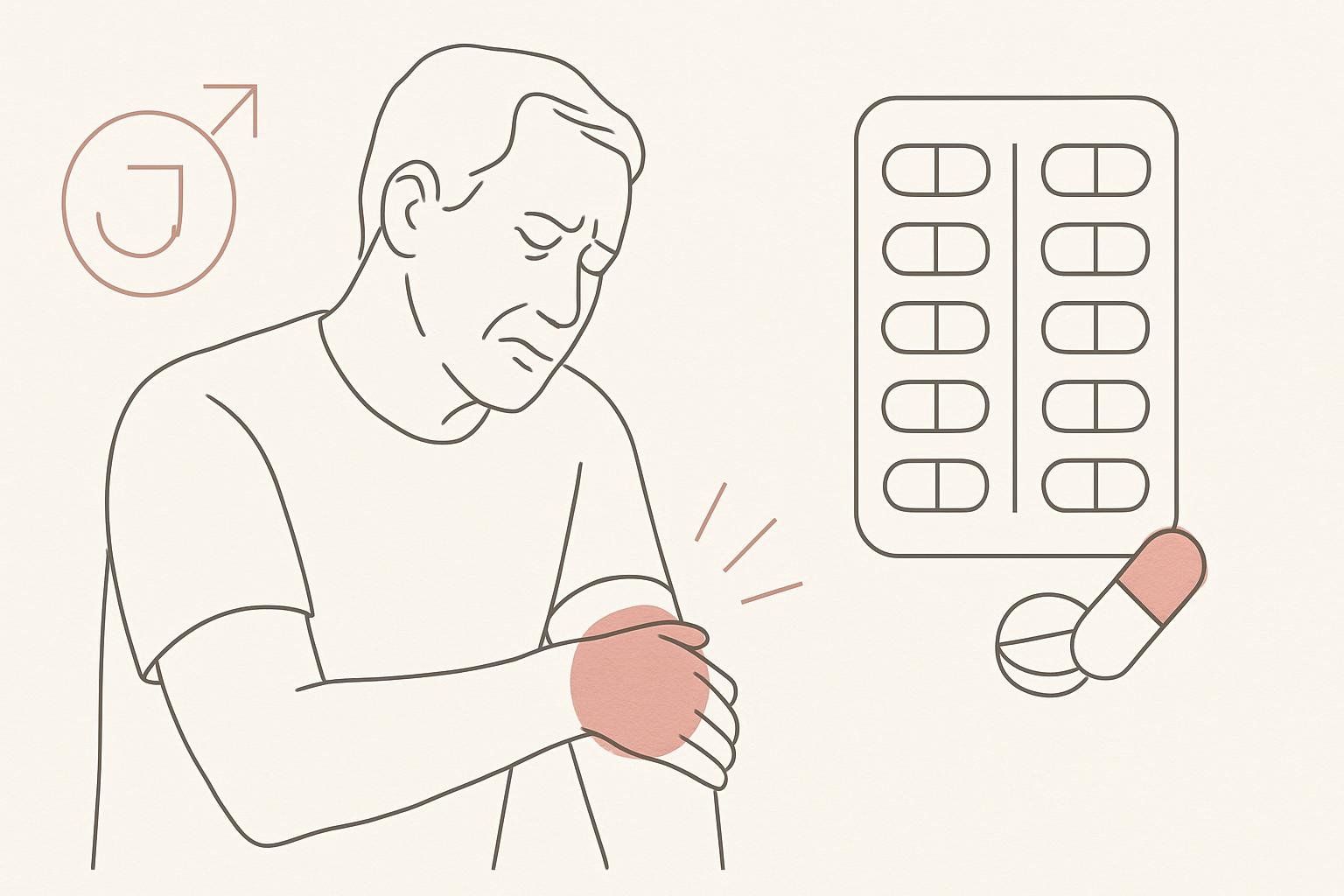
- Pain, redness, or swelling in your arm or leg
- Dark urine or pale stools, nausea, vomiting, loss of appetite, stomach pain, yellow skin or eyes
- Changes in how much or how often you urinate, trouble urinating
Warnings
- Tell your doctor if you have kidney disease, liver disease, heart disease, lung disease, blood clotting problems, diabetes, an enlarged prostate, high cholesterol, sleep apnea, or a history of heart attack or stroke.
- This medicine may cause the following problems:Increased risk of prostate cancerBlood clot in your leg or lungPossible increased risk of heart attack or strokeLower sperm countLiver problems
- Your doctor will do lab tests at regular visits to check on the effects of this medicine. Keep all appointments.
- Keep all medicine out of the reach of children. Never share your medicine with anyone.
- Tell any doctor or dentist who treats you that you are using this medicine. This medicine may affect certain medical test results.
Prescription savings · · · ·
What is Testosterone ?
Testosterone is a steroid hormone primarily synthesized in male testes and female ovaries, playing key roles in both sexes. It regulates and promotes the development of secondary sexual characteristics, such as muscle and bone mass, and it is also involved in maintaining sexual function, mood, and overall physical health. In medical settings, synthetic testosterone is prescribed for conditions including hypogonadism and certain types of breast cancer, as well as to support gender affirming therapy.- Pain, redness, or swelling in your arm or leg
- Dark urine or pale stools, nausea, vomiting, loss of appetite, stomach pain, yellow skin or eyes
- Changes in how much or how often you urinate, trouble urinating
- Allergic reaction: Itching or hives, swelling in your face or hands, swelling or tingling in your mouth or throat, chest tightness, trouble breathing
- Chest pain that may spread, trouble breathing, coughing up blood, unusual sweating, faintness
- Swelling in your hands, ankles, or feet
- Tell your doctor if you have kidney disease, liver disease, heart disease, lung disease, blood clotting problems, diabetes, an enlarged prostate, high cholesterol, sleep apnea, or a history of heart attack or stroke.
- This medicine may cause the following problems:Increased risk of prostate cancerBlood clot in your leg or lungPossible increased risk of heart attack or strokeLower sperm countLiver problems
- Your doctor will do lab tests at regular visits to check on the effects of this medicine. Keep all appointments.
- Keep all medicine out of the reach of children. Never share your medicine with anyone.
- Tell any doctor or dentist who treats you that you are using this medicine. This medicine may affect certain medical test results.
- This medicine can be habit-forming. Do not use more than your prescribed dose. Call your doctor if you think your medicine is not working.
Testosterone Coupons & Prices
Testosterone 75GM of 1.62%

4 ED medications in one dose
Sildenafil, tadalafil, apomorphine & L-Citrulline · Works in ~15 min · Lasts up to 36 hours
Testosterone prices by dosage
Lowest cash price with a free Rx.com coupon vs. the average retail price.
| Dosage | Quantity | Retail price | Rx.com price |
|---|---|---|---|
| 75gm of 1.62% · Pump Btl | 75 | $1,366.44 | $39.08 |
| 75gm of 20.25 mg/act(1.62%) · Pump Btl | 75 | $398.99 | $39.08 |
| 75gm of 12.5 mg/act(1%) · Pump Btl | 75 | $239.99 | $63.57 |
| 90ml of 30mg/act · Pump Btl | 90 | $595.95 | $79.01 |
Cash prices near ZIP 77433; updated regularly. Actual pharmacy price may vary.
Looking for a testosterone coupon? Testosterone is available as a lower-cost generic and is also sold under brand names such as AndroGel, Depo-Testosterone, Xyosted, and Jatenzo. Because it is prescribed in several forms, the cash price can vary widely from one pharmacy to the next. Rx.com compares testosterone prices across more than 60,000 pharmacies so you can find today's lowest price near you. Enter your ZIP above to see the current price and print or show your free Rx.com discount coupon at the pharmacy counter.
What is testosterone and how does it work?
Testosterone is an androgen, the main male sex hormone, used as testosterone replacement therapy (TRT). It is FDA-approved for adult men who have low or absent natural testosterone caused by a medical condition, including primary hypogonadism (testicular failure that is present at birth or develops later) and hypogonadotropic (secondary) hypogonadism caused by problems of the pituitary gland or hypothalamus. TRT restores testosterone to a normal range, which can help with symptoms tied to a diagnosed deficiency.
It comes in several forms so treatment can be tailored to the patient. The most established options are topical gels applied to the skin, injections given into muscle or under the skin, and oral capsules taken by mouth; long-acting implantable pellets are also used. Testosterone is not approved for boosting athletic performance, and it is not approved for men whose testosterone is low due to aging alone. Your provider decides whether TRT is appropriate and which form fits you best.
Testosterone cost and how to save without insurance
Testosterone is available as a generic, which usually keeps its price well below the brand versions. Even so, what you pay in cash can differ a lot depending on the form you are prescribed (gel versus injection versus capsule), the strength, and which pharmacy you use. That is exactly why comparing pharmacies matters. Rx.com checks prices across 60,000+ pharmacies and shows you a free discount coupon you can use whether or not you have insurance. Enter your ZIP above to see today's price near you.
If your provider prescribes a specific brand such as AndroGel, the manufacturer may offer its own savings and support program on its official website; eligibility and terms vary, and manufacturer programs typically exclude people with government insurance. An Rx.com discount coupon is a separate cash-price option and cannot be combined with insurance, but it is often a simple way to lower the counter price on the generic.
Brands, forms, and related medications
Generic testosterone is the active ingredient in several brand products. Examples currently marketed in the US include AndroGel (a topical gel), Depo-Testosterone and Xyosted (injections), and Jatenzo (an oral capsule). Availability of individual products can change over time, so ask your pharmacy what is on hand.
Testosterone is also commonly prescribed as a specific injectable ester. Two of the most common are testosterone cypionate and testosterone enanthate. For some men who want to preserve fertility, providers may discuss non-testosterone options such as clomiphene instead of TRT. Because prices differ across these products and forms, it is worth comparing your exact prescription on Rx.com.
Safety, warnings, and what to discuss with your provider
Testosterone is a Schedule III (C-III) controlled substance because it can be misused. The one boxed warning that still applies to any testosterone product is a secondary-exposure warning on the topical gels (such as AndroGel): testosterone can transfer to others through skin contact and cause virilization in children and women, so keep the application site covered and wash your hands after applying. This warning does not apply to injections or oral capsules. In February 2025, after the large TRAVERSE trial found no increase in major heart problems, the FDA removed the cardiovascular boxed warning from all testosterone products. During 2025 the FDA also removed the separate blood-pressure boxed warnings that certain products had carried, including the oral capsules and the Xyosted injection. As of 2026, no testosterone product carries a boxed warning about blood pressure or cardiovascular risk; increased blood pressure now appears in the Warnings and Precautions section of the labeling. Testosterone can still raise blood pressure, so your provider may check it, and these products are not recommended if you have uncontrolled high blood pressure. Misuse of testosterone or other anabolic steroids can cause serious heart, mental-health, and withdrawal problems.
Other possible risks include worsening of an enlarged prostate (BPH), a rise in red blood cell count (polycythemia), blood clots, fluid retention or worsening heart failure, worse sleep apnea, breast enlargement, and reduced sperm production and fertility; oral forms may affect the liver. Providers usually monitor testosterone level, hematocrit, PSA, and lipids. Testosterone should not be used by men with breast cancer or known or suspected prostate cancer, or during pregnancy. This is general information, not medical advice; talk with your provider about whether TRT is right for you and what monitoring you need.
This Testosterone information was written and reviewed against authoritative U.S. medical sources — MedlinePlus (U.S. National Library of Medicine), DailyMed, and FDA prescribing information — and checked for accuracy. It is provided for education and is not a substitute for professional medical advice.
Verify the official label: Testosterone on DailyMed (FDA)
Reviewed against FDA labeling · Last reviewed July 2026


Related Drugs
Browse more medications: starting with T · full A-Z directory · by condition · common drugs
Medical disclaimer: This information is provided for general educational purposes only and is not medical advice. It is not a substitute for professional diagnosis or treatment. Always consult a licensed physician, pharmacist, or other qualified healthcare provider before starting, stopping, or changing any medication or treatment. Never disregard professional medical advice or delay seeking it because of something you read here. If you think you may have a medical emergency, call your doctor or 911 immediately.


