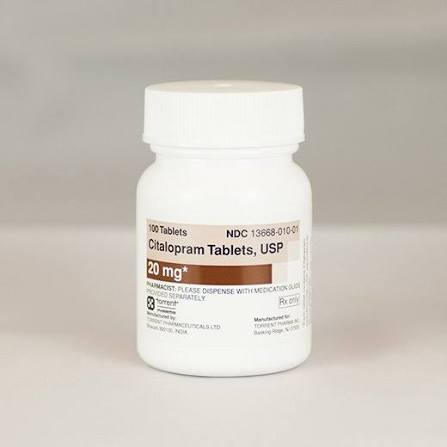
Citalopram Hydrobromide
Citalopram Hydrobromide 20MG
What is Citalopram Hydrobromide?
Citalopram Hydrobromide (Celexa) is a prescription antidepressant used to treat major depressive disorder (MDD) and improve symptoms such as persistent sadness, loss of interest, low energy, and changes in sleep or appetite. As a selective serotonin reuptake inhibitor (SSRI), it helps restore the balance of serotonin in the brain to support improved mood and emotional well-being.
Side Effects
- Unusual bleeding or bruising
- Confusion, weakness, and muscle twitching
- Allergic reaction: Itching or hives, swelling in your face or hands, swelling or tingling in your mouth or throat, chest tightness, trouble breathing
Warnings
- Tell your doctor if you are pregnant or breastfeeding, or if you have kidney disease, liver disease, bleeding problems, glaucoma, electrolyte imbalance, heart problems, or a seizure disorder. Tell your doctor if you or anyone in your family has a bipolar disorder, heart rhythm problem (including QT prolongation or a slow heartbeat), or a recent heart attack.
- For some children, teenagers, and young adults, this medicine may increase mental or emotional problems. This may lead to thoughts of suicide and violence. Talk with your doctor right away if you have any thoughts or behavior changes that concern you. Tell your doctor if you or anyone in your family has a history of bipolar disorder or suicide attempts.
- This medicine may cause the following problems: Heart rhythm problemsSerotonin syndrome (may be life threatening when used with certain other medicines)Increased risk of bleeding problemsSlow growth in childrenSexual problems
- This medicine may make you dizzy or drowsy. Do not drive or do anything that could be dangerous until you know how this medicine affects you.
- Do not stop using this medicine suddenly. Your doctor will need to slowly decrease your dose before you stop it completely.
Prescription savings · · · ·
What is Citalopram Hydrobromide ?
Citalopram Hydrobromide (Celexa) is a prescription antidepressant used to treat major depressive disorder (MDD) and improve symptoms such as persistent sadness, loss of interest, low energy, and changes in sleep or appetite. As a selective serotonin reuptake inhibitor (SSRI), it helps restore the balance of serotonin in the brain to support improved mood and emotional well-being.
- Unusual bleeding or bruising
- Confusion, weakness, and muscle twitching
- Allergic reaction: Itching or hives, swelling in your face or hands, swelling or tingling in your mouth or throat, chest tightness, trouble breathing
- Anxiety, restlessness, fever, sweating, muscle spasms, nausea, vomiting, diarrhea, seeing or hearing things that are not there
- Chest pain, trouble breathing
- Lightheadedness, dizziness, fainting
- Eye pain, vision changes, seeing halos around lights
- Fast, pounding, or uneven heartbeat
- Loss in sexual ability, desire, drive, or performance, delayed or inability to have an orgasm, inability to have or keep an erection
- Thoughts of hurting yourself or others, unusual mood or behavior
- Feeling more excited or energetic than usual, trouble sleeping, racing thoughts
- Painful, prolonged erection of your penis
- Tell your doctor if you are pregnant or breastfeeding, or if you have kidney disease, liver disease, bleeding problems, glaucoma, electrolyte imbalance, heart problems, or a seizure disorder. Tell your doctor if you or anyone in your family has a bipolar disorder, heart rhythm problem (including QT prolongation or a slow heartbeat), or a recent heart attack.
- For some children, teenagers, and young adults, this medicine may increase mental or emotional problems. This may lead to thoughts of suicide and violence. Talk with your doctor right away if you have any thoughts or behavior changes that concern you. Tell your doctor if you or anyone in your family has a history of bipolar disorder or suicide attempts.
- This medicine may cause the following problems: Heart rhythm problemsSerotonin syndrome (may be life threatening when used with certain other medicines)Increased risk of bleeding problemsSlow growth in childrenSexual problems
- This medicine may make you dizzy or drowsy. Do not drive or do anything that could be dangerous until you know how this medicine affects you.
- Do not stop using this medicine suddenly. Your doctor will need to slowly decrease your dose before you stop it completely.
- Your doctor will do lab tests at regular visits to check on the effects of this medicine. Keep all appointments.
- Keep all medicine out of the reach of children. Never share your medicine with anyone.
- Keep all medicine out of the reach of children. Never share your medicine with anyone.
- Thoughts of hurting yourself or others, unusual behavior
- Unusual bleeding or bruising
Citalopram Hydrobromide Coupons & Prices
Citalopram Hydrobromide 20MG

4 ED medications in one dose
Sildenafil, tadalafil, apomorphine & L-Citrulline · Works in ~15 min · Lasts up to 36 hours
Citalopram Hydrobromide prices by dosage
Lowest cash price with a free Rx.com coupon vs. the average retail price.
| Dosage | Quantity | Retail price | Rx.com price |
|---|---|---|---|
| 10mg · Tablet | 30 | $25.69 | $7.80 |
| 20mg · Tablet | 30 | $43.99 | $9.00 |
| 40mg · Tablet | 30 | — | $9.00 |
Cash prices near ZIP 77433; updated regularly. Actual pharmacy price may vary.
Looking for a citalopram hydrobromide coupon? Citalopram is the low-cost generic version of Celexa, a widely prescribed SSRI antidepressant, and it is available as an FDA-approved generic. Even so, the cash price for the exact same tablet can vary widely from one pharmacy to the next, which is why comparing before you fill matters. Rx.com checks prices across more than 60,000 pharmacies so you can find a discounted cash price near you. Enter your ZIP above to see today's price on citalopram hydrobromide.
What is citalopram hydrobromide and how does it work?
Citalopram (sold under the brand name Celexa) is a selective serotonin reuptake inhibitor, or SSRI. It is FDA-approved to treat major depressive disorder (MDD) in adults. SSRIs are thought to work by increasing the amount of serotonin, a natural chemical messenger, available in the brain, which can help improve mood over time.
Citalopram is also very commonly prescribed off-label for other conditions, including anxiety disorders, obsessive-compulsive disorder, PTSD, premenstrual dysphoric disorder, and hot flashes. Whether citalopram is appropriate for you is a decision to make with your prescriber; this page is general information, not medical advice.
Citalopram cost without insurance and how to save
Because citalopram is available as an FDA-approved generic, it is already one of the more affordable antidepressants, and there is no brand manufacturer copay card needed to keep the cost down. The catch is that cash prices are not the same everywhere. Two pharmacies on the same street can charge very different amounts for an identical 30-day supply, so it pays to compare rather than assume your usual pharmacy has the best price.
With an Rx.com discount, you can pay the lower cash price instead of an inflated one, whether or not you have insurance. Enter your ZIP above to see today's price on citalopram hydrobromide at pharmacies near you, then show the coupon at the counter.
Citalopram vs. related antidepressants
Citalopram is closely related to escitalopram (brand Lexapro), which is a refined version of the same molecule. Other commonly prescribed SSRIs include sertraline and fluoxetine. These medicines are similar in how they work but differ in dosing, drug interactions, and side effects, so the right choice depends on your history and your prescriber's judgment.
If you have been prescribed the brand, compare it against the generic: citalopram is the substitutable generic of Celexa and usually costs far less for the same active ingredient. Use the ZIP search above to compare prices across these options.
Important safety information
Citalopram carries a boxed warning for an increased risk of suicidal thoughts and behaviors in children, adolescents, and young adults up to age 24, especially when starting treatment or changing the dose; it is not approved for use in children. Citalopram can also cause dose-dependent QT-interval prolongation (a heart-rhythm effect), so the maximum recommended dose is 40 mg per day, and lower for adults over 60, those with liver problems, certain slow metabolizers, or people taking cimetidine. It should be avoided in congenital long QT syndrome.
Other risks include serotonin syndrome (do not combine with MAOIs, which are contraindicated, or other serotonergic drugs without medical guidance), low sodium levels, increased bleeding risk (especially with NSAIDs or blood thinners), and discontinuation symptoms if stopped abruptly. Do not stop citalopram on your own; talk with your provider or pharmacist about any concerns.
This Citalopram Hydrobromide information was written and reviewed against authoritative U.S. medical sources — MedlinePlus (U.S. National Library of Medicine), DailyMed, and FDA prescribing information — and checked for accuracy. It is provided for education and is not a substitute for professional medical advice.
Verify the official label: Citalopram Hydrobromide on DailyMed (FDA)
Reviewed against FDA labeling · Last reviewed July 2026
Related Drugs
Browse more medications: starting with C · full A-Z directory · by condition · common drugs
Medical disclaimer: This information is provided for general educational purposes only and is not medical advice. It is not a substitute for professional diagnosis or treatment. Always consult a licensed physician, pharmacist, or other qualified healthcare provider before starting, stopping, or changing any medication or treatment. Never disregard professional medical advice or delay seeking it because of something you read here. If you think you may have a medical emergency, call your doctor or 911 immediately.


