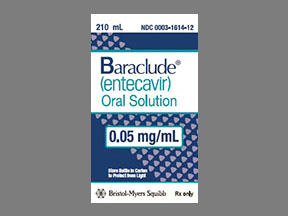
Baraclude
Baraclude 210ML of 0.05MG/ML
What is Baraclude?
Entecavir is an antiviral medication primarily used to treat chronic hepatitis B virus (HBV) infection. It works by inhibiting the reverse transcriptase enzyme, which is essential for the replication of the virus, thereby reducing viral load and liver damage. Entecavir is typically administered orally and is well-tolerated, with a safety profile that makes it suitable for long-term use in managing HBV.Side Effects
- Headache
- Fatigue
- Nausea
Warnings
- May cause lactic acidosis, a rare but serious condition.
- Hepatomegaly with steatosis, which can be fatal, may occur.
- Monitor liver function regularly.
- Do not discontinue abruptly as it may lead to a severe worsening of hepatitis B.
- Use with caution in patients with renal impairment.
Prescription savings · · · ·
What is Baraclude ?
Entecavir is an antiviral medication primarily used to treat chronic hepatitis B virus (HBV) infection. It works by inhibiting the reverse transcriptase enzyme, which is essential for the replication of the virus, thereby reducing viral load and liver damage. Entecavir is typically administered orally and is well-tolerated, with a safety profile that makes it suitable for long-term use in managing HBV.- Headache
- Fatigue
- Nausea
- Dizziness
- Upset stomach
- Drowsiness
- Trouble sleeping
- May cause lactic acidosis, a rare but serious condition.
- Hepatomegaly with steatosis, which can be fatal, may occur.
- Monitor liver function regularly.
- Do not discontinue abruptly as it may lead to a severe worsening of hepatitis B.
- Use with caution in patients with renal impairment.
- Consult a healthcare provider if pregnant or breastfeeding.
- Be aware of potential drug interactions with other medications.
Baraclude Coupons & Prices
Baraclude 210ML of 0.05MG/ML
4 ED medications in one dose
Sildenafil, tadalafil, apomorphine & L-Citrulline · Works in ~15 min · Lasts up to 36 hours
Baraclude prices by dosage
Lowest cash price with a free Rx.com coupon vs. the average retail price.
| Dosage | Quantity | Retail price | Rx.com price |
|---|---|---|---|
| 210ml of 0.05mg/ml · Bottle | 210 | — | $944.58 |
Cash prices near ZIP 77433; updated regularly. Actual pharmacy price may vary.
Related Drugs
Browse more medications: starting with B · full A-Z directory · by condition · common drugs
Medical disclaimer: This information is provided for general educational purposes only and is not medical advice. It is not a substitute for professional diagnosis or treatment. Always consult a licensed physician, pharmacist, or other qualified healthcare provider before starting, stopping, or changing any medication or treatment. Never disregard professional medical advice or delay seeking it because of something you read here. If you think you may have a medical emergency, call your doctor or 911 immediately.


