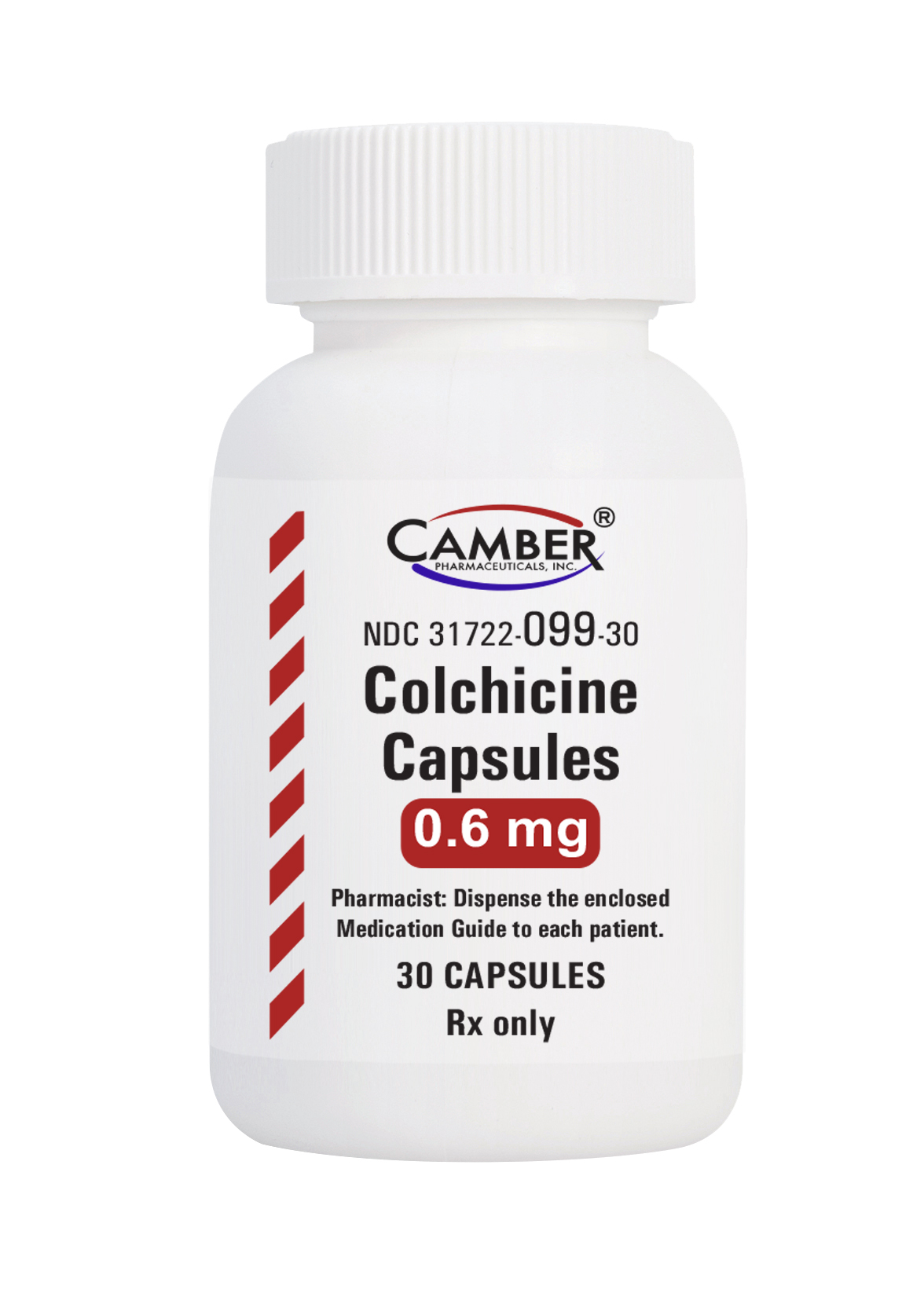
Colchicine
Colchicine
¿Qué es Colchicine?
Mitigare se usa para prevenir y tratar los brotes de gota. La colchicina es la versión genérica. En promedio, el precio de Mitigare es de aproximadamente $235 por un suministro de 30 cápsulas de 0.6 mg. Afortunadamente, puedes utilizar nuestra oferta de ahorro de Rx.com para recibir un descuento de hasta el 80% sobre el precio de venta al público en farmacias participantes cerca de ti.Side Effects
- Allergic reaction: Itching or hives, swelling in your face or hands, swelling or tingling in your mouth or throat, chest tightness, trouble breathing
- Unusual bleeding, bruising, or weakness
- Bloody or black tarry stools, red or dark brown urine
Warnings
- This medicine may make you bleed, bruise, or get infections more easily. Take precautions to prevent illness and injury. Wash your hands often.
- Talk with your doctor before using this medicine if you plan to have children. Some men who use this medicine have become infertile (unable to have children).
- Your doctor will do lab tests at regular visits to check on the effects of this medicine. Keep all appointments.
- Tell your doctor if you are pregnant or breastfeeding, or if you have kidney disease, liver disease, anemia, bleeding problems, or muscle problems.
- This medicine may cause severe muscle problems.
Prescription savings · ·
¿Qué es Colchicine ?
Mitigare se usa para prevenir y tratar los brotes de gota. La colchicina es la versión genérica. En promedio, el precio de Mitigare es de aproximadamente $235 por un suministro de 30 cápsulas de 0.6 mg. Afortunadamente, puedes utilizar nuestra oferta de ahorro de Rx.com para recibir un descuento de hasta el 80% sobre el precio de venta al público en farmacias participantes cerca de ti.Colchicine Cupones y Precios - Rx.com
Colchicine

4 ED medications in one dose
Apomorphine, sildenafil, tadalafil & vardenafil · One sublingual dose · Free express shipping
Colchicine prices by dosage
Lowest cash price with a free Rx.com coupon vs. the average retail price.
| Dosis | Cantidad | Retail price | Rx.com price |
|---|---|---|---|
| 0.6mg · Tablet | 30 | $216.99 | $16.82 |
Cash prices near ZIP 77433; updated regularly. Actual pharmacy price may vary.
¿Busca un cupón para colchicine? Colchicine está disponible como genérico de bajo costo, pero el precio en efectivo aún puede variar mucho de una farmacia a otra, por lo que comparar antes de surtir su receta es importante. Rx.com consulta precios en más de 60,000 farmacias para que pueda encontrar el precio en efectivo más bajo cerca de usted, sin necesidad de seguro. Ingrese su código postal arriba para ver el precio de hoy de colchicine en las farmacias a su alrededor.
¿Qué es colchicine y cómo funciona?
Colchicine es un agente antigotoso de la familia de los alcaloides. Actúa como antiinflamatorio inhibiendo los microtúbulos (tubulina), lo que reduce la respuesta inflamatoria que provoca un ataque de gota. Está aprobado por la FDA para prevenir y tratar los brotes agudos de gota en adultos, para tratar la fiebre mediterránea familiar (FMF) en adultos y niños de 4 años en adelante, y (como la marca Lodoco, 0.5 mg una vez al día) para reducir el riesgo de infarto, accidente cerebrovascular, revascularización coronaria y muerte cardiovascular en adultos con enfermedad cardiovascular aterosclerótica establecida o múltiples factores de riesgo cardiovascular.
Es importante saber que colchicine no es un analgésico. No trata el dolor que no esté relacionado con la gota o la FMF. Algunos médicos también lo usan fuera de indicación para afecciones como la pericarditis y la enfermedad de Behcet, pero solo debe tomarlo para lo que su propio proveedor le haya recetado.
Costo de colchicine sin seguro y cómo ahorrar
Colchicine está disponible como genérico, lo que por lo general lo hace mucho más asequible que las versiones de marca (Colcrys, Mitigare, Lodoco y Gloperba). Aun así, los precios en efectivo del mismo genérico pueden variar mucho según la farmacia que use, que es exactamente por lo que vale la pena comparar. No necesita seguro para usar un precio con cupón de Rx.com.
Ingrese su código postal arriba para ver el precio de hoy de colchicine en las farmacias cercanas y elegir el más bajo. Si su proveedor le recetó específicamente la marca Lodoco, el fabricante ofrece recursos para pacientes y cualquier programa de ahorro disponible en su página oficial (lodoco.com/patient-resources); los términos y la elegibilidad varían, así que consulte el sitio del fabricante para conocer los detalles actuales.
Alternativas a colchicine y medicamentos relacionados para la gota
Colchicine es uno de varios medicamentos que se usan en el tratamiento de la gota, y a menudo se usa junto con otros porque cumplen funciones distintas. Colchicine ayuda con los brotes, mientras que los medicamentos que reducen el urato actúan a largo plazo para disminuir los niveles de ácido úrico. Entre las opciones relacionadas que su proveedor puede comentar se incluyen:
- allopurinol y febuxostat - medicamentos diarios que reducen el ácido úrico para ayudar a prevenir futuros brotes
- probenecid - ayuda al cuerpo a eliminar más ácido úrico
- indomethacin - un antiinflamatorio que a veces se usa para el dolor agudo de la gota
Si le recetaron una versión de marca de colchicine, también puede comparar precios de Colcrys, Mitigare y Lodoco. Su proveedor decidirá qué combinación es la adecuada para usted.
Seguridad y efectos secundarios de colchicine
Los efectos secundarios más comunes de colchicine son gastrointestinales: diarrea, náuseas, vómitos y dolor abdominal. Entre los riesgos más graves se incluyen problemas de la sangre (como recuentos sanguíneos bajos y, en raras ocasiones, anemia aplásica) y toxicidad muscular o nerviosa (incluidas la miopatía y la rabdomiólisis), que son más probables en personas con insuficiencia renal o hepática o en quienes también toman estatinas o fibratos. Las personas con insuficiencia renal o hepática significativa a menudo necesitan un ajuste de la dosis.
Se han reportado sobredosis mortales tanto en adultos como en niños, por lo que siempre debe mantener colchicine fuera del alcance de los niños. Puede ocurrir toxicidad potencialmente mortal cuando colchicine se combina con ciertas interacciones farmacológicas fuertes (como clarithromycin, ketoconazole, ritonavir o cyclosporine); estas combinaciones pueden estar contraindicadas o requerir una reducción de la dosis. Esta es información general, no consejo médico - hable con su médico o farmacéutico sobre sus otros medicamentos y la dosis adecuada para usted antes de comenzar o cambiar colchicine.
La información sobre Colchicine fue redactada y revisada con base en fuentes médicas autorizadas de EE. UU. (MedlinePlus, de la Biblioteca Nacional de Medicina de EE. UU.; DailyMed; y la información de prescripción de la FDA) y verificada para asegurar su precisión. Se ofrece con fines educativos y no sustituye el consejo médico profesional.
Consulte la etiqueta oficial: Colchicine en DailyMed (FDA)
Revisado con base en el etiquetado de la FDA · Última revisión: julio de 2026
Medicamentos Relacionados
Browse more medications: starting with C · full A-Z directory · by condition · common drugs
Medical disclaimer: This information is provided for general educational purposes only and is not medical advice. It is not a substitute for professional diagnosis or treatment. Always consult a licensed physician, pharmacist, or other qualified healthcare provider before starting, stopping, or changing any medication or treatment. Never disregard professional medical advice or delay seeking it because of something you read here. If you think you may have a medical emergency, call your doctor or 911 immediately.


