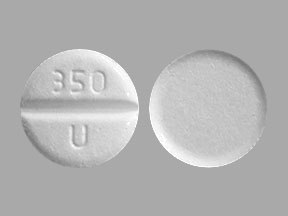
Allopurinol
Allopurinol 100MG
What is Allopurinol?
Allopurinol is a medication used to treat gout, a type of arthritis caused by high levels of uric acid in the body. It is also used for managing high uric acid levels in cancer patients and preventing kidney stones.Side Effects
- Pain when you urinate, cloudy or bloody urine, change in how much or how often you urinate
- Unusual bleeding, bruising, or weakness
- Dark urine or pale stools, loss of appetite, stomach pain, nausea, vomiting, yellow skin or eyes
Warnings
- Keep all medicine out of the reach of children. Never share your medicine with anyone.
- Your doctor will do lab tests at regular visits to check on the effects of this medicine. Keep all appointments.
- This medicine may make you drowsy, dizzy, or less alert. Do not drive or do anything else that could be dangerous until you know how this medicine affects you.
- Gout flares may occur after you start taking this medicine. Do not stop taking this medicine even if you have a gout flare. Your doctor may give you medicines to reduce and prevent worsening of gout.
- This medicine may cause the following:Liver problemsKidney problemsSerious skin reactions, including Stevens-Johnson syndrome, toxic epidermal necrolysis, and drug reaction with eosinophilia and systemic symptoms (DRESS)
Prescription savings · · · ·
What is Allopurinol ?
Allopurinol is a medication used to treat gout, a type of arthritis caused by high levels of uric acid in the body. It is also used for managing high uric acid levels in cancer patients and preventing kidney stones.- Pain when you urinate, cloudy or bloody urine, change in how much or how often you urinate
- Unusual bleeding, bruising, or weakness
- Dark urine or pale stools, loss of appetite, stomach pain, nausea, vomiting, yellow skin or eyes
- Yellow skin or eyes
- Blistering, peeling, red skin rash
- Allergic reaction: Itching or hives, swelling in your face or hands, swelling or tingling in your mouth or throat, chest tightness, trouble breathing
- Keep all medicine out of the reach of children. Never share your medicine with anyone.
- Your doctor will do lab tests at regular visits to check on the effects of this medicine. Keep all appointments.
- This medicine may make you drowsy, dizzy, or less alert. Do not drive or do anything else that could be dangerous until you know how this medicine affects you.
- Gout flares may occur after you start taking this medicine. Do not stop taking this medicine even if you have a gout flare. Your doctor may give you medicines to reduce and prevent worsening of gout.
- This medicine may cause the following:Liver problemsKidney problemsSerious skin reactions, including Stevens-Johnson syndrome, toxic epidermal necrolysis, and drug reaction with eosinophilia and systemic symptoms (DRESS)
- This medicine may make you bleed, bruise, or get infections more easily. Take precautions to prevent illness and injury. Wash your hands often.
- Tell your doctor if you are pregnant or breastfeeding, or if you have kidney disease, liver disease, diabetes, high blood pressure, heart failure, seizures, or cancer (including multiple myeloma).
Allopurinol Coupons & Prices
Allopurinol 100MG

4 ED medications in one dose
Apomorphine, sildenafil, tadalafil & vardenafil · One sublingual dose · Free express shipping
Allopurinol prices by dosage
Lowest cash price with a free Rx.com coupon vs. the average retail price.
| Dosage | Quantity | Retail price | Rx.com price |
|---|---|---|---|
| 100mg · Tablet | 90 | $19.79 | $10.55 |
| 200mg · Tablet | 30 | $110.55 | $61.16 |
| 300mg · Tablet | 45 | $14.99 | $11.24 |
Cash prices near ZIP 77433; updated regularly. Actual pharmacy price may vary.
Looking for an allopurinol coupon? Allopurinol is the long-standing generic tablet used to lower uric acid and prevent gout attacks. What surprises most people is how much the cash price can swing from one pharmacy to the next for the exact same tablet, which is why comparing before you fill is worth the two minutes. Rx.com compares cash prices at more than 60,000 pharmacies nationwide and gives you a free discount coupon you can hand to the pharmacist. Enter your ZIP above to see today's price for your dose and quantity near you.
What is allopurinol and how does it work?
Allopurinol is a xanthine oxidase inhibitor, also called a urate-lowering or antihyperuricemic medicine. Your body makes uric acid as it breaks down certain substances, and an enzyme called xanthine oxidase is one of the last steps in that process. Allopurinol blocks that enzyme, so your body produces less uric acid. Over weeks and months, lower uric acid levels mean fewer gout attacks and a chance for tophi (uric acid deposits under the skin) to shrink. It is sold as a generic tablet, with Zyloprim as the reference brand name.
For the tablets, the FDA-approved uses are: managing the signs and symptoms of primary or secondary gout, meaning acute attacks, tophi, joint destruction, uric acid stones and kidney involvement; managing patients with leukemia, lymphoma or other malignancies whose cancer therapy raises serum and urinary uric acid levels; and managing people with recurrent calcium oxalate kidney stones who excrete unusually large amounts of uric acid each day. Allopurinol is not intended for people who simply have a high uric acid number with no symptoms, and it is not a rescue medicine for a flare that is happening right now.
There is also an intravenous form, Aloprim (allopurinol sodium) for injection, but its approved use is much narrower than the tablets. It is indicated only for adults and children with leukemia, lymphoma or solid tumor malignancies who are receiving cancer therapy that raises uric acid levels and who cannot tolerate oral therapy. It is not an IV substitute for gout treatment, and this coupon page is for the oral tablets.
Allopurinol cost and coupons without insurance
Allopurinol is an old generic with many manufacturers, and there is no manufacturer savings card for it. What people often do not realize is that the cash price for the same strength and quantity is set independently by each pharmacy chain, so what you pay can depend a great deal on where you fill. Prices vary by pharmacy and by ZIP code, which matters when you are refilling every month for years. Compare before you fill rather than assuming any one pharmacy is cheapest.
- Rx.com compares cash prices at 60,000+ pharmacies, including the big chains, grocery stores, and independents.
- The Rx.com coupon is free, requires no insurance and no membership, and you simply show it at the counter.
- Ask for the 90-day supply price as well as the 30-day price. Per-tablet cost is often better on larger fills.
- A discount coupon is a cash price. If you have insurance, compare your copay against the coupon price and use whichever is lower.
Enter your ZIP above to see today's allopurinol price near you.
Allopurinol vs. other gout medications
Allopurinol is usually the first urate-lowering drug clinicians reach for in gout, and it is often used alongside a second medicine rather than instead of one. Your prescriber picks based on your kidney function, other conditions, and how you have responded before.
- Febuxostat (brand Uloric) is the other xanthine oxidase inhibitor, but it is not simply an equivalent alternative. In February 2019 the FDA added a boxed warning to febuxostat for an increased risk of cardiovascular death and death from any cause compared with allopurinol, based on the CARES cardiovascular outcomes trial in gout patients with heart disease. At the same time, the FDA limited febuxostat's approved use to patients who did not respond adequately to allopurinol, cannot tolerate it, or for whom allopurinol is not advisable. Allopurinol carries no boxed warning.
- Probenecid works differently: instead of making less uric acid, it helps the kidneys clear more of it.
- Colchicine, an NSAID such as indomethacin or naproxen, or a steroid such as prednisone treats the inflammation of a flare. Because starting allopurinol can itself set off flares at first, one of these is commonly prescribed at the same time as short-term flare prevention.
Which combination is right for you is a conversation with your clinician, not a decision to make from a price list. Once you have the prescription, though, you can compare the cash price of any of these on Rx.com.
Allopurinol side effects and safety
Allopurinol does not carry an FDA boxed warning, but its label does describe serious risks. The most important is a severe skin or hypersensitivity reaction, including Stevens-Johnson syndrome (SJS), toxic epidermal necrolysis (TEN), and drug reaction with eosinophilia and systemic symptoms (DRESS). The FDA label states that these serious and sometimes fatal dermatologic reactions occur in approximately 5 in 10,000 (0.05%) patients taking allopurinol. Published cohort studies have reported higher and wider-ranging estimates, for example DRESS somewhere between roughly 1 in 1,000 and 1 in 10,000 new users, and about 4.7 per 1,000 new users in one Taiwanese cohort, so treat any single number as an approximation rather than your personal risk. What is well established is that a mild rash is not unusual (studies put it around 2% of users), that severe reactions are rare by comparison but can be fatal, and that allopurinol is one of the most common medication causes of Stevens-Johnson syndrome and toxic epidermal necrolysis. That is why the rule is simple and worth remembering: stop the drug and call your prescriber at the first sign of a rash or any other hypersensitivity symptom. Risk is higher in people who carry the HLA-B*58:01 gene variant, which is more common in people of Han Chinese, Thai, Korean, and African ancestry; rheumatology guidelines recommend considering testing for it before starting in those groups, and it is reasonable to ask your clinician about.
Other risks described in the label include liver injury and elevated liver enzymes (your prescriber may check bloodwork, especially early on), bone marrow suppression, and drowsiness or dizziness, so be careful driving until you know how it affects you. Vasculitis and organ involvement can occur as part of a hypersensitivity reaction. If your kidney function is reduced, you generally need a lower dose. The more common side effects are rash, nausea, diarrhea, elevated liver enzymes, and an increase in gout flares in the first months of treatment.
Tell your pharmacist and prescriber everything you take. Interactions named in the Drug Interactions section of the current allopurinol tablet label include azathioprine and mercaptopurine, whose exposure rises sharply and whose doses must be cut substantially to avoid severe bone marrow suppression; the blood thinners warfarin and dicumarol, whose effect can be increased, so your prescriber may monitor your INR or prothrombin time; theophylline, whose clearance can fall at higher allopurinol doses; ampicillin and amoxicillin, and also bendamustine, which raise the risk of serious rash; thiazide diuretics, which raise hypersensitivity risk especially if your kidneys are impaired; cyclosporine, whose levels can rise; chlorpropamide, which can raise the risk of low blood sugar in kidney impairment; capecitabine and fluorouracil, where allopurinol may reduce the cancer drug's effectiveness; pegloticase, which should not be combined with allopurinol; uricosuric agents; and cyclophosphamide and other cytotoxic drugs, which can worsen bone marrow suppression. Separately, clinical literature that is not part of the FDA label also describes a possible interaction with ACE inhibitors, so that is still worth raising with your pharmacist. Drink plenty of fluids, about eight glasses of water a day, unless your clinician tells you otherwise. If you are pregnant or breastfeeding, discuss it first, since allopurinol passes into breast milk. This page is general information, not medical advice, and it is not a complete list of side effects or interactions. Your prescriber and pharmacist know your history.
This Allopurinol information was written and reviewed against authoritative U.S. medical sources — MedlinePlus (U.S. National Library of Medicine), DailyMed, and FDA prescribing information — and checked for accuracy. It is provided for education and is not a substitute for professional medical advice.
Verify the official label: Allopurinol on DailyMed (FDA)
Reviewed against FDA labeling · Last reviewed July 2026
Related Drugs
Browse more medications: starting with A · full A-Z directory · by condition · common drugs
Medical disclaimer: This information is provided for general educational purposes only and is not medical advice. It is not a substitute for professional diagnosis or treatment. Always consult a licensed physician, pharmacist, or other qualified healthcare provider before starting, stopping, or changing any medication or treatment. Never disregard professional medical advice or delay seeking it because of something you read here. If you think you may have a medical emergency, call your doctor or 911 immediately.


