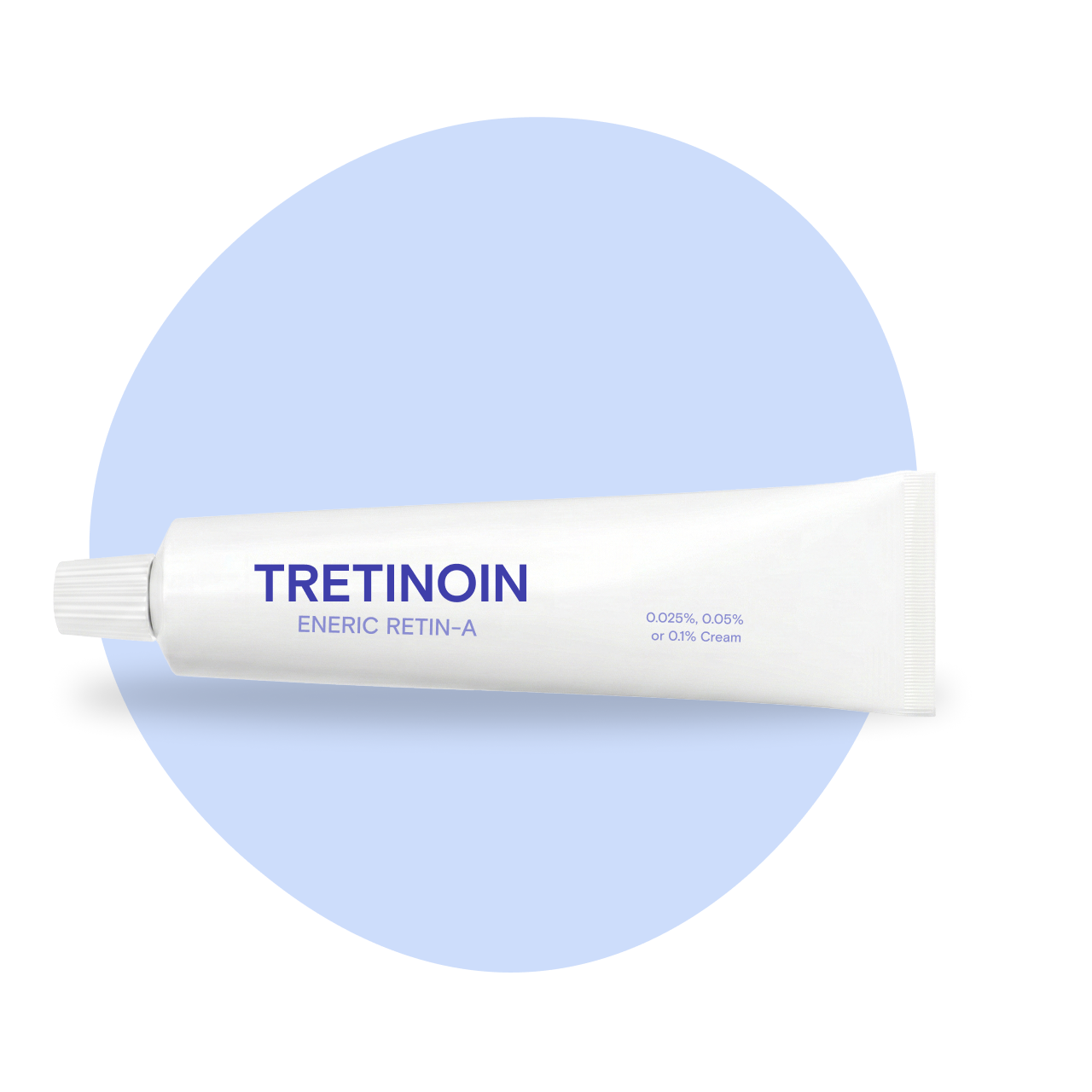
Tretinoin
Tretinoin 45GM of 0.025%
What is Tretinoin?
Tretinoin is a prescription topical retinoid used to treat acne, improve skin texture, reduce fine lines, and address signs of sun damage. Commonly sold under brand names such as Retin-A, Tretinoin helps increase skin cell turnover, unclog pores, and promote smoother, healthier-looking skin. Learn about Tretinoin uses, dosage, side effects, anti-aging benefits, and prescription treatment options.
Side Effects
- Allergic reaction: Itching or hives, swelling in your face or hands, swelling or tingling in your mouth or throat, chest tightness, trouble breathing
- Severe or ongoing skin redness, peeling, itching, blistering, crusting, or swelling
- Skin warmth, stinging, or burning that continues or gets worse
Warnings
- Keep all medicine out of the reach of children. Never share your medicine with anyone.
- Your doctor will check your progress and the effects of this medicine at regular visits. Keep all appointments. During the first 3 to 6 weeks of using this medicine, your acne may seem to get worse. This means the medicine is working, and it is important that you keep using it.
- This medicine may make your skin more sensitive to sunlight, wind, and cold weather. Use a sunscreen when you are outdoors. Avoid sunlamps and tanning beds. You may need to wear protective clothing, including long sleeves and a hat.
- The gel form of this medicine is flammable. Do not smoke while you are using this medicine. Always keep it away from fire, flames, or high heat.
- Topical application routeDo not use this medicine to treat a skin problem your doctor has not examined.
Prescription savings · · · ·
What is Tretinoin ?
Tretinoin is a prescription topical retinoid used to treat acne, improve skin texture, reduce fine lines, and address signs of sun damage. Commonly sold under brand names such as Retin-A, Tretinoin helps increase skin cell turnover, unclog pores, and promote smoother, healthier-looking skin. Learn about Tretinoin uses, dosage, side effects, anti-aging benefits, and prescription treatment options.
- Allergic reaction: Itching or hives, swelling in your face or hands, swelling or tingling in your mouth or throat, chest tightness, trouble breathing
- Severe or ongoing skin redness, peeling, itching, blistering, crusting, or swelling
- Skin warmth, stinging, or burning that continues or gets worse
- Keep all medicine out of the reach of children. Never share your medicine with anyone.
- Your doctor will check your progress and the effects of this medicine at regular visits. Keep all appointments. During the first 3 to 6 weeks of using this medicine, your acne may seem to get worse. This means the medicine is working, and it is important that you keep using it.
- This medicine may make your skin more sensitive to sunlight, wind, and cold weather. Use a sunscreen when you are outdoors. Avoid sunlamps and tanning beds. You may need to wear protective clothing, including long sleeves and a hat.
- The gel form of this medicine is flammable. Do not smoke while you are using this medicine. Always keep it away from fire, flames, or high heat.
- Topical application routeDo not use this medicine to treat a skin problem your doctor has not examined.
- Tell your doctor if you are pregnant or breastfeeding, or if you have a fish allergy, eczema, sunburn, or other skin problems.
Tretinoin Coupons & Prices
Tretinoin 45GM of 0.025%
4 ED medications in one dose
Sildenafil, tadalafil, apomorphine & L-Citrulline · Works in ~15 min · Lasts up to 36 hours
Tretinoin prices by dosage
Lowest cash price with a free Rx.com coupon vs. the average retail price.
| Dosage | Quantity | Retail price | Rx.com price |
|---|---|---|---|
| 20gm of 0.05% · Tube Of Cream | 20 | $32.79 | $24.90 |
| 20gm of 0.025% · Tube Of Cream | 20 | — | $24.90 |
| 20gm of 0.1% · Tube Of Cream | 20 | $35.18 | $26.61 |
| 45gm of 0.025% · Tube Of Cream | 45 | $71.99 | $38.32 |
| 45gm of 0.05% · Tube Of Cream | 45 | $73.59 | $51.14 |
| 45gm of 0.1% · Tube Of Cream | 45 | $80.51 | $48.99 |
Cash prices near ZIP 77433; updated regularly. Actual pharmacy price may vary.
Looking for a tretinoin coupon? Tretinoin is the low-cost generic version of Retin-A and other topical retinoid brands, but the cash price at the pharmacy counter can vary widely from one store to the next. Rx.com compares tretinoin prices across more than 60,000 pharmacies so you can find a lower price near you and use a free discount coupon at checkout. Enter your ZIP above to see today's price.
What is tretinoin and how does it work?
Tretinoin is a topical retinoid, a form of vitamin A, and one of the first-generation retinoids. It is FDA-approved to treat acne vulgaris, and in its emollient (Renova) form it is approved to help reduce the look of fine facial wrinkles, mottled dark spots, and rough texture in sun-damaged skin as part of an overall skin-care and sun-avoidance routine. Tretinoin works by speeding up the turnover of skin cells, which helps unclog pores and smooth skin over time.
Tretinoin is sold under brand names including Retin-A, Retin-A Micro, Altreno, Atralin, Avita, and Renova. The topical product is not a controlled substance. (A separate oral form, Vesanoid, is used only in a specific type of leukemia and is not the same as the skin product covered here.)
Tretinoin cost without insurance and how to save
Generic tretinoin is widely available, which usually keeps its cash price lower than the brand-name versions. Even so, what you pay without insurance can differ a lot depending on which pharmacy you use, so it pays to compare before you fill. Rx.com checks prices across 60,000+ pharmacies and gives you a free coupon you can show at the counter, whether or not you have insurance. Enter your ZIP above to see today's price near you.
If you are prescribed a specific brand such as Altreno, the manufacturer offers its own savings program. You can review the official details at the Altreno savings page; eligibility and terms vary and are set by the manufacturer.
Tretinoin vs. other acne and skin treatments
Tretinoin is one of several topical retinoids and acne treatments. Comparing options with your provider can help you find the right fit for your skin and budget. Related medications you can look up on Rx.com include:
- Retin-A — the brand-name equivalent of tretinoin
- adapalene — another topical retinoid, often used for acne
- tazarotene — a topical retinoid for acne and other skin conditions
- clindamycin — a topical antibiotic sometimes used alongside retinoids for acne
- isotretinoin — an oral retinoid for severe acne
- hydroquinone — used for dark spots and hyperpigmentation
Prices for each vary by pharmacy, so it is worth comparing whichever product your provider prescribes.
Safety and side effects
Tretinoin commonly causes local skin irritation, such as redness, burning or stinging, dryness, peeling, and scaling. Acne may briefly seem worse during the first 7 to 10 days as the skin adjusts. Tretinoin also makes skin more sensitive to sunlight, so limit sun and UV exposure and use sunscreen. Avoid getting it in the eyes, mouth, nostrils, or on broken or sunburned skin, and avoid using harsh products like benzoyl peroxide, salicylic acid, sulfur, or abrasive scrubs at the same time, which can add to irritation.
Topical tretinoin is generally not recommended during pregnancy. This page is general information and not medical advice; talk with your doctor or pharmacist about whether tretinoin is right for you and how to use it safely.
This Tretinoin information was written and reviewed against authoritative U.S. medical sources — MedlinePlus (U.S. National Library of Medicine), DailyMed, and FDA prescribing information — and checked for accuracy. It is provided for education and is not a substitute for professional medical advice.
Verify the official label: Tretinoin on DailyMed (FDA)
Reviewed against FDA labeling · Last reviewed July 2026
Tretinoin — Articles & Guides
8 articles
Related Drugs
Browse more medications: starting with T · full A-Z directory · by condition · common drugs
Medical disclaimer: This information is provided for general educational purposes only and is not medical advice. It is not a substitute for professional diagnosis or treatment. Always consult a licensed physician, pharmacist, or other qualified healthcare provider before starting, stopping, or changing any medication or treatment. Never disregard professional medical advice or delay seeking it because of something you read here. If you think you may have a medical emergency, call your doctor or 911 immediately.


