
Finasteride
Finasteride 1MG
What is Finasteride?
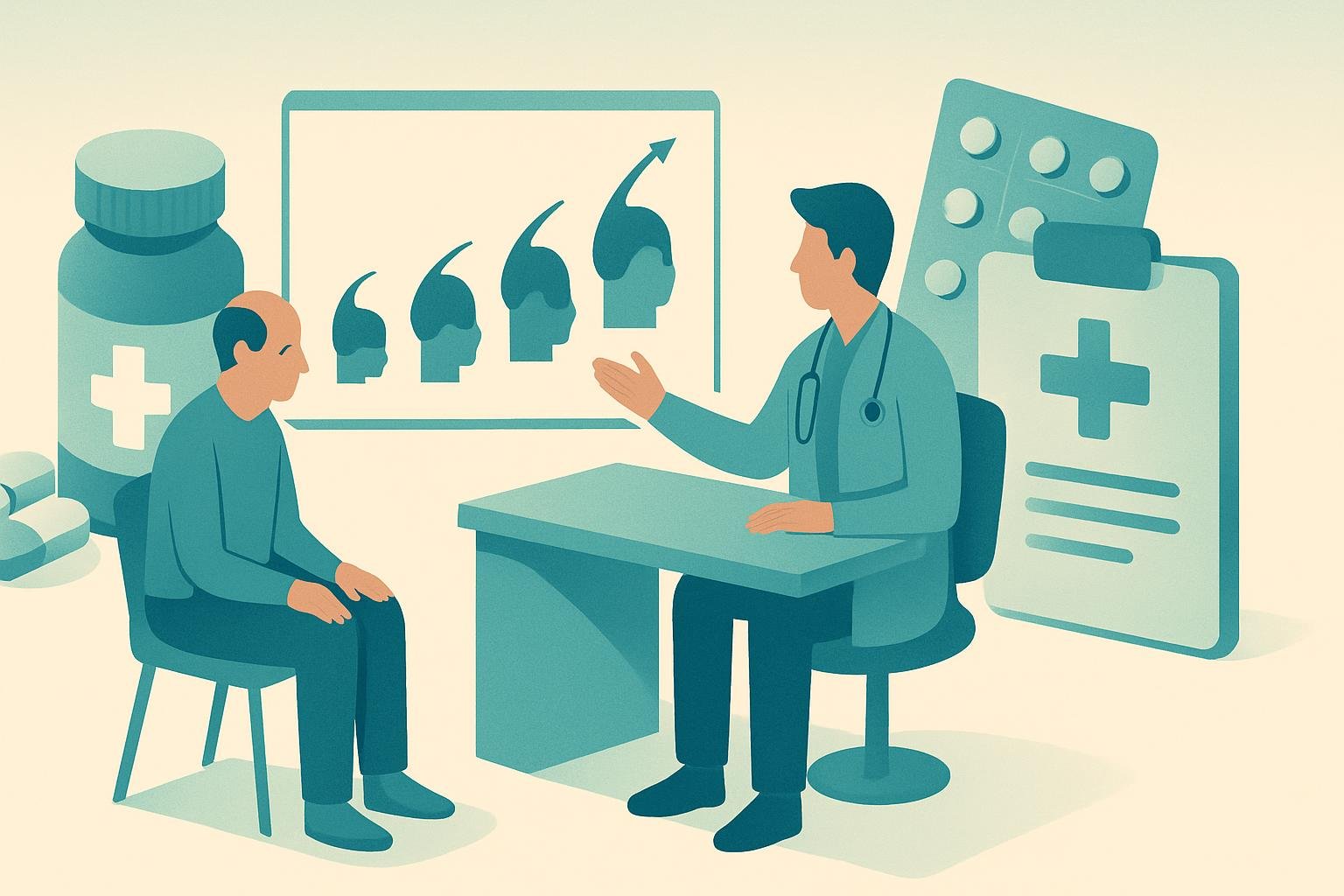
Finasteride is a prescription medication used to treat male pattern hair loss and benign prostatic hyperplasia (BPH), also known as an enlarged prostate. By reducing levels of dihydrotestosterone (DHT), Finasteride may help slow hair loss, promote hair regrowth, and improve urinary symptoms related to prostate enlargement. Learn about Finasteride uses, dosage, side effects, hair loss treatment results, and online prescription options through Rx.com. This is the generic for Propecia.
Side Effects
- Allergic reaction: Itching or hives, swelling in your face or hands, swelling or tingling in your mouth or throat, chest tightness, trouble breathing
- Breast swelling, pain, or tenderness, or lumps, nipple discharge
- Change in how much or how often you urinate
Warnings
- Keep all medicine out of the reach of children. Never share your medicine with anyone.
- This medicine is not for use in women. Women who are pregnant should avoid touching or handling this medicine because it can harm an unborn male baby. If a pregnant woman gets this medicine on her skin, wash the area immediately with soap and water.
- Tell your doctor if you have liver disease.
- This medicine will not cure an enlarged prostate problem or male pattern baldness. Once you stop using this medicine, the prostate will begin to grow again within a few months and any new hair will be lost within 12 months.
- This medicine may increase your risk of high-grade prostate cancer.
Prescription savings · · · ·
What is Finasteride ?
Finasteride is a prescription medication used to treat male pattern hair loss and benign prostatic hyperplasia (BPH), also known as an enlarged prostate. By reducing levels of dihydrotestosterone (DHT), Finasteride may help slow hair loss, promote hair regrowth, and improve urinary symptoms related to prostate enlargement. Learn about Finasteride uses, dosage, side effects, hair loss treatment results, and online prescription options through Rx.com. This is the generic for Propecia.
- Allergic reaction: Itching or hives, swelling in your face or hands, swelling or tingling in your mouth or throat, chest tightness, trouble breathing
- Breast swelling, pain, or tenderness, or lumps, nipple discharge
- Change in how much or how often you urinate
- Lightheadedness, dizziness, or fainting
- Pain in the testicles.
- Swelling in your hands, ankles, or feet.
- Weakness.
- Keep all medicine out of the reach of children. Never share your medicine with anyone.
- This medicine is not for use in women. Women who are pregnant should avoid touching or handling this medicine because it can harm an unborn male baby. If a pregnant woman gets this medicine on her skin, wash the area immediately with soap and water.
- Tell your doctor if you have liver disease.
- This medicine will not cure an enlarged prostate problem or male pattern baldness. Once you stop using this medicine, the prostate will begin to grow again within a few months and any new hair will be lost within 12 months.
- This medicine may increase your risk of high-grade prostate cancer.
- This medicine may affect the results of the prostate specific antigen (PSA) test, which may be used to detect prostate cancer. Make sure you tell all of your doctors that you are using this medicine.
- Some men who use this medicine have become infertile (unable to have children). Talk with your doctor before using this medicine if you plan to have children.
- Your doctor will do lab tests at regular visits to check on the effects of this medicine. Keep all appointments.
Finasteride Coupons & Prices
Finasteride 1MG

Weight-loss medication, prescribed online
Licensed U.S. providers · No insurance needed · Shipped to your door
Finasteride prices by dosage
Lowest cash price with a free Rx.com coupon vs. the average retail price.
| Dosage | Quantity | Retail price | Rx.com price |
|---|---|---|---|
| 1mg · Tablet | 90 | $233.99 | $14.42 |
| 5mg · Tablet | 90 | $164.69 | $15.59 |
Cash prices near ZIP 77433; updated regularly. Actual pharmacy price may vary.
Looking for a finasteride coupon? Finasteride is the low-cost generic version of Propecia (1 mg, for male pattern hair loss) and Proscar (5 mg, for an enlarged prostate). Because it's available as a generic, the cash price is usually modest, but what you pay can vary a lot from one pharmacy to the next. Rx.com compares finasteride prices across more than 60,000 pharmacies so you don't overpay. Enter your ZIP above to see today's price near you and print or show a free coupon at the pharmacy counter.
What is finasteride and how does it work?
Finasteride is a 5-alpha reductase inhibitor. It blocks the enzyme that converts testosterone into dihydrotestosterone (DHT), a hormone linked to both prostate growth and male pattern hair loss. By lowering DHT, finasteride can shrink an enlarged prostate and slow or partly reverse hair loss on the scalp.
The FDA has approved finasteride for two uses, and the dose depends on the condition. At 5 mg per day (sold as Proscar), it treats benign prostatic hyperplasia (BPH, or enlarged prostate), helping improve urinary symptoms and reducing the risk of acute urinary retention and the need for prostate surgery. At 1 mg per day (sold as Propecia), it treats male pattern hair loss (androgenetic alopecia) in men.
How much does finasteride cost without insurance?
Finasteride is a generic, so it's already one of the more affordable options in its class, and you often don't need insurance to get a good price. Still, the cash price isn't the same everywhere. Two pharmacies in the same town can charge very different amounts for the same tablet, which is exactly why comparing before you fill matters.
Rx.com checks finasteride prices at more than 60,000 pharmacies and shows you a free discount coupon you can use whether or not you have insurance. The brand-name versions, Propecia and Proscar, are typically far more expensive than the generic. Enter your ZIP above to see today's price at pharmacies near you.
Finasteride alternatives and related medicines
Finasteride isn't the only option for hair loss or an enlarged prostate, and the right choice depends on your condition and your provider's guidance.
- Propecia and Proscar are the brand-name versions of finasteride (1 mg and 5 mg).
- Dutasteride is another 5-alpha reductase inhibitor used for BPH.
- Minoxidil is a topical (and oral, off-label) hair-loss treatment that works by a different mechanism and is sometimes used alongside finasteride.
- Tamsulosin is an alpha-blocker that relaxes the prostate and bladder muscles to ease urinary symptoms of BPH.
Ask your provider or pharmacist which option fits your needs. You can compare cash prices for any of these on Rx.com.
Finasteride safety and side effects
Finasteride has no FDA boxed warning, but there are important safety points to know. The most common side effects are sexual: decreased libido, erectile dysfunction, and ejaculation problems such as reduced ejaculate volume. Some men report sexual side effects that persist after stopping the drug (sometimes called post-finasteride syndrome), and there have been reports of depression, mood changes, and suicidal thoughts, as well as breast tenderness or enlargement (with rare reports of male breast cancer) and allergic reactions.
Finasteride is Pregnancy Category X and must not be used or handled by women who are or may become pregnant, because it can cause abnormalities in the genitals of a male fetus. Pregnant or potentially pregnant women should not handle crushed or broken tablets, and the drug is present in semen. Finasteride also lowers PSA levels by about half, which your doctor needs to factor in when screening for prostate cancer. This is general information, not medical advice. Talk with your doctor or pharmacist about whether finasteride is right for you and report any side effects.
This Finasteride information was written and reviewed against authoritative U.S. medical sources — MedlinePlus (U.S. National Library of Medicine), DailyMed, and FDA prescribing information — and checked for accuracy. It is provided for education and is not a substitute for professional medical advice.
Verify the official label: Finasteride on DailyMed (FDA)
Reviewed against FDA labeling · Last reviewed July 2026
Finasteride — Articles & Guides
8 articles


Related Drugs
Browse more medications: starting with F · full A-Z directory · by condition · common drugs
Medical disclaimer: This information is provided for general educational purposes only and is not medical advice. It is not a substitute for professional diagnosis or treatment. Always consult a licensed physician, pharmacist, or other qualified healthcare provider before starting, stopping, or changing any medication or treatment. Never disregard professional medical advice or delay seeking it because of something you read here. If you think you may have a medical emergency, call your doctor or 911 immediately.


