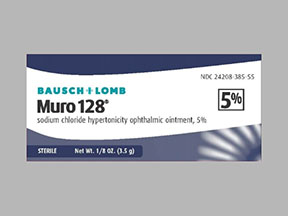
Muro 128
Muro 128 3.5GM of 5%
¿Qué es Muro 128?
Muro 128 (solución oftálmica hipertónica de cloruro de sodio al 5%) es una solución estéril para los ojos diseñada para aliviar temporalmente el edema corneal debido a sus propiedades hipertónicas, las cuales ayudan a extraer el fluido de la córnea. Por lo general, se prescribe para promover la eliminación de agua de la córnea, aliviando el dolor, la hinchazón y la visión borrosa asociados con la condición. Muro 128 está disponible sin receta en formas de ungüento y solución y debe utilizarse según las indicaciones de un profesional de la salud.Side Effects
- Changes in vision, eye pain, continued redness of the eye
- Allergic reaction: Itching or hives, swelling in your face or hands, swelling or tingling in your mouth or throat, chest tightness, trouble breathing
Warnings
- Ophthalmic routeIf you hurt your eye, develop an eye infection, or need to have eye surgery, talk with your doctor right away. You may need to change your medicine or stop using it.
- Tell your doctor if you are pregnant or breastfeeding, or if you have other eye problems.
- Keep all medicine out of the reach of children. Never share your medicine with anyone.
- Call your doctor if your symptoms do not improve or if they get worse.
Prescription savings · ·
¿Qué es Muro 128 ?
Muro 128 (solución oftálmica hipertónica de cloruro de sodio al 5%) es una solución estéril para los ojos diseñada para aliviar temporalmente el edema corneal debido a sus propiedades hipertónicas, las cuales ayudan a extraer el fluido de la córnea. Por lo general, se prescribe para promover la eliminación de agua de la córnea, aliviando el dolor, la hinchazón y la visión borrosa asociados con la condición. Muro 128 está disponible sin receta en formas de ungüento y solución y debe utilizarse según las indicaciones de un profesional de la salud.Muro 128 Cupones y Precios - Rx.com
Muro 128 3.5GM of 5%
Weight-loss medication, prescribed online
Licensed U.S. providers · No insurance needed · Shipped to your door
Muro 128 prices by dosage
Lowest cash price with a free Rx.com coupon vs. the average retail price.
| Dosis | Cantidad | Retail price | Rx.com price |
|---|---|---|---|
| 3.5gm of 5% · Tube Of Ointment | 3.5 | $19.99 | $19.11 |
Cash prices near ZIP 77433; updated regularly. Actual pharmacy price may vary.
Muro 128 es un colirio de cloruro de sodio hipertónico (al 5% o 2%) y un ungüento oftálmico al 5% de venta libre que se usa para el alivio temporal del edema corneal, la inflamación de la córnea que causa visión borrosa y halos. Como se vende sin receta, lo que usted paga puede variar mucho de una farmacia a otra, y a algunos compradores les conviene más usar un cupón de Muro 128 o pedirle a su oftalmólogo que lo recete. Ingrese su código postal arriba para ver el precio de hoy en las farmacias cerca de usted antes de comprar.
¿Qué es Muro 128 y cómo funciona?
Muro 128 es una solución salina oftálmica hipertónica (hiperosmótica). El ingrediente activo es cloruro de sodio, con una concentración de sal más alta que la de sus lágrimas naturales. Cuando toca la superficie del ojo, la ósmosis extrae el líquido sobrante de la córnea inflamada. A medida que baja la inflamación, la nubosidad, la vista borrosa y los halos alrededor de las luces suelen mejorar. Muro 128 viene como solución al 2%, solución al 5% y ungüento al 5%. Otras marcas de productos oftálmicos de cloruro de sodio hipertónico, fabricadas por otros laboratorios, incluyen Sochlor y Altachlore; estos son productos distintos que comparten el mismo ingrediente activo, no otros nombres de Muro 128, que es un producto de Bausch + Lomb.
El uso indicado en la etiqueta es el alivio temporal del edema corneal. En la práctica, esa inflamación suele provenir de afecciones como la distrofia endotelial de Fuchs, la inflamación después de una cirugía de cataratas o de córnea, y la queratopatía bullosa. Es importante entender que trata el síntoma, no la causa. Extrae líquido de la córnea para dar alivio temporal, pero no corrige la afección de fondo. La etiqueta indica que se use solo bajo el consejo y la supervisión de un médico.
Cómo usarlo
Para la solución, las instrucciones de la etiqueta son 1 o 2 gotas en el ojo o los ojos afectados cada 3 o 4 horas, o según las indicaciones de un médico. Para el ungüento al 5%, las instrucciones de la etiqueta son bajar el párpado inferior del ojo afectado y aplicar una pequeña cantidad (una tira de aproximadamente 1/4 de pulgada) dentro del párpado, cada 3 o 4 horas o según las indicaciones de un médico. El ungüento nubla la vista temporalmente, y por esa razón algunos médicos indican a los pacientes usarlo a la hora de acostarse, pero esa es una indicación del médico, no el horario de la etiqueta. No permita que la punta del frasco o del tubo toque su ojo, sus dedos ni ninguna otra superficie, ya que eso puede contaminar el producto. Es solo para uso externo en el ojo.
Deje de usarlo y consulte a un médico si tiene dolor en los ojos, cambios en la visión, enrojecimiento o irritación persistentes, o si su afección empeora o dura más de 72 horas. Manténgalo fuera del alcance de los niños. Esta es información general, no consejo médico, así que siga las indicaciones que le dé su propio profesional del cuidado de la vista.
Costo y ahorro en Muro 128
Muro 128 es un producto de monografía de venta libre (OTC), así que puede comprarlo directamente del estante sin receta. Eso también significa que el precio lo fija cada tienda y puede diferir de una farmacia a otra, y entre la solución y el ungüento. No hay una tarjeta de copago del fabricante para este producto. Los precios varían, así que vale la pena comparar en lugar de suponer que alguna tienda en particular es la más barata.
Algunos artículos de venta libre salen más baratos con un cupón de descuento, o cuando su oftalmólogo los receta para que la farmacia los cobre en el mostrador de recetas en lugar del pasillo de enfrente. Ingrese su código postal arriba para ver el precio de hoy en Rx.com e imprimir o enviarse por mensaje de texto un cupón gratis, y luego compárelo con el precio de estante donde usted compra. Si lo usa todos los días para una afección crónica como la distrofia de Fuchs, revisar un tamaño más grande o una versión genérica de cloruro de sodio hipertónico también puede cambiar las cuentas.
Muro 128 frente a otras gotas para los ojos
Las alternativas más cercanas son los otros productos de solución salina hipertónica: el cloruro de sodio oftálmico genérico, Sochlor y Altachlore. Son productos de distintos fabricantes con el mismo ingrediente activo en las mismas concentraciones hipertónicas, así que son las opciones más cercanas si una marca en particular no está disponible o cuesta más donde usted compra. Pregúntele a su farmacéutico cuál tiene realmente en existencia.
Las lágrimas artificiales comunes como Systane y Refresh no son sustitutos. Lubrican la superficie del ojo seco, pero no tienen la concentración de sal necesaria para extraer líquido de una córnea inflamada. Los tratamientos con receta para el ojo seco como Restasis actúan sobre un problema completamente distinto (la producción de lágrimas) y no hacen nada para el edema corneal. Si su oftalmólogo le dijo que tiene inflamación de la córnea, la solución salina hipertónica es la categoría que usted necesita.
Seguridad y efectos secundarios
La queja más común es ardor, escozor o irritación temporales justo después de aplicarlo, lo cual la etiqueta indica como algo esperado con este producto a base de sal y que por lo general pasa rápido. El ungüento al 5% nubla la vista por un rato después de aplicarlo; la etiqueta igual indica aplicarlo cada 3 o 4 horas o según las indicaciones de su médico, así que si su médico le dijo que lo use solo a la hora de acostarse, siga su indicación. Las etiquetas de Datos del Medicamento (Drug Facts) no hablan de los lentes de contacto, pero las referencias de medicamentos para consumidores generalmente aconsejan quitarse los lentes de contacto blandos antes de usarlo y esperar unos 15 minutos antes de volver a ponérselos. Pregúntele a su profesional del cuidado de la vista qué hacer en su caso.
Consulte a un médico si tiene dolor en los ojos, cambios en la visión, enrojecimiento o irritación que no desaparecen, o si las cosas empeoran o duran más de 72 horas. Nunca comparta el frasco o el tubo con otra persona, y no toque la punta contra ninguna superficie. Esta página es solo información y no es consejo médico; hable con su profesional del cuidado de la vista sobre si Muro 128 es adecuado para usted.
La información sobre Muro 128 fue redactada y revisada con base en fuentes médicas autorizadas de EE. UU. (MedlinePlus, de la Biblioteca Nacional de Medicina de EE. UU.; DailyMed; y la información de prescripción de la FDA) y verificada para asegurar su precisión. Se ofrece con fines educativos y no sustituye el consejo médico profesional.
Consulte la etiqueta oficial: Muro 128 en DailyMed (FDA)
Revisado con base en el etiquetado de la FDA · Última revisión: julio de 2026
Medicamentos Relacionados
Browse more medications: starting with M · full A-Z directory · by condition · common drugs
Medical disclaimer: This information is provided for general educational purposes only and is not medical advice. It is not a substitute for professional diagnosis or treatment. Always consult a licensed physician, pharmacist, or other qualified healthcare provider before starting, stopping, or changing any medication or treatment. Never disregard professional medical advice or delay seeking it because of something you read here. If you think you may have a medical emergency, call your doctor or 911 immediately.


