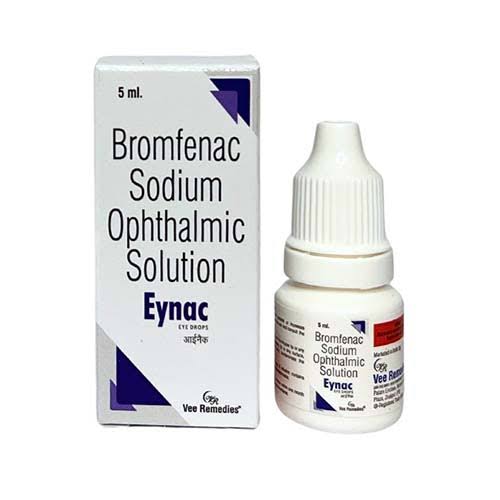
Bromfenac Sodium
Bromfenac Sodium 3ML of 0.07%
What is Bromfenac Sodium?
Bromfenac Sodium (Prolensa, BromSite, Xibrom) is a prescription nonsteroidal anti-inflammatory (NSAID) eye drop used to treat eye pain and inflammation following cataract surgery. It helps reduce swelling, discomfort, and redness by blocking the production of inflammatory chemicals in the eye.
Side Effects
- Blurred vision or other vision changes
- Allergic reaction: Itching or hives, swelling in your face or hands, swelling or tingling in your mouth or throat, chest tightness, trouble breathing
- Bleeding, pain, swelling, or severe redness or irritation in your eye
Warnings
- Tell your doctor if you are pregnant or breastfeeding, or if you have asthma or a sulfite allergy, a bleeding disorder, diabetes, rheumatoid arthritis, or another eye problem (such as dry eye). Tell your doctor if you had an allergic reaction to aspirin, phenylacetic acid, or another NSAID (including aspirin, diclofenac, ibuprofen, naproxen, celecoxib).
- This medicine may cause the following problems: Increased risk for bleedingKeratitis, which can lead to cornea damageSlower healing, especially if you also use a steroid medicine
- Ophthalmic routeIf you hurt your eye, develop an eye infection, or need to have eye surgery, talk with your doctor right away. You may need to change your medicine or stop using it.
- Keep all medicine out of the reach of children. Never share your medicine with anyone.
Prescription savings · · · ·
What is Bromfenac Sodium ?
Bromfenac Sodium (Prolensa, BromSite, Xibrom) is a prescription nonsteroidal anti-inflammatory (NSAID) eye drop used to treat eye pain and inflammation following cataract surgery. It helps reduce swelling, discomfort, and redness by blocking the production of inflammatory chemicals in the eye.
- Blurred vision or other vision changes
- Allergic reaction: Itching or hives, swelling in your face or hands, swelling or tingling in your mouth or throat, chest tightness, trouble breathing
- Bleeding, pain, swelling, or severe redness or irritation in your eye
- Increased sensitivity to light
- Tell your doctor if you are pregnant or breastfeeding, or if you have asthma or a sulfite allergy, a bleeding disorder, diabetes, rheumatoid arthritis, or another eye problem (such as dry eye). Tell your doctor if you had an allergic reaction to aspirin, phenylacetic acid, or another NSAID (including aspirin, diclofenac, ibuprofen, naproxen, celecoxib).
- This medicine may cause the following problems: Increased risk for bleedingKeratitis, which can lead to cornea damageSlower healing, especially if you also use a steroid medicine
- Ophthalmic routeIf you hurt your eye, develop an eye infection, or need to have eye surgery, talk with your doctor right away. You may need to change your medicine or stop using it.
- Keep all medicine out of the reach of children. Never share your medicine with anyone.
Bromfenac Sodium Coupons & Prices
Bromfenac Sodium 3ML of 0.07%

4 ED medications in one dose
Apomorphine, sildenafil, tadalafil & vardenafil · One sublingual dose · Free express shipping
Bromfenac Sodium prices by dosage
Lowest cash price with a free Rx.com coupon vs. the average retail price.
| Dosage | Quantity | Retail price | Rx.com price |
|---|---|---|---|
| 3ml of 0.07% · Bottle | 3 | $384.99 | $52.90 |
| 5ml of 0.075% · Bottle | 3 | $165.99 | $54.87 |
Cash prices near ZIP 77433; updated regularly. Actual pharmacy price may vary.
Bromfenac sodium is a prescription eye drop used after cataract surgery to calm inflammation and reduce pain in the eye. Most patients fill the generic version of this once-daily NSAID drop, and prices for it can vary from pharmacy to pharmacy. Enter your ZIP above to compare today's bromfenac sodium price near you with a free Rx.com coupon.
What Is Bromfenac Sodium and How Does It Work?
Bromfenac sodium is a topical nonsteroidal anti-inflammatory drug (NSAID) formulated as an eye drop. It's FDA-approved for the treatment of postoperative inflammation and reduction of ocular pain in patients who have had cataract surgery. By blocking the COX enzymes that produce inflammatory prostaglandins in the eye, it helps calm redness, swelling, and discomfort during the surgical recovery period. It's typically used once daily starting the day before surgery and continuing for about two weeks afterward, exactly as your ophthalmologist directs.
Bromfenac Sodium Cost and How to Save
Bromfenac sodium eye drops are available as a generic, as well as under the brand name Prolensa. Cash prices for the generic can differ significantly between pharmacies, so it's worth comparing before you fill a short post-surgical course. Rx.com compares bromfenac sodium prices across more than 60,000 U.S. pharmacies, so you can find a lower price and a free coupon to use whether or not you have insurance.
Bromfenac Sodium vs. Other Post-Cataract Eye Drops
Ophthalmologists also prescribe other NSAID and steroid eye drops around cataract surgery, including ketorolac drops and prednisolone acetate drops. Bromfenac's once-daily dosing is often more convenient than drops that require multiple daily applications, but your surgeon will choose the regimen that best fits your procedure and eye health. Never substitute one prescribed eye drop for another without your doctor's guidance.
Bromfenac Sodium Safety Information
- Some formulations contain sodium sulfite, which can trigger allergic-type reactions, including anaphylaxis or asthma flares, in sulfite-sensitive people.
- Like other topical NSAIDs, it may slow corneal healing; the risk is higher with prolonged use or when combined with topical steroids.
- Rare but serious corneal reactions (thinning, erosion, ulceration, or perforation) have been reported with topical NSAID eye drops.
- It may increase bleeding time in and around the eye, so tell your doctor if you're on a blood thinner.
This isn't a complete list of risks. Follow your ophthalmologist's instructions and report any new eye pain, redness, or vision changes right away.
This Bromfenac Sodium information was written and reviewed against authoritative U.S. medical sources — MedlinePlus (U.S. National Library of Medicine), DailyMed, and FDA prescribing information — and checked for accuracy. It is provided for education and is not a substitute for professional medical advice.
Verify the official label: Bromfenac Sodium on DailyMed (FDA)
Reviewed against FDA labeling · Last reviewed July 2026
Related Drugs
Browse more medications: starting with B · full A-Z directory · by condition · common drugs
Medical disclaimer: This information is provided for general educational purposes only and is not medical advice. It is not a substitute for professional diagnosis or treatment. Always consult a licensed physician, pharmacist, or other qualified healthcare provider before starting, stopping, or changing any medication or treatment. Never disregard professional medical advice or delay seeking it because of something you read here. If you think you may have a medical emergency, call your doctor or 911 immediately.


