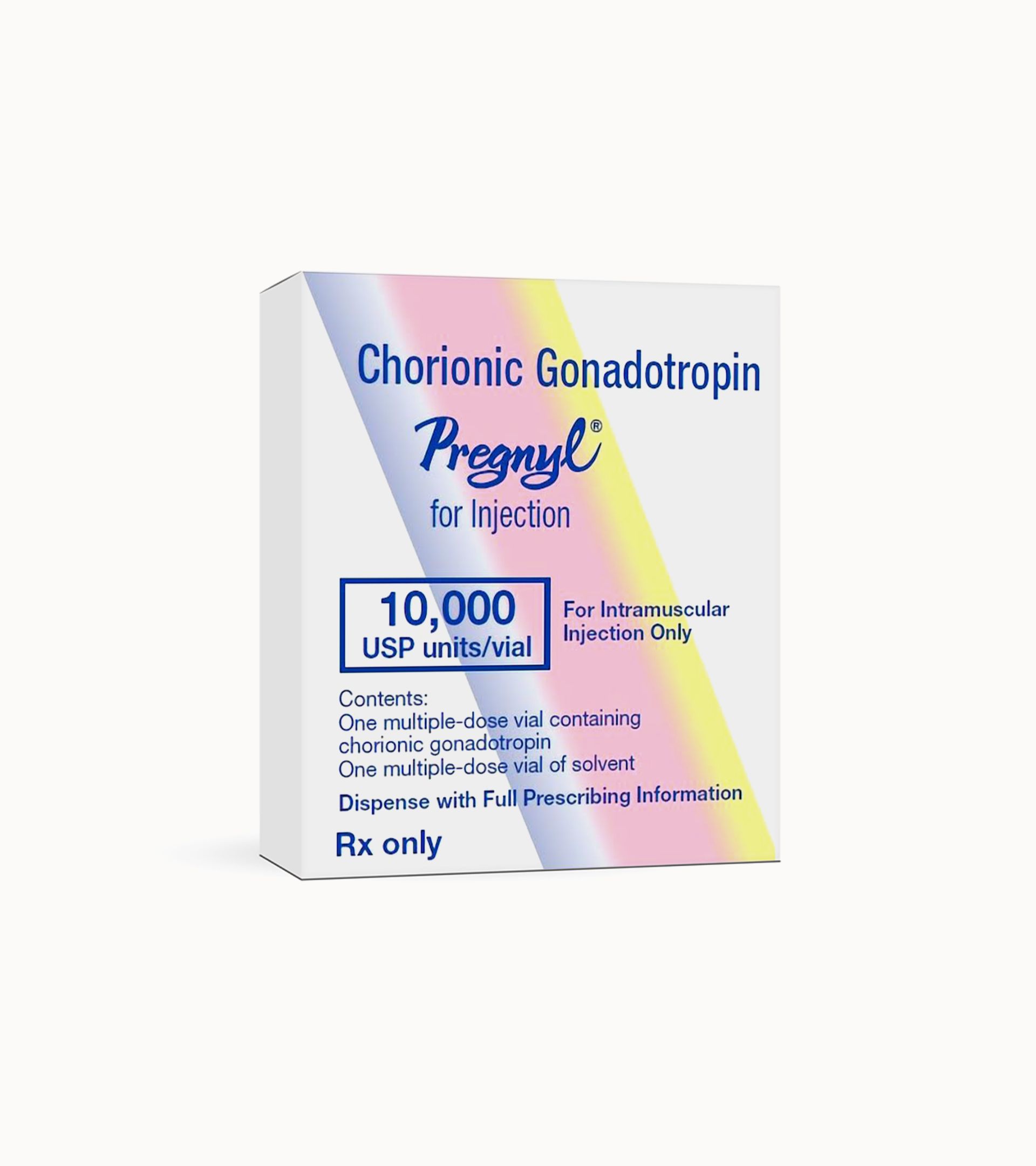
Pregnyl
Pregnyl 10000UNIT
What is Pregnyl?
Pregnyl (human chorionic gonadotropin or hCG) is a prescription injectable medication used to treat certain fertility conditions in both men and women and is sometimes prescribed as part of testosterone replacement therapy (TRT) protocols. Pregnyl works by mimicking luteinizing hormone (LH), helping stimulate ovulation in women and testosterone production in men. Learn about Pregnyl uses, dosage, side effects, fertility treatment, and TRT support options.
Side Effects
- Allergic reaction: Itching or hives, swelling in your face or hands, swelling or tingling in your mouth or throat, chest tightness, trouble breathing
- Chest pain, trouble breathing, coughing up blood
- Numbness or weakness in your arm or leg, or on one side of your body, pain in your lower leg
Warnings
- Tell your doctor if you are breastfeeding, or if you have heart disease, kidney disease, epilepsy, migraine headaches, high blood pressure, or a history of breathing problems (including asthma), blood clots, stroke, ovary problems, or stomach surgery.
- This medicine may cause the following problems:Ovarian hyperstimulation syndrome (OHSS), which can be life-threateningLung or breathing problemsBlood clotsIncreased risk of ectopic pregnancy or miscarriage
- Talk to your doctor about the possibility that this medicine could cause you to get pregnant with twins, triplets, or multiple babies.
- The medicine may cause a boy to start puberty too soon. Call your doctor if your child starts to show signs of puberty while he uses this medicine. Some signs are acne, voice changes, getting taller too fast, or starting to grow hair in the armpit or on the face.
- This medicine contains benzyl alcohol. Tell your doctor if benzyl alcohol has ever made you sick.
Prescription savings · · · ·
What is Pregnyl ?
Pregnyl (human chorionic gonadotropin or hCG) is a prescription injectable medication used to treat certain fertility conditions in both men and women and is sometimes prescribed as part of testosterone replacement therapy (TRT) protocols. Pregnyl works by mimicking luteinizing hormone (LH), helping stimulate ovulation in women and testosterone production in men. Learn about Pregnyl uses, dosage, side effects, fertility treatment, and TRT support options.
- Allergic reaction: Itching or hives, swelling in your face or hands, swelling or tingling in your mouth or throat, chest tightness, trouble breathing
- Chest pain, trouble breathing, coughing up blood
- Numbness or weakness in your arm or leg, or on one side of your body, pain in your lower leg
- Severe menstrual-like cramps, bloating, passing gas, vaginal bleeding, weight gain
- Sudden or severe headache, problems with vision, speech, or walking
- Severe nausea, vomiting, or pain in your pelvis
- Sudden weight gain or bloating
- Tell your doctor if you are breastfeeding, or if you have heart disease, kidney disease, epilepsy, migraine headaches, high blood pressure, or a history of breathing problems (including asthma), blood clots, stroke, ovary problems, or stomach surgery.
- This medicine may cause the following problems:Ovarian hyperstimulation syndrome (OHSS), which can be life-threateningLung or breathing problemsBlood clotsIncreased risk of ectopic pregnancy or miscarriage
- Talk to your doctor about the possibility that this medicine could cause you to get pregnant with twins, triplets, or multiple babies.
- The medicine may cause a boy to start puberty too soon. Call your doctor if your child starts to show signs of puberty while he uses this medicine. Some signs are acne, voice changes, getting taller too fast, or starting to grow hair in the armpit or on the face.
- This medicine contains benzyl alcohol. Tell your doctor if benzyl alcohol has ever made you sick.
- Your doctor will do lab tests at regular visits to check on the effects of this medicine. Keep all appointments.
- Tell any doctor or dentist who treats you that you are using this medicine. This medicine may affect certain medical test results.
- Keep all medicine out of the reach of children. Never share your medicine with anyone.
Pregnyl Coupons & Prices
Pregnyl 10000UNIT

Weight-loss medication, prescribed online
Licensed U.S. providers · No insurance needed · Shipped to your door
Looking for a Pregnyl coupon? Pregnyl is a brand of human chorionic gonadotropin (hCG), an injectable fertility hormone most often used as the "trigger shot" that prompts ovulation in fertility treatment, and also prescribed for undescended testicles in boys and for certain cases of low testosterone in men. Because Pregnyl is not covered by every insurance plan, cash prices vary widely from pharmacy to pharmacy. Enter your ZIP code above to see today's Rx.com price at pharmacies near you, and compare it against the manufacturer savings card before you pay full retail.
What is Pregnyl and how does it work?
Pregnyl contains human chorionic gonadotropin (hCG), a hormone in the gonadotropin drug class that mimics the body's natural luteinizing hormone (LH). In women being treated for infertility, hCG is given after the ovaries have been prepared with menotropins (human menopausal gonadotropins) to trigger the release of a mature egg and to support the luteal phase of the cycle. This is the role most people know it for: the ovulation "trigger shot" used in IVF and controlled ovarian stimulation. Pregnyl is also FDA-approved for two uses in males: prepubertal cryptorchidism (undescended testicles not caused by a physical obstruction), typically in boys, and selected cases of hypogonadotropic (secondary) hypogonadism, where it stimulates the testes to make testosterone and sperm.
Pregnyl is given by injection. Your fertility clinic or prescriber will determine the timing and dose, which matters a great deal in treatment cycles. This page is general information, not medical advice, so follow your provider's instructions exactly.
Pregnyl cost and savings: manufacturer card vs. Rx.com cash coupon
There are a few ways to lower what you pay for Pregnyl, and the best one depends on your coverage:
- Manufacturer savings card. Pregnyl's maker offers support through the Organon Access Program (organonaccessprogram.com). Manufacturer copay cards are generally limited to people with commercial (private) insurance and typically cannot be used if you are uninsured or covered by Medicare or Medicaid. Terms, eligibility, and any savings amounts vary and are set by the manufacturer, so check the official page for current details. The Organon Access Program may also offer patient-assistance help for eligible patients who qualify.
- Rx.com cash coupon. The Rx.com coupon is a cash-discount coupon, not insurance. It's useful when you're uninsured, when you have Medicare, or when the manufacturer card is declined or doesn't apply. Enter your ZIP above to see today's price at pharmacies near you and bring the coupon to the counter.
- Ask your pharmacist about lower-cost hCG options. A lower-cost hCG product may be available at some pharmacies, and an alternate brand such as Novarel uses the same active hCG hormone. Be aware that hCG supply can be limited: chorionic gonadotropin has been on the drug-shortage list with intermittent availability, so what any given pharmacy can stock changes over time. Ask your prescriber and pharmacist what is available and appropriate for your treatment plan, and compare prices at the counter.
Pregnyl alternatives and related fertility medications
Pregnyl is one of several medications used in ovulation induction and IVF cycles. Which one is right depends on your treatment protocol and your prescriber's judgment. This can also matter for availability, because hCG products have seen intermittent shortages. Related options include:
- Novarel — another brand of human chorionic gonadotropin (hCG), the same active hormone as Pregnyl.
- Ovidrel — a recombinant hCG trigger shot delivered in a prefilled syringe.
- Menopur — menotropins (human menopausal gonadotropins) used to stimulate the ovaries before the trigger shot.
- Gonal-f and Follistim — follicle-stimulating hormone (FSH) medications used during ovarian stimulation.
- Clomid — an oral medication that can be used to induce ovulation in some patients.
These are not interchangeable, and the choice, dosing, and timing are decided by your fertility specialist. Use this list to have an informed conversation with your provider, not to self-substitute.
Pregnyl safety information
Pregnyl has no FDA boxed warning, but there are important risks to understand. When used with menotropins for ovulation induction, there is an increased chance of multiple births. The most serious concern is ovarian hyperstimulation syndrome (OHSS), which can be life-threatening and may involve enlarged ovaries, fluid buildup in the abdomen or chest, and blood clots; treatment should be stopped if OHSS develops. Pregnyl can also raise the risk of blood clots in arteries or veins. Because it contains benzyl alcohol in the diluent, caution is advised in newborns.
Pregnyl should not be used by people with precocious (early) puberty, prostate cancer or other androgen-dependent tumors, or a prior allergic reaction to hCG. In boys treated for undescended testicles it can trigger early signs of puberty, which should be monitored and, if they appear, treatment stopped. Note that hCG has not been shown to work for weight loss and is not approved for that purpose. This is a summary, not a complete list of risks or medical advice. Tell your provider about your full health history and report any concerning symptoms right away.
This Pregnyl information was written and reviewed against authoritative U.S. medical sources — MedlinePlus (U.S. National Library of Medicine), DailyMed, and FDA prescribing information — and checked for accuracy. It is provided for education and is not a substitute for professional medical advice.
Verify the official label: Pregnyl on DailyMed (FDA)
Reviewed against FDA labeling · Last reviewed July 2026
Related Drugs
Browse more medications: starting with P · full A-Z directory · by condition · common drugs
Medical disclaimer: This information is provided for general educational purposes only and is not medical advice. It is not a substitute for professional diagnosis or treatment. Always consult a licensed physician, pharmacist, or other qualified healthcare provider before starting, stopping, or changing any medication or treatment. Never disregard professional medical advice or delay seeking it because of something you read here. If you think you may have a medical emergency, call your doctor or 911 immediately.


