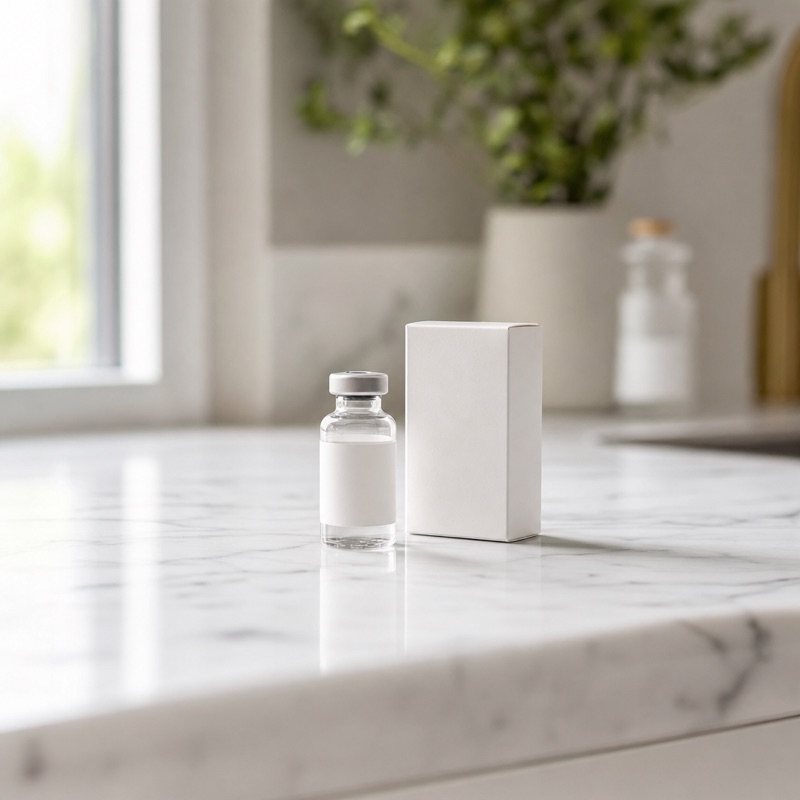
Traveling With BPC-157 in 2026: TSA, Carry-On Packing, and Customs Rules
Yes, you can fly with a legally prescribed vial or prefilled syringe of BPC-157, but the peptide must stay in your carry-on, be clearly labeled, and be declared at airport security and international borders.
You can bring prescription BPC-157 through Transportation Security Administration (TSA) checkpoints in the United States, provided the vial or prefilled syringes are clearly labeled, packed in your carry-on bag, and separated for inspection upon request. Medically necessary liquids and cold packs are exempt from the 3-1-1 liquid limit, so you may carry more than 3.4 oz (100 mL) and frozen gel packs when the peptide needs refrigeration. For international trips, declare BPC-157 at customs, carry a copy of your prescription, and check destination-country rules because some nations ban personal peptide imports.
- TSA treats prescribed BPC-157 as a medically necessary liquid, so the 3-1-1 rule does not apply (tsa.gov).
- Keep vials or syringes in your carry-on, not checked luggage, to prevent temperature excursions and loss.
- Frozen gel packs or a small insulated bag are allowed when they are needed to keep medication cold (tsa.gov).
- Always travel with the original pharmacy label or a printed prescription showing “BPC-157 injection” and your name.
- Many countries require you to declare prescription drugs at customs; a few prohibit peptide imports entirely.
Black Friday & Cyber Monday saleEnds Mon, Nov 30
Buy 3 months, get 3 free
6 months of prescription BPC-157 for $597 ($99.50/mo), or $199 month to month. Prescribed by a U.S.-licensed provider, compounded by a licensed U.S. 503A pharmacy. No code needed, billed only if prescribed. Not FDA approved.
Prescription BPC-157 from Rx.com, from $99.50/mo. Online visit with a U.S.-licensed provider, compounded by a licensed U.S. 503A pharmacy. Not FDA approved.
See plans →BPC-157 is a prescription-only research peptide, not an FDA-approved drug
BPC-157 is a lab-synthesized fragment of a naturally occurring protein found in gastric juice. Under the U.S. Department of Health and Human Services’ 2026 interim enforcement discretion policy, licensed 503A compounding pharmacies may legally prepare BPC-157 for individual patients who hold valid prescriptions, although compounded BPC-157 itself is not FDA-approved. That distinction matters at the border: customs officers often ask whether a substance is FDA-approved or investigational.
Rx.com now offers prescription BPC-157 from Rx.com after an online visit with a licensed U.S. provider. The finished peptide is shipped directly to you with a pharmacy label bearing your name, the prescriber’s name, and instructions to refrigerate. Carrying that label is your primary proof the medication is legitimate.
For foundational details on the molecule, see our explainer How BPC-157 Works.
TSA allows medically necessary liquids of any volume if you declare them
TSA officers follow the 3-1-1 rule for most liquids, but medications are specifically exempt. According to the agency’s current “Traveling with Medical Liquids” guidance (tsa.gov), passengers may bring larger quantities of medically necessary liquids, gels, and aerosols in their carry-on after they are screened.
What you must do at the checkpoint:
- Tell the officer you are carrying prescription medication that must remain with you and may need refrigeration.
- Separate the peptide and ice packs from other items before X-ray so they can be inspected visually or swabbed.
- Present the label or prescription upon request-while TSA does not require passengers to have a prescription to bring medication, showing one speeds the screening and reduces questions.
TSA does not dictate how much liquid medication you can bring, only that it be screened. The officer may open the container and test a small sample for explosives. If you refuse sampling, the medication can still be cleared by other methods such as additional screening or a pat-down.
Pack BPC-157 so it stays cold and survives turbulence
Carry-on is safest for temperature-sensitive peptides. Checked bags can sit for hours in extreme heat or cold on the tarmac, and lost luggage could separate you from time-critical doses.
Vial vs prefilled syringes:- Vial + needles: Keep the sealed vial upright in a hard-sided travel case with foam cutouts. Store sealed syringe packs separately to avoid accidental puncture.
- Prefilled syringes: Snap each into a rigid plastic tube or a prescription syringe travel case to protect the plunger.
- Small insulated lunch bag: Choose one that fits inside your personal item so you do not exceed your airline’s carry-on limits.
- Frozen gel packs: TSA permits them in carry-ons when they are required to keep medication cold. If partially melted, they must be screened as liquids.
- Instant ice packs: Chemical packs that activate when squeezed are allowed but may be swabbed.
- Extra zipper bag: Condensation can dampen paperwork; place prescriptions in a separate dry pouch.
| Packing Item | Allowed in Carry-On? | Screening Notes |
|---|---|---|
| Sealed 5 mL BPC-157 vial | Yes | Declare as medication, may be swabbed |
| Unopened 1 mL prefilled syringe | Yes | May stay in case during X-ray |
| Needle tips (blunt-draw + injection) | Yes | Needles are medical; declare |
| Frozen gel pack < 16 oz | Yes | Must be frozen solid or screened as liquid |
| Dry ice < 5.5 lbs (2.5 kg) | Airline dependent | Requires vented cooler and airline approval |
Most travelers find two small gel packs in a lunch-size cooler keep BPC-157 below 46 °F (8 °C) for a 6-hour flight. For multi-leg journeys, pack spare gel packs and ask an airport café to refreeze them during layovers.
Check destination rules: some countries ban peptide imports
Every country sets its own rules for personal medication imports. Even prescription status at home does not guarantee legal entry abroad.
Common requirements in 2026:- Customs declaration: List prescription drugs on the arrival form and verbally declare them if an officer asks.
- Quantity limits: Many nations allow no more than a 90-day supply of any prescription.
- Original packaging: The label must show your full name matching your passport.
- Translated prescription: Countries such as Japan and the United Arab Emirates recommend an English or local-language doctor’s note.
- Peptide prohibitions: Australia and the United Kingdom currently classify BPC-157 as an unapproved therapeutic good; personal import is not permitted without special authorization. Customs may seize the peptide and fine the traveler.
Before you book, check the health ministry or embassy website of every country on your itinerary. Our detailed BPC-157 Legality Outside the U.S. article lists current bans and permit procedures.
| Country | Bring BPC-157?* | Documentation Required |
|---|---|---|
| Canada | Possession allowed | Prescription label; 90-day max |
| Mexico | Discouraged | Customs may allow with Spanish translation |
| United Kingdom | Not allowed | Special import license needed |
| Australia | Not allowed | Therapeutic Goods Administration permit |
| Japan | Case-by-case | “Yakkan Shoumei” import certificate |
*Status reflects official guidance published November 2026; laws change frequently-confirm before travel.
If TSA or customs questions your peptide, stay calm and show paperwork
Most screenings end in under two minutes once you present a clear prescription label. Still, miscommunication happens.
At TSA:- If an officer doubts the medication’s legitimacy, ask for a supervisor and present your labeled vial, printed prescription, and a government photo ID.
- If you decline sampling because of contamination concerns, request alternate screening such as a visual inspection and explosive-trace swab of the exterior.
- Declare the peptide first; voluntary honesty is viewed favorably.
- Carry a doctor’s letter on letterhead stating your diagnosis, dose, and that BPC-157 is medically necessary.
- If officers threaten confiscation in a country where peptides are restricted, you may be offered the choice to abandon the product or return home with it.
If your supply is seized overseas, contact your prescriber through the Rx.com portal for a replacement prescription shipped to a local pharmacy or to your U.S. address when you return.
Can you fly with your next dose of BPC-157?
Use this quick check before you zip the suitcase
Check the column that fits your situation:
✅ Good to Go
- Prescription label shows your full legal name
- Peptide packed in carry-on with cold packs
- Printed doctor letter and copies on phone
- Confirmed destination import rules allow entry
- Supply limited to 90 days or less
🏥 Fix Before You Fly
- No prescription or label on vial
- Medication packed in checked luggage
- Gel packs over 3.4 oz but not declared
- Traveling to a country that bans peptide imports
- Quantity exceeds local limit (often 90 days)
🚨 When to Contact Your Healthcare Provider
Reach out to your prescriber or pharmacist right away if you:
- Miss a scheduled dose because of travel delays: your provider may adjust the timing.
- Accidentally leave BPC-157 unrefrigerated for more than 24 hours: potency may drop.
- Notice cloudiness, particles, or color change in the vial: these may signal contamination.
- Lose the medication to theft or customs seizure: you will need a replacement prescription.
- Experience unexpected swelling, rash, or painful injection sites during the trip.
- Develop signs of infection such as fever, chills, or severe redness near an injection site.
Scientific References
Black Friday & Cyber Monday saleEnds Mon, Nov 30
Buy 3 months, get 3 free
6 months of prescription BPC-157 for $597 ($99.50/mo), or $199 month to month. Prescribed by a U.S.-licensed provider, compounded by a licensed U.S. 503A pharmacy. No code needed, billed only if prescribed. Not FDA approved.
Frequently Asked Questions
Do I have to show my BPC-157 prescription at TSA?
TSA does not legally require passengers to present prescriptions, but doing so speeds screening. A clearly printed pharmacy label or paper prescription proves the liquid is medically necessary and avoids confusion.
Can I keep BPC-157 in checked baggage if it is frozen?
You could, but it is risky. Cargo holds can reach freezing or sweltering temperatures, and lost luggage could separate you from doses. Carry-on storage keeps the peptide within the recommended 36-46 °F range and under your supervision.
Are needles and syringes allowed in carry-on bags?
Yes. TSA classifies syringes, pen needles, and lancets as medical devices permitted in carry-on bags once they are screened. Keep them with the medication and declare them to officers.
Do reusable ice packs count toward the 3-1-1 liquid limit?
No, when they are required to keep medication cold. If a gel pack is partially thawed, officers may test it, but it will not be forced into the quart-size bag.
How many weeks of BPC-157 can I bring abroad?
Most countries allow a personal supply of up to 90 days. Always confirm the specific limit with the destination’s customs authority before departure.
Is BPC-157 banned by the World Anti-Doping Agency (WADA)?
Yes. WADA lists BPC-157 as a prohibited substance for athletes in and out of competition. Competitive athletes should consult their governing body before traveling with or using the peptide.
What if my connecting airport has stricter rules?
You must comply with screening rules in every jurisdiction you pass through. Even on a layover, local security officers can enforce their own medication policies, so research every stop on multi-leg itineraries.