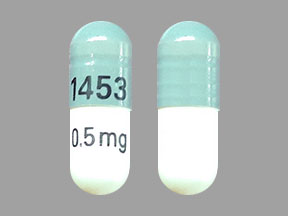
Anagrelide Hcl
Anagrelide HCl 0.5MG
What is Anagrelide Hcl?
Agrylin is a miscellaneous coagulation modifier drug used to treat thrombocythemia. Anagrelide is the generic version of Agrylin. The average Agrylin price is about $501 for a supply of 60, 0.5 mg capsules. You can use our Rx.com Agrylin discount coupon to save significantly about up to 80% on the retail price at participating pharmacies near you.Side Effects
- Fast, pounding, or uneven heartbeat
- Allergic reaction: Itching or hives, swelling in your face or hands, swelling or tingling in your mouth or throat, chest tightness, trouble breathing
- Chest pain, coughing up blood
Warnings
- Your doctor will do lab tests at regular visits to check on the effects of this medicine. Keep all appointments.
- Do not stop using this medicine suddenly. Your doctor will need to slowly decrease your dose before you stop it completely. The platelet levels in your blood will increase when you stop using this medicine.
- Talk with your doctor before using this medicine if you plan to have children. Some women who use this medicine have become infertile (unable to have children).
- Keep all medicine out of the reach of children. Never share your medicine with anyone.
- This medicine may cause the following problems:Heart rhythm problems (including QT prolongation)Pulmonary hypertension (high blood pressure in the lungs)Increased risk of bleedingInterstitial lung disease
Prescription savings · · · ·
What is Anagrelide Hcl ?
Agrylin is a miscellaneous coagulation modifier drug used to treat thrombocythemia. Anagrelide is the generic version of Agrylin. The average Agrylin price is about $501 for a supply of 60, 0.5 mg capsules. You can use our Rx.com Agrylin discount coupon to save significantly about up to 80% on the retail price at participating pharmacies near you.- Fast, pounding, or uneven heartbeat
- Allergic reaction: Itching or hives, swelling in your face or hands, swelling or tingling in your mouth or throat, chest tightness, trouble breathing
- Chest pain, coughing up blood
- Fainting, dizziness, or lightheadedness
- Unusual bleeding, bruising, or weakness
- Trouble breathing
- Rapid weight gain, swelling in your hands, ankles, or feet
- Your doctor will do lab tests at regular visits to check on the effects of this medicine. Keep all appointments.
- Do not stop using this medicine suddenly. Your doctor will need to slowly decrease your dose before you stop it completely. The platelet levels in your blood will increase when you stop using this medicine.
- Talk with your doctor before using this medicine if you plan to have children. Some women who use this medicine have become infertile (unable to have children).
- Keep all medicine out of the reach of children. Never share your medicine with anyone.
- This medicine may cause the following problems:Heart rhythm problems (including QT prolongation)Pulmonary hypertension (high blood pressure in the lungs)Increased risk of bleedingInterstitial lung disease
- Do not breastfeed during treatment with this medicine and for 1 week after the last dose.
- Tell your doctor if you are pregnant, or if you have kidney disease, liver disease, bleeding problems, or lung problems. Tell your doctor if you have any type of heart disease or condition, especially heart rhythm problems.
Anagrelide Hcl Coupons & Prices
Anagrelide HCl 0.5MG
4 ED medications in one dose
Apomorphine, sildenafil, tadalafil & vardenafil · One sublingual dose · Free express shipping
Anagrelide Hcl prices by dosage
Lowest cash price with a free Rx.com coupon vs. the average retail price.
| Dosage | Quantity | Retail price | Rx.com price |
|---|---|---|---|
| 0.5mg · Capsule | 60 | $499.99 | $42.87 |
| 1mg · Capsule | 60 | $2,258.97 | $82.04 |
Cash prices near ZIP 77433; updated regularly. Actual pharmacy price may vary.
An anagrelide hcl coupon from Rx.com can be used at the pharmacy counter when you are paying cash for anagrelide hydrochloride, the generic form of Agrylin. Anagrelide is a platelet-reducing medicine prescribed to lower a high platelet count in people with myeloproliferative neoplasms such as essential thrombocythemia. Cash prices for the same capsules can differ a lot from one pharmacy to the next, even between stores a few miles apart, so it is worth comparing before you fill. Rx.com compares prices across more than 60,000 pharmacies. Enter your ZIP code above to see today's price for your strength and quantity near you.
What is anagrelide and how does it work?
Anagrelide hydrochloride is a platelet-reducing agent. The precise mechanism by which anagrelide lowers the platelet count is not fully known. What the label describes is that it reduces platelet production by the megakaryocytes in the bone marrow: in cell culture studies anagrelide suppressed transcription factors, including GATA-1 and FOG-1, that are needed for megakaryocytopoiesis, and blood from treated volunteers showed a disruption in the postmitotic phase of megakaryocyte development. Lowering the platelet count reduces the risk of blood clots (thrombosis) and helps ease the symptoms that go with a very high platelet count, including thrombo-hemorrhagic events.
It is FDA-approved for the treatment of thrombocythemia secondary to myeloproliferative neoplasms, to reduce the elevated platelet count and the risk of thrombosis and to ameliorate associated symptoms including thrombo-hemorrhagic events. The label does not name specific myeloproliferative neoplasm subtypes. It is not used for reactive or secondary thrombocytosis. In practice it is often used as second-line cytoreduction when hydroxyurea is not tolerated or is not doing enough. Generic anagrelide hydrochloride comes as 0.5 mg and 1 mg capsules. A usual adult starting dose is 0.5 mg four times a day or 1 mg twice a day, then adjusted to keep the platelet count under 600,000/uL (ideally 150,000 to 400,000/uL), without exceeding 10 mg per day or 2.5 mg in a single dose. Your prescriber sets your dose; this page is information, not medical advice.
What anagrelide costs without insurance, and how a coupon helps
A generic version of anagrelide hydrochloride capsules is available in the US, so most people filling this prescription are getting the generic rather than brand-name Agrylin. That does not mean every pharmacy charges the same thing. Cash prices are set store by store, and the spread between the cheapest and the most expensive pharmacy in one ZIP code can be large. If you are paying without insurance, or your plan has a high deductible, the pharmacy you choose is often the single biggest factor in what you pay.
Rx.com compares cash prices across more than 60,000 pharmacies so you can see the range before you hand over the prescription. Enter your ZIP above to see today's price, then bring the coupon to the counter and ask the pharmacist to run it as a cash discount instead of your insurance if it comes out lower. Because anagrelide is taken long term and the dose gets adjusted during the first weeks, it is worth re-checking prices when your strength or quantity changes. There is no manufacturer copay savings card offered for generic anagrelide; Takeda, which markets Agrylin, publishes its own patient support information on its official site, and terms vary.
Anagrelide compared with other options
Agrylin is the brand name for the same drug, anagrelide hydrochloride, from Takeda Pharmaceuticals America. The generic contains the same active ingredient and is usually the lower-cost way to fill it, though you should still compare pharmacies.
Anagrelide is not the only way to lower a high platelet count, and the choice belongs to you and your hematologist. Hydroxyurea (brand Hydrea) is commonly used first, with anagrelide often stepping in when hydroxyurea is not tolerated or is not working well enough. Jakafi (ruxolitinib) is used in certain myeloproliferative neoplasms. Low-dose aspirin is sometimes used alongside cytoreduction to reduce clotting risk, but combining it with anagrelide raises bleeding risk (see below), so only take aspirin with anagrelide if your prescriber has told you to.
Anagrelide safety, side effects, and monitoring
Anagrelide does not carry a boxed warning, but its label describes several important risks. Cardiovascular toxicity has been reported, including QT prolongation, torsades de pointes, and ventricular tachycardia. The label directs prescribers to obtain a pre-treatment cardiovascular examination including an ECG in all patients, and to monitor for cardiovascular effects during treatment; anagrelide should be used cautiously if you have known or suspected heart disease or take other medicines that prolong the QT interval. Pulmonary hypertension has been reported, and a cardiopulmonary assessment is recommended before starting. Pulmonary toxicity such as interstitial lung disease or pneumonitis can occur; the drug should be stopped if that is suspected. Bleeding risk goes up when anagrelide is combined with aspirin, and a postmarketing study found more major hemorrhagic events with the combination. Liver problems increase drug exposure: anagrelide is not recommended in severe hepatic impairment, and moderate impairment calls for a lower dose plus liver monitoring. It interacts with CYP1A2 inhibitors (such as fluvoxamine and ciprofloxacin), which can raise anagrelide exposure, and with CYP1A2 inducers (such as omeprazole), which can lower it, and with other PDE3 inhibitors (cilostazol, milrinone). If you are pregnant or planning a pregnancy, talk it through with your prescriber, who can weigh your treatment against the risks that thrombocythemia itself can carry in pregnancy.
The most common side effects are headache, palpitations, diarrhea, weakness or lack of energy (asthenia), swelling (edema), nausea, abdominal pain, dizziness, and fast heartbeat. Your platelet count must be checked every two days during the first week and weekly after that until you reach a maintenance dose. Do not stop anagrelide on your own: stopping abruptly can cause rebound thrombocytosis. Tell your prescriber about every medicine and supplement you take, and call them about chest symptoms, shortness of breath, a fast or irregular heartbeat, or unusual bleeding. This is general information and not a substitute for advice from your doctor or pharmacist.
This Anagrelide Hcl information was written and reviewed against authoritative U.S. medical sources — MedlinePlus (U.S. National Library of Medicine), DailyMed, and FDA prescribing information — and checked for accuracy. It is provided for education and is not a substitute for professional medical advice.
Verify the official label: Anagrelide Hcl on DailyMed (FDA)
Reviewed against FDA labeling · Last reviewed July 2026
Related Drugs
Browse more medications: starting with A · full A-Z directory · by condition · common drugs
Medical disclaimer: This information is provided for general educational purposes only and is not medical advice. It is not a substitute for professional diagnosis or treatment. Always consult a licensed physician, pharmacist, or other qualified healthcare provider before starting, stopping, or changing any medication or treatment. Never disregard professional medical advice or delay seeking it because of something you read here. If you think you may have a medical emergency, call your doctor or 911 immediately.


