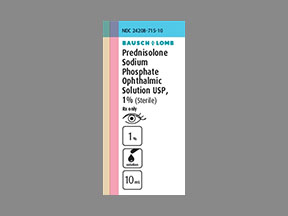
Prednisolone Sodium Phosphate
prednisoLONE Sodium Phosphate 120ML of 5MG/5ML
What is Prednisolone Sodium Phosphate?
Prednisolone Sodium Phosphate is a synthetic glucocorticoid with potent anti-inflammatory and immunosuppressive properties. It is available in oral and injectable forms and primarily used to treat conditions such as asthma, allergies, and autoimmune diseases. This medication works by mimicking the effects of corticosteroids naturally produced by the adrenal glands to modulate the body's immune response and reduce inflammation.Side Effects
- Trouble seeing, eye pain, headache
- Muscle pain or weakness
- Skin changes or growths
Warnings
- It is not safe to take this medicine during pregnancy. It could harm an unborn baby. Tell your doctor right away if you become pregnant.
- Tell your doctor if you are breastfeeding or if you have kidney problems, liver disease, heart failure, high blood pressure, a recent heart attack, diabetes, glaucoma, osteoporosis, or thyroid problems. Tell your doctor about any infection you have. Also tell your doctor if you have had mental or emotional problems (such as depression) or stomach or bowel problems (such as an ulcer or diverticulitis).
- This medicine may cause the following problems:Mood or behavior changesHigher blood pressure, retaining water, changes in salt or potassium levels in your bodyCataracts or glaucoma (with long-term use)Weak bones or osteoporosis (with long-term use)Slow growth in children (with long-term use)Muscle problems (with high doses, especially if you have myasthenia gravis or similar nerve and muscle problems)
- Do not stop using this medicine suddenly. Your doctor will need to slowly decrease your dose before you stop it completely.
- This medicine could cause you to get infections more easily. Tell your doctor right away if you are exposed to chicken pox, measles, or other serious infection. Tell your doctor if you had a serious infection in the past, such as tuberculosis or herpes.
Prescription savings · · · ·
What is Prednisolone Sodium Phosphate ?
Prednisolone Sodium Phosphate is a synthetic glucocorticoid with potent anti-inflammatory and immunosuppressive properties. It is available in oral and injectable forms and primarily used to treat conditions such as asthma, allergies, and autoimmune diseases. This medication works by mimicking the effects of corticosteroids naturally produced by the adrenal glands to modulate the body's immune response and reduce inflammation.- Trouble seeing, eye pain, headache
- Muscle pain or weakness
- Skin changes or growths
- Severe stomach pain, nausea, vomiting, or red or black stools
- Fever, chills, cough, sore throat, and body aches
- Allergic reaction: Itching or hives, swelling in your face or hands, swelling or tingling in your mouth or throat, chest tightness, trouble breathing
- Dark freckles, skin color changes, coldness, weakness, tiredness, nausea, vomiting, weight loss
- Depression, trouble sleeping, unusual thoughts, feelings, or behaviors
- Dry mouth, increased thirst, muscle cramps, nausea or vomiting, uneven heartbeat
- Rapid weight gain, swelling in your hands, ankles, or feet
- It is not safe to take this medicine during pregnancy. It could harm an unborn baby. Tell your doctor right away if you become pregnant.
- Tell your doctor if you are breastfeeding or if you have kidney problems, liver disease, heart failure, high blood pressure, a recent heart attack, diabetes, glaucoma, osteoporosis, or thyroid problems. Tell your doctor about any infection you have. Also tell your doctor if you have had mental or emotional problems (such as depression) or stomach or bowel problems (such as an ulcer or diverticulitis).
- This medicine may cause the following problems:Mood or behavior changesHigher blood pressure, retaining water, changes in salt or potassium levels in your bodyCataracts or glaucoma (with long-term use)Weak bones or osteoporosis (with long-term use)Slow growth in children (with long-term use)Muscle problems (with high doses, especially if you have myasthenia gravis or similar nerve and muscle problems)
- Do not stop using this medicine suddenly. Your doctor will need to slowly decrease your dose before you stop it completely.
- This medicine could cause you to get infections more easily. Tell your doctor right away if you are exposed to chicken pox, measles, or other serious infection. Tell your doctor if you had a serious infection in the past, such as tuberculosis or herpes.
- Tell your doctor about any extra stress or anxiety in your life. Your dose might need to be changed for a short time.
- Your doctor will check your progress and the effects of this medicine at regular visits. Keep all appointments.
- Tell any doctor or dentist who treats you that you are using this medicine. This medicine may affect certain medical test results.
- Keep all medicine out of the reach of children. Never share your medicine with anyone.
- Every other day schedule: You might have some mild symptoms of your illness on the day you do not take the medicine (the €œoff€ day). If this is a problem for you, tell your doctor.
Prednisolone Sodium Phosphate Coupons & Prices
prednisoLONE Sodium Phosphate 120ML of 5MG/5ML
4 ED medications in one dose
Apomorphine, sildenafil, tadalafil & vardenafil · One sublingual dose · Free express shipping
Prednisolone Sodium Phosphate prices by dosage
Lowest cash price with a free Rx.com coupon vs. the average retail price.
| Dosage | Quantity | Retail price | Rx.com price |
|---|---|---|---|
| 5gm of powder · Bottle | 30 | — | $371.65 |
| 10ml of 1% ophth soln (eye) · Bottle | 30 | $189.99 | $159.65 |
| 25gm of powder · Bottle | 30 | $3,287.99 | $2,736.55 |
| 100gm of powder · Bottle | 400 | — | $36,425.72 |
| 120ml of 5mg/5ml (base) oral soln · Bottle | 30 | $62.79 | $14.04 |
| 237ml of 15mg/5ml (base) oral soln · Bottle | 237 | $38.99 | $28.67 |
| 237ml of 10mg/5ml (base) oral soln · Bottle | 237 | $708.09 | $242.74 |
| 237ml of 20mg/5ml (base) oral soln · Bottle | 237 | $945.36 | $342.36 |
Cash prices near ZIP 77433; updated regularly. Actual pharmacy price may vary.
If you or your child have been prescribed prednisolone sodium phosphate — most often dispensed today as a generic oral solution, since the brand-name versions previously sold under the names Orapred and Millipred have both been discontinued — a prednisolone sodium phosphate coupon can help lower what you pay at the pharmacy counter, since cash prices for this generic corticosteroid vary widely from one pharmacy to the next. (A related but different product, the orally disintegrating tablet Orapred ODT, remains actively marketed under its own brand name.) Rx.com compares prices at more than 60,000 U.S. pharmacies, so enter your ZIP code above to see today's price near you before you fill your prescription.
What Is Prednisolone Sodium Phosphate?
Prednisolone sodium phosphate is a corticosteroid (glucocorticoid) — a synthetic adrenocortical steroid made as the water-soluble phosphate ester salt of prednisolone. It's most often dispensed today as a generic oral solution. Two branded oral products that formerly sold this same salt as an oral solution, Orapred and Millipred, have both been discontinued — Orapred oral solution as of October 31, 2015, and Millipred (oral solution and tablets) as of September 30, 2024. A related but distinct branded product, Orapred ODT — an orally disintegrating tablet formulation of the same drug, marketed by Advanz Pharma — remains actively marketed. An older brand of the oral solution, Pediapred, was also phased out in stages as its different strengths were discontinued at different times; generic prednisolone sodium phosphate oral solution remains available today. A separate eye-drop version, prednisolone sodium phosphate ophthalmic solution, is also sold generically for treating eye inflammation.
The oral form's FDA labeling covers control of severe or incapacitating allergic conditions that haven't responded to conventional treatment — including seasonal and perennial allergic rhinitis, serum sickness, drug hypersensitivity reactions, and contact or atopic dermatitis — as well as broader use as an anti-inflammatory or immunosuppressive agent across a wide category of conditions, including certain allergic, dermatologic, gastrointestinal, hematologic, ophthalmologic, nervous system, renal, respiratory, and rheumatologic diseases, specific infectious diseases, organ transplantation, certain endocrine conditions, and palliation of certain neoplastic conditions — a category that covers respiratory conditions such as asthma. Because the oral solution is easy to dose by weight, it's also commonly used, based on a doctor's clinical judgment, for short courses during asthma flare-ups or croup in children. The ophthalmic solution is used for steroid-responsive eye inflammation such as uveitis. This isn't medical advice; talk to your provider about whether it's the right treatment for you or your child.
Prednisolone Sodium Phosphate Cost and Coupon Savings
Prednisolone sodium phosphate is available as a generic, and — like most generic medications — it doesn't come with a manufacturer coupon or savings-card program the way many brand-name drugs do. That doesn't mean the price is the same everywhere: cash prices for the same prescription can differ significantly from one pharmacy to the next, even for the same dosage and quantity, so it's worth comparing before you fill.
Rx.com checks pricing across more than 60,000 pharmacies nationwide, including major chains and independent pharmacies, so you can see which one offers the lowest price near you today. Enter your ZIP code above to compare current prices for prednisolone sodium phosphate at pharmacies in your area.
Prednisolone Sodium Phosphate vs. Prednisolone, Prednisone, and Other Steroids
Prednisolone sodium phosphate is a specific salt form of prednisolone — the water-soluble phosphate ester, chosen for oral liquid and eye-drop formulations because it dissolves quickly. It's different from prednisolone acetate, a different salt used to make longer-acting suspension formulations, and from prednisone, which is an inactive prodrug the liver has to convert into prednisolone before it works — meaning prednisolone-based products can act more directly.
Other corticosteroids sometimes compared with it include methylprednisolone, dexamethasone, and hydrocortisone — each with different strength and duration of action, and prescribed based on the specific condition being treated. Orapred ODT, an orally disintegrating tablet, is the main branded form of this same prednisolone sodium phosphate medication still actively marketed today; the original Orapred oral-solution brand has been discontinued, and the oral solution is now dispensed generically.
Safety Information and Side Effects
Prednisolone sodium phosphate doesn't carry an FDA boxed warning, but its labeling includes several important warnings. It can increase the risk of infection and mask the usual signs of an infection, and live vaccines should be avoided while taking it. With prolonged use, it can suppress the body's own adrenal (HPA-axis) hormone production, which is why it should never be stopped abruptly after extended use — dosing needs to be tapered down gradually under a provider's direction. Other effects associated with longer-term use include cushingoid changes in body appearance, elevated blood sugar or new-onset diabetes, fluid retention and high blood pressure, bone thinning (osteoporosis), and slowed growth in children. It can also cause mood changes, insomnia, or, rarely, more serious psychiatric effects, and it raises the risk of stomach ulcers or GI bleeding, especially when combined with NSAIDs.
- Avoid live-virus vaccines while on this medication
- Never stop after prolonged use without a provider-directed taper
- Tell your provider about any signs of infection, since symptoms can be masked
- The ophthalmic (eye-drop) form carries its own warnings for increased eye pressure/glaucoma, cataracts, and delayed healing or masked infection with prolonged use
This is general information, not medical advice. Talk to your doctor or pharmacist about your specific situation before starting, stopping, or changing this medication.
This Prednisolone Sodium Phosphate information was written and reviewed against authoritative U.S. medical sources — MedlinePlus (U.S. National Library of Medicine), DailyMed, and FDA prescribing information — and checked for accuracy. It is provided for education and is not a substitute for professional medical advice.
Verify the official label: Prednisolone Sodium Phosphate on DailyMed (FDA)
Reviewed against FDA labeling · Last reviewed July 2026
Related Drugs
Browse more medications: starting with P · full A-Z directory · by condition · common drugs
Medical disclaimer: This information is provided for general educational purposes only and is not medical advice. It is not a substitute for professional diagnosis or treatment. Always consult a licensed physician, pharmacist, or other qualified healthcare provider before starting, stopping, or changing any medication or treatment. Never disregard professional medical advice or delay seeking it because of something you read here. If you think you may have a medical emergency, call your doctor or 911 immediately.


