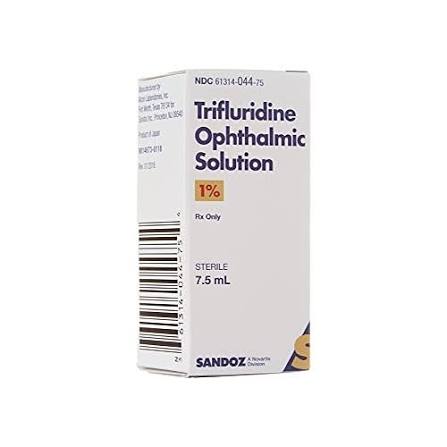
Trifluridine
Trifluridine
What is Trifluridine?
Trifluridine is a prescription antiviral eye drop used to treat viral eye infections caused by the herpes simplex virus (HSV), including herpes simplex keratitis. It works by stopping the virus from multiplying, helping the cornea heal while reducing pain, redness, and inflammation.
Side Effects
- Allergic reaction: Itching or hives, swelling in your face or hands, swelling or tingling in your mouth or throat, chest tightness, trouble breathing
- Increased eye irritation (redness, swelling, or pain) than before you started using the drops.
- Blurred vision or other change in vision.
Warnings
- If your symptoms are not any better after 1 week, tell your doctor.
- Make sure your doctor knows if you are pregnant or breastfeeding.
- Increased eye irritation (redness, swelling, or pain) than before you started using the drops.
Prescription savings · · · ·
What is Trifluridine ?
Trifluridine is a prescription antiviral eye drop used to treat viral eye infections caused by the herpes simplex virus (HSV), including herpes simplex keratitis. It works by stopping the virus from multiplying, helping the cornea heal while reducing pain, redness, and inflammation.
- Allergic reaction: Itching or hives, swelling in your face or hands, swelling or tingling in your mouth or throat, chest tightness, trouble breathing
- Increased eye irritation (redness, swelling, or pain) than before you started using the drops.
- Blurred vision or other change in vision.
- If your symptoms are not any better after 1 week, tell your doctor.
- Make sure your doctor knows if you are pregnant or breastfeeding.
- Increased eye irritation (redness, swelling, or pain) than before you started using the drops.
Trifluridine Coupons & Prices
Trifluridine
4 ED medications in one dose
Apomorphine, sildenafil, tadalafil & vardenafil · One sublingual dose · Free express shipping
Trifluridine prices by dosage
Lowest cash price with a free Rx.com coupon vs. the average retail price.
| Dosage | Quantity | Retail price | Rx.com price |
|---|---|---|---|
| 7.5ml of 1% · Bottle | 7 | $193.04 | $191.37 |
Cash prices near ZIP 77433; updated regularly. Actual pharmacy price may vary.
Looking for a trifluridine coupon? Trifluridine 1% ophthalmic solution (the generic form of Viroptic) is a prescription antiviral eye drop used to treat herpes simplex eye infections. Because it is available as a generic, it is already an affordable option, but the cash price can vary widely from one pharmacy to the next. Rx.com compares trifluridine prices across more than 60,000 pharmacies so you can find a lower price near you. Enter your ZIP above to see today's price.
What is trifluridine and how does it work?
Trifluridine is an antiviral medicine in the nucleoside (pyrimidine) analog class. It is applied as 1% ophthalmic eye drops to treat certain eye infections caused by the herpes simplex virus (types 1 and 2), including primary keratoconjunctivitis and recurrent epithelial keratitis, also known as herpetic keratitis or dendritic corneal ulcers. It works by interfering with the virus's ability to copy itself, which helps the surface of the eye heal.
Trifluridine is FDA-approved for patients 6 years and older and should only be used when a healthcare provider has made a clinical diagnosis of herpetic keratitis. It is not effective against bacterial, fungal, or non-herpetic viral eye infections. It was originally sold under the brand name Viroptic.
Trifluridine cost and coupons without insurance
Trifluridine is available as a generic, which usually keeps its cost lower than a brand-name equivalent. Even so, the cash price without insurance can differ a lot depending on which pharmacy you use, so it pays to compare before you fill. There is no manufacturer savings card for generic trifluridine, but a free discount coupon can still lower your out-of-pocket cost.
Rx.com checks prices at more than 60,000 pharmacies and shows you a coupon you can bring to the counter, whether or not you have insurance. Enter your ZIP above to see today's price and find the lowest option near you.
Trifluridine alternatives and related antivirals
Trifluridine is one of several antiviral medicines used against herpes simplex infections. Another eye drop option a provider may consider is ganciclovir ophthalmic gel. For herpes infections treated with oral or systemic medicine, providers commonly use acyclovir or valacyclovir.
These medicines are not interchangeable, and only your eye doctor or prescriber can decide which treatment fits your diagnosis. If you have been prescribed one of these, you can compare its price on Rx.com too.
Trifluridine safety and how to use it
Trifluridine is for topical use in the eye only and must never be injected. It has no boxed warning. The most common side effects are mild, brief burning or stinging when the drops go in (reported in about 4.6% of people) and swelling of the eyelid (about 2.8%). To reduce the risk of eye or corneal toxicity, do not use more than 9 drops per day or continue treatment for longer than 21 days in a row. Prolonged use can lead to epithelial keratopathy or increased pressure inside the eye.
Store trifluridine refrigerated at 36 to 46 degrees Fahrenheit (2 to 8 degrees Celsius). This information is not medical advice. Use trifluridine only for a confirmed herpetic keratitis diagnosis, and follow your provider's or pharmacist's directions. Talk with them about any side effects or questions.
This Trifluridine information was written and reviewed against authoritative U.S. medical sources — MedlinePlus (U.S. National Library of Medicine), DailyMed, and FDA prescribing information — and checked for accuracy. It is provided for education and is not a substitute for professional medical advice.
Verify the official label: Trifluridine on DailyMed (FDA)
Reviewed against FDA labeling · Last reviewed July 2026
Related Drugs
Browse more medications: starting with T · full A-Z directory · by condition · common drugs
Medical disclaimer: This information is provided for general educational purposes only and is not medical advice. It is not a substitute for professional diagnosis or treatment. Always consult a licensed physician, pharmacist, or other qualified healthcare provider before starting, stopping, or changing any medication or treatment. Never disregard professional medical advice or delay seeking it because of something you read here. If you think you may have a medical emergency, call your doctor or 911 immediately.


