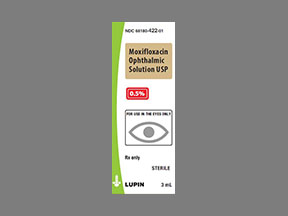
Moxifloxacin Hcl
Moxifloxacin HCl 3ML of 0.5%
What is Moxifloxacin Hcl?
Moxifloxacin hydrochloride (HCl) is a synthetic broad-spectrum antibacterial agent classified as a fluoroquinolone antibiotic. It is commonly used to treat a variety of bacterial infections including respiratory tract infections, skin infections, and intra-abdominal infections. Moxifloxacin works by inhibiting bacterial DNA gyrase and topoisomerase IV, enzymes essential for bacterial DNA replication, transcription, repair, and recombination.Side Effects
- Diarrhea that may contain blood
- Pain, stiffness, swelling, or bruises around your ankle, leg, shoulder, or other joints
- Shaking, trembling, sweating, hunger, confusion
Warnings
- Tell your doctor if you are pregnant or breastfeeding, or if you have kidney disease, liver disease, diabetes, heart disease, myasthenia gravis, brain problems, aortic aneurysm (bulge in the wall of the largest artery), or a history of heart rhythm problems (including prolonged QT interval), seizures, or mental illness. Tell your doctor if you have ever had tendon or joint problems, including rheumatoid arthritis, or if you have received a transplant.
- This medicine may cause the following problems:Tendinitis and tendon rupture (may happen after treatment ends)Nerve damage in the arms or legs, which may become permanentChanges in mood or behavior, seizures, or increased pressure in the headSerious skin reactionsKidney problemsLiver problemsIncreased risk of aortic aneurysmHeart rhythm changesChanges in blood sugar levels
- This medicine may make you dizzy or lightheaded. Do not drive or do anything else that could be dangerous until you know how this medicine affects you.
- This medicine may make you bleed, bruise, or get infections more easily. Take precautions to prevent illness and injury. Wash your hands often.
- This medicine can cause diarrhea. Call your doctor if the diarrhea becomes severe, does not stop, or is bloody. Do not take any medicine to stop diarrhea until you have talked to your doctor. Diarrhea can occur 2 months or more after you stop taking this medicine.
Prescription savings · · · ·
What is Moxifloxacin Hcl ?
Moxifloxacin hydrochloride (HCl) is a synthetic broad-spectrum antibacterial agent classified as a fluoroquinolone antibiotic. It is commonly used to treat a variety of bacterial infections including respiratory tract infections, skin infections, and intra-abdominal infections. Moxifloxacin works by inhibiting bacterial DNA gyrase and topoisomerase IV, enzymes essential for bacterial DNA replication, transcription, repair, and recombination.- Diarrhea that may contain blood
- Pain, stiffness, swelling, or bruises around your ankle, leg, shoulder, or other joints
- Shaking, trembling, sweating, hunger, confusion
- Seizures, severe headache, unusual thoughts or behaviors, trouble sleeping, feeling anxious, confused, or depressed, seeing, hearing, or feeling things that are not there
- Change in how much or how often you urinate, cloudy or bloody urine
- Fainting, dizziness, or lightheadedness
- Chest pain, fast, slow, or uneven heartbeat
- Allergic reaction: Itching or hives, swelling in your face or hands, swelling or tingling in your mouth or throat, chest tightness, trouble breathing
- Sudden chest, stomach, or back pain, trouble breathing, cough
- Unusual bleeding, bruising, or weakness
- Sensitivity of the skin to sunlight, redness or other discoloration of the skin, severe sunburn
- Dark urine or pale stools, nausea, vomiting, loss of appetite, stomach pain, yellow skin or eyes
- Numbness, tingling, weakness, or burning pain in your hands, arms, legs, or feet
- Blistering, peeling, red skin rash
- Tell your doctor if you are pregnant or breastfeeding, or if you have kidney disease, liver disease, diabetes, heart disease, myasthenia gravis, brain problems, aortic aneurysm (bulge in the wall of the largest artery), or a history of heart rhythm problems (including prolonged QT interval), seizures, or mental illness. Tell your doctor if you have ever had tendon or joint problems, including rheumatoid arthritis, or if you have received a transplant.
- This medicine may cause the following problems:Tendinitis and tendon rupture (may happen after treatment ends)Nerve damage in the arms or legs, which may become permanentChanges in mood or behavior, seizures, or increased pressure in the headSerious skin reactionsKidney problemsLiver problemsIncreased risk of aortic aneurysmHeart rhythm changesChanges in blood sugar levels
- This medicine may make you dizzy or lightheaded. Do not drive or do anything else that could be dangerous until you know how this medicine affects you.
- This medicine may make you bleed, bruise, or get infections more easily. Take precautions to prevent illness and injury. Wash your hands often.
- This medicine can cause diarrhea. Call your doctor if the diarrhea becomes severe, does not stop, or is bloody. Do not take any medicine to stop diarrhea until you have talked to your doctor. Diarrhea can occur 2 months or more after you stop taking this medicine.
- This medicine may make your skin more sensitive to sunlight. Wear sunscreen. Do not use sunlamps or tanning beds.
- Call your doctor if your symptoms do not improve or if they get worse.
- Your doctor will do lab tests at regular visits to check on the effects of this medicine. Keep all appointments.
- Keep all medicine out of the reach of children. Never share your medicine with anyone.
- Shaking, trembling, sweating, fast or pounding heartbeat, faintness or lightheadedness, hunger, confusion
- Yellow skin or eyes
Moxifloxacin Hcl Coupons & Prices
Moxifloxacin HCl 3ML of 0.5%

Weight-loss medication, prescribed online
Licensed U.S. providers · No insurance needed · Shipped to your door
A moxifloxacin coupon from Rx.com can lower what you pay at the pharmacy counter for moxifloxacin hydrochloride, the generic version of the fluoroquinolone antibiotic once sold under the brand name Avelox (the oral and IV brand is largely discontinued in the U.S., but FDA-approved generic tablets are widely available). Even though this generic is usually inexpensive, the cash price can vary a lot from one pharmacy to the next for the very same tablets, which is exactly why comparing is worth the two minutes. Enter your ZIP code above to see today's price for your prescribed strength and quantity across more than 60,000 participating pharmacies, then show the free coupon at the counter. Rx.com is not insurance, and it is not medical advice.
What is moxifloxacin and how does it work?
Moxifloxacin hydrochloride is a broad-spectrum, fourth-generation fluoroquinolone antibiotic. Like other drugs in its class, it works by interfering with the enzymes bacteria need to copy their DNA, which stops the bacteria from multiplying and allows the body to clear the infection. It only works against bacteria, so it will not help with a cold, the flu, or any other viral illness.
In adults 18 and older, the FDA-approved oral and injectable forms are used for bacterial infections caused by susceptible organisms, including community-acquired pneumonia, acute bacterial sinusitis, acute bacterial worsening (exacerbation) of chronic bronchitis, uncomplicated and complicated skin and skin-structure infections, complicated intra-abdominal infections, and the treatment and prevention of plague, including pneumonic and septicemic plague. Importantly, the FDA label says that for acute sinusitis, bronchitis flare-ups, and uncomplicated skin infections, moxifloxacin should be used only when no other treatment options are available, because of the risk of serious side effects. (Moxifloxacin is also sold as an eye drop under the brand names Vigamox and Moxeza; those are a different product with different labeling from the oral tablets covered on this page.)
Moxifloxacin cost without insurance, and how the coupon helps
Because moxifloxacin is available as an FDA-approved generic, it is generally one of the lower-cost options among branded antibiotics, and a typical course is short (usually one tablet a day for several days rather than an ongoing monthly refill). But "generic" does not mean "the same price everywhere." Cash prices for the identical strength and quantity can differ sharply between a chain drugstore, a grocery-store pharmacy, and an independent down the street, since each sets its own cash price. That spread is the single biggest reason to check before you fill.
If you are paying without insurance, or your plan's deductible or copay is higher than the cash price, a free Rx.com discount coupon can bring the counter price down. There is no manufacturer savings card for moxifloxacin, since the U.S. brand is essentially off the market. Enter your ZIP above to see today's price near you, compare across the pharmacies in our network, and bring the coupon (printed or on your phone) to the pharmacist. You cannot combine a discount coupon with insurance on the same fill, so use whichever is cheaper.
Moxifloxacin vs. other antibiotics
Moxifloxacin is a strong, broad-spectrum antibiotic, but stronger is not automatically better. Because of the fluoroquinolone class risks described below, prescribers often reserve it for infections where a narrower antibiotic will not do the job. Other commonly prescribed antibiotics your clinician may consider, depending on the infection and your history, include:
- Levofloxacin and ciprofloxacin: the other widely used fluoroquinolones. They carry the same class-wide boxed warnings as moxifloxacin, and they differ in which bacteria they cover best.
- Azithromycin: a macrolide often used for respiratory infections.
- Doxycycline hyclate: a tetracycline used for respiratory, skin, and tick-borne infections.
- Amoxicillin and cefdinir: penicillin- and cephalosporin-class antibiotics that are frequently first-line for sinus, ear, and throat infections.
These are not interchangeable. Only your prescriber can decide which antibiotic fits your infection, allergies, and other medications. If you have already been prescribed one of them, you can compare its price on Rx.com the same way.
Safety information you should know
Moxifloxacin carries an FDA boxed warning shared by the fluoroquinolone class: these medicines have been linked to disabling and potentially irreversible serious reactions that can happen together, including tendinitis and tendon rupture (risk is highest in people over 60, those taking corticosteroids, and kidney, heart, or lung transplant recipients), peripheral neuropathy (nerve damage that may be permanent), and central nervous system effects such as seizures, confusion, hallucinations, depression, and suicidal thoughts. The boxed warning also states that moxifloxacin may worsen muscle weakness in people with myasthenia gravis and should be avoided in them. Because of these risks, the label says moxifloxacin should be reserved for people who have no other treatment option for acute bacterial sinusitis, acute bacterial worsening of chronic bronchitis, or uncomplicated skin infections. Stop the medicine and call your doctor right away if you notice tendon pain or swelling, numbness or tingling, or new mood or thinking changes.
Other important risks include QT-interval prolongation and a dangerous heart rhythm called torsades de pointes (avoid combining with other QT-prolonging drugs, and use caution with low potassium or known QT prolongation), liver injury, serious allergic reactions including anaphylaxis, Clostridioides difficile-associated diarrhea, blood-sugar swings including severe low and high blood sugar (especially in people with diabetes taking insulin or a sulfonylurea), sun sensitivity, a possible increased risk of aortic aneurysm or dissection, and joint concerns in children. Separate moxifloxacin from antacids, sucralfate, multivitamins, and anything containing magnesium, aluminum, iron, zinc, or calcium: take moxifloxacin either 4 hours before or 8 hours after those products, or it may not be absorbed. Common side effects are nausea, diarrhea, headache, and dizziness. This page is a summary and is not medical advice; talk with your doctor or pharmacist about your full medication list before starting moxifloxacin.
This Moxifloxacin Hcl information was written and reviewed against authoritative U.S. medical sources — MedlinePlus (U.S. National Library of Medicine), DailyMed, and FDA prescribing information — and checked for accuracy. It is provided for education and is not a substitute for professional medical advice.
Verify the official label: Moxifloxacin Hcl on DailyMed (FDA)
Reviewed against FDA labeling · Last reviewed July 2026
Related Drugs
Browse more medications: starting with M · full A-Z directory · by condition · common drugs
Medical disclaimer: This information is provided for general educational purposes only and is not medical advice. It is not a substitute for professional diagnosis or treatment. Always consult a licensed physician, pharmacist, or other qualified healthcare provider before starting, stopping, or changing any medication or treatment. Never disregard professional medical advice or delay seeking it because of something you read here. If you think you may have a medical emergency, call your doctor or 911 immediately.


