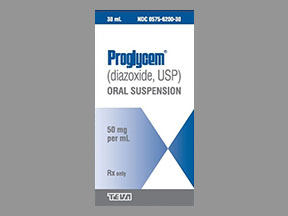
Proglycem
Proglycem 30ML of 50MG/ML
¿Qué es Proglycem?
Proglycem, cuyo nombre genérico es diazóxido, es un medicamento oral utilizado principalmente para tratar la hipoglucemia (bajo nivel de azúcar en la sangre) asociada con condiciones como el hiperinsulinismo. Su función es inhibir la liberación de insulina del páncreas, ayudando así a estabilizar los niveles de azúcar en la sangre. Generalmente se prescribe cuando los cambios en la dieta u otros tratamientos son insuficientes. Proglycem desempeña un papel fundamental en el manejo de trastornos relacionados con la insulina para prevenir episodios hipoglucémicos.Side Effects
- Lightheadedness, dizziness, or fainting
- Rapid weight gain, swelling in your hands, ankles, or feet, trouble breathing, tiredness
- Allergic reaction: Itching or hives, swelling in your face or hands, swelling or tingling in your mouth or throat, chest tightness, trouble breathing
Warnings
- Tell your doctor if you are pregnant or breastfeeding, or if you have kidney disease, heart failure, edema, lung or breathing problems, or a history of gout.
- This medicine may cause ketoacidosis (high levels of ketones in the blood) or severe high blood sugar levels and dehydration, which could lead to coma. You will need to test yourself for ketones and sugar levels.
- Tell any doctor or dentist who treats you that you are using this medicine. This medicine may affect certain medical test results.
- Your doctor will do lab tests at regular visits to check on the effects of this medicine. Keep all appointments.
- Keep all medicine out of the reach of children. Never share your medicine with anyone.
Prescription savings · ·
¿Qué es Proglycem ?
Proglycem, cuyo nombre genérico es diazóxido, es un medicamento oral utilizado principalmente para tratar la hipoglucemia (bajo nivel de azúcar en la sangre) asociada con condiciones como el hiperinsulinismo. Su función es inhibir la liberación de insulina del páncreas, ayudando así a estabilizar los niveles de azúcar en la sangre. Generalmente se prescribe cuando los cambios en la dieta u otros tratamientos son insuficientes. Proglycem desempeña un papel fundamental en el manejo de trastornos relacionados con la insulina para prevenir episodios hipoglucémicos.Proglycem Cupones y Precios - Rx.com
Proglycem 30ML of 50MG/ML
Weight-loss medication, prescribed online
Licensed U.S. providers · No insurance needed · Shipped to your door
Proglycem prices by dosage
Lowest cash price with a free Rx.com coupon vs. the average retail price.
| Dosis | Cantidad | Retail price | Rx.com price |
|---|---|---|---|
| 30ml of 50mg/ml · Bottle | 30 | $609.19 | $525.63 |
Cash prices near ZIP 77433; updated regularly. Actual pharmacy price may vary.
Si usted o un familiar tiene prescrita la suspensión oral de Proglycem (diazóxido) para el nivel bajo de azúcar en sangre relacionado con hiperinsulinismo, un cupón de Proglycem puede hacer que el precio en efectivo sea más manejable, especialmente porque el diazóxido también está disponible como genérico. Ingrese su código postal arriba para comparar los precios en farmacias de Proglycem y diazóxido genérico cerca de usted, ya sea que no tenga seguro, tenga Medicare, o esté pagando en efectivo.
¿Qué es Proglycem (diazóxido) y cómo funciona?
Proglycem es el nombre de marca de la suspensión oral de diazóxido, una benzotiadiazina no diurética que actúa como agente antihipoglucemiante al suprimir la liberación de insulina del páncreas. Está aprobado por la FDA para tratar la hipoglucemia sintomática causada por hiperinsulinismo. En adultos, está indicado para el adenoma o carcinoma inoperable de células de los islotes, o para neoplasias malignas extrapancreáticas. En bebés y niños, está indicado para la sensibilidad a la leucina, la hiperplasia de células de los islotes, la nesidioblastosis, las neoplasias malignas extrapancreáticas, el adenoma de células de los islotes, o la adenomatosis.
Proglycem se usa en adultos con hiperinsulinismo tipo insulinoma, así como en bebés y neonatos con hiperinsulinismo congénito (hipoglucemia hiperinsulinémica persistente de la infancia). No es apropiado para la hipoglucemia funcional (reactiva), el tipo de nivel bajo de azúcar en sangre que puede ocurrir después de comer; Proglycem está contraindicado para ese uso.
Cupón de Proglycem: diazóxido genérico y el precio en efectivo de Rx.com
La suspensión oral de diazóxido está disponible como genérico, por lo que la forma más importante de reducir su costo de bolsillo suele ser surtir el genérico en lugar de la marca Proglycem; pregúntele a su farmacéutico si una sustitución es apropiada para su receta. Los precios tanto de la marca como del genérico varían según la farmacia y pueden cambiar con frecuencia, por lo que vale la pena comparar antes de surtir.
Un cupón de Proglycem de Rx.com se puede usar en farmacias participantes sin importar su situación de seguro, ya sea que no tenga seguro, tenga Medicare (que por lo general no cubre cupones de descuento en efectivo junto con un plan de la Parte D, pero se puede usar en lugar del seguro cuando resulta más económico), o simplemente esté comparando sus opciones. Ingrese su código postal arriba para ver el precio de hoy de Proglycem y diazóxido genérico en farmacias cerca de usted.
Tratamientos relacionados para el hiperinsulinismo y la hipoglucemia severa
Debido a que Proglycem y el diazóxido genérico comparten el mismo ingrediente activo, dosis y forma, generalmente se pueden sustituir entre sí en la farmacia. Otros medicamentos se usan a veces para afecciones relacionadas: la octreotida es un análogo de la somatostatina que se utiliza ocasionalmente para ciertos casos de hiperinsulinismo, mientras que el glucagón se usa para el tratamiento de emergencia de la hipoglucemia severa en sí, en lugar de para la supresión continua de insulina.
Estos son medicamentos distintos para situaciones clínicas relacionadas pero diferentes; hable con su endocrinólogo o médico que le receta sobre qué tratamiento se ajusta a su diagnóstico específico antes de cambiar cualquier cosa.
Información de seguridad: advertencias y precauciones clave
Proglycem lleva una advertencia de seguridad de la FDA: se ha reportado hipertensión pulmonar en neonatos y bebés tratados con diazóxido, particularmente aquellos con factores de riesgo como prematuridad, aspiración de meconio, sepsis, o enfermedad cardíaca congénita o diafragmática existente. Estos bebés deben ser monitoreados en busca de signos de dificultad respiratoria, y el medicamento debe suspenderse si se sospecha hipertensión pulmonar; la afección suele ser reversible una vez que se detiene el diazóxido.
Proglycem también causa retención de líquidos y sodio, lo cual puede desencadenar o empeorar la insuficiencia cardíaca y es la razón por la que a menudo se administra junto con un diurético. Puede elevar la glucosa en sangre hasta el punto de causar hiperglucemia, cetoacidosis, o coma hiperosmolar no cetósico, especialmente durante otra enfermedad, por lo que se requiere un monitoreo regular de la glucosa. Con el uso prolongado, la hipertricosis (crecimiento excesivo de vello) es común; también se han reportado edema, malestar gastrointestinal, y raros efectos en las células sanguíneas. Esta es información general, no un consejo médico; trabaje con su médico que le receta en un plan de monitoreo que se ajuste a su situación.
La información sobre Proglycem fue redactada y revisada con base en fuentes médicas autorizadas de EE. UU. (MedlinePlus, de la Biblioteca Nacional de Medicina de EE. UU.; DailyMed; y la información de prescripción de la FDA) y verificada para asegurar su precisión. Se ofrece con fines educativos y no sustituye el consejo médico profesional.
Consulte la etiqueta oficial: Proglycem en DailyMed (FDA)
Revisado con base en el etiquetado de la FDA · Última revisión: julio de 2026
Medicamentos Relacionados
Browse more medications: starting with P · full A-Z directory · by condition · common drugs
Medical disclaimer: This information is provided for general educational purposes only and is not medical advice. It is not a substitute for professional diagnosis or treatment. Always consult a licensed physician, pharmacist, or other qualified healthcare provider before starting, stopping, or changing any medication or treatment. Never disregard professional medical advice or delay seeking it because of something you read here. If you think you may have a medical emergency, call your doctor or 911 immediately.


