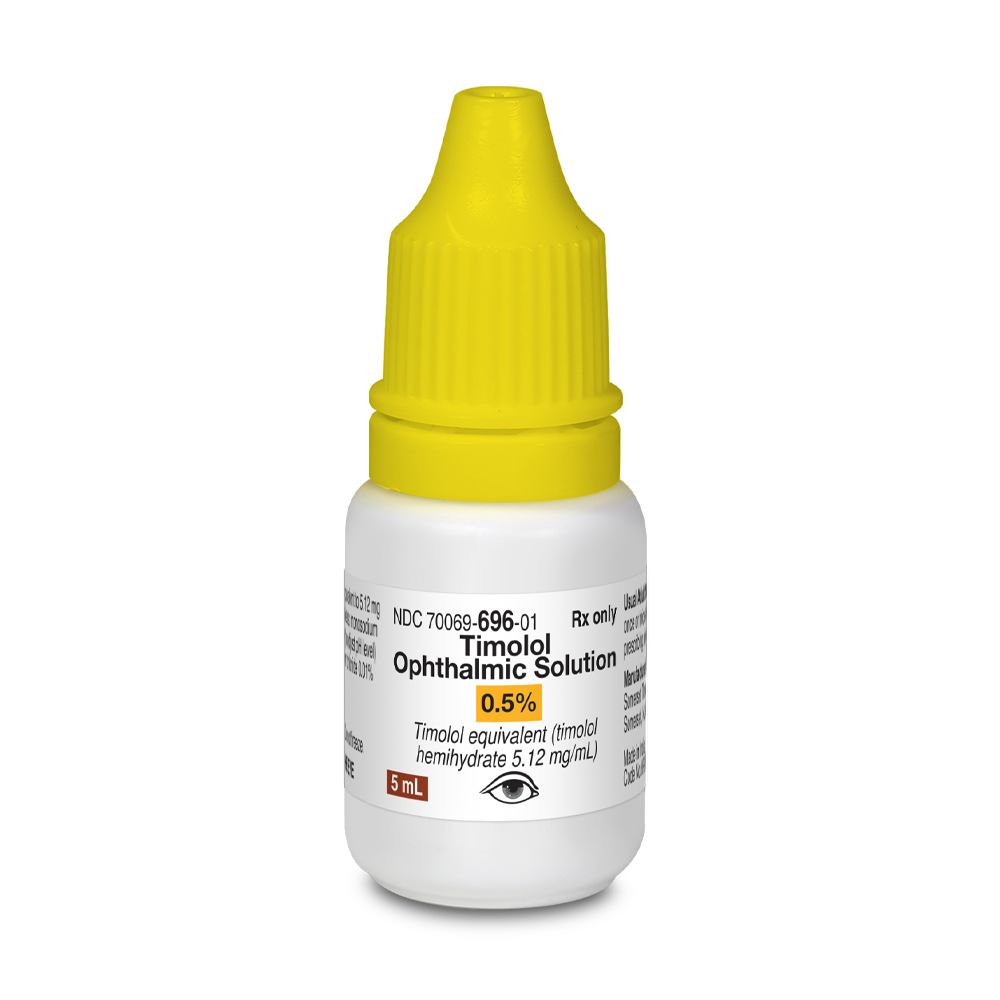
Timolol Hemihydrate
Timolol Hemihydrate
¿Qué es Timolol Hemihydrate?
El Timolol Hemihidrato es un agente bloqueador de los receptores beta-adrenérgicos no selectivo, comúnmente utilizado en soluciones oftálmicas para reducir la presión intraocular en condiciones como el glaucoma y la hipertensión ocular. Al disminuir la producción de humor acuoso en el ojo, ayuda efectivamente a reducir el riesgo de daño al nervio óptico y pérdida de visión asociada con la presión ocular elevada. Su formulación garantiza una absorción y eficacia óptimas mientras minimiza los posibles efectos cardiovasculares sistémicos.Side Effects
- Blurred vision
- Dizziness
- Fatigue
Warnings
- Do not use if you have asthma or severe chronic obstructive pulmonary disease (COPD)
- Consult your doctor if you have a history of heart failure
- Use with caution in patients with diabetes
- Can mask symptoms of low blood sugar
- Should not be stopped suddenly without consulting a healthcare provider
Prescription savings · ·
¿Qué es Timolol Hemihydrate ?
El Timolol Hemihidrato es un agente bloqueador de los receptores beta-adrenérgicos no selectivo, comúnmente utilizado en soluciones oftálmicas para reducir la presión intraocular en condiciones como el glaucoma y la hipertensión ocular. Al disminuir la producción de humor acuoso en el ojo, ayuda efectivamente a reducir el riesgo de daño al nervio óptico y pérdida de visión asociada con la presión ocular elevada. Su formulación garantiza una absorción y eficacia óptimas mientras minimiza los posibles efectos cardiovasculares sistémicos.Timolol Hemihydrate Cupones y Precios - Rx.com
Timolol Hemihydrate
4 ED medications in one dose
Apomorphine, sildenafil, tadalafil & vardenafil · One sublingual dose · Free express shipping
Timolol Hemihydrate prices by dosage
Lowest cash price with a free Rx.com coupon vs. the average retail price.
| Dosis | Cantidad | Retail price | Rx.com price |
|---|---|---|---|
| 5ml of 0.5% · Bottle | 5 | $195.99 | $63.37 |
| 10ml of 0.5% · Bottle | 5 | $175.49 | $63.37 |
| 15ml of 0.5% · Bottle | 15 | $490.99 | $163.11 |
Cash prices near ZIP 77433; updated regularly. Actual pharmacy price may vary.
Use un cupón gratuito de Rx.com para timolol hemihidrato y compare los precios en efectivo de la solución oftálmica de timolol hemihidrato (0.25% y 0.5%), la gota oftálmica genérica que también se vende bajo la marca Betimol para la presión ocular elevada en la hipertensión ocular y el glaucoma de ángulo abierto. Los precios en efectivo del mismo frasco pueden variar mucho de una farmacia a otra, por eso vale la pena dedicar el minuto que toma comparar. Rx.com consulta los precios en más de 60,000 farmacias, así que ingrese su código postal arriba para ver el precio de hoy cerca de usted y lleve el cupón al mostrador.
¿Qué es el timolol hemihidrato y cómo funciona?
El timolol hemihidrato es un bloqueador beta-adrenérgico no selectivo (un betabloqueador oftálmico) que se administra en forma de gotas para los ojos para bajar la presión dentro del ojo. Está aprobado por la FDA para tratar la presión intraocular elevada en personas con hipertensión ocular o glaucoma de ángulo abierto. Bajar esa presión es lo que protege el nervio óptico con el tiempo, y por eso estas gotas normalmente se usan todos los días aunque uno no sienta ninguna diferencia.
La dosis inicial habitual según la etiqueta es una gota de la solución al 0.25% en el ojo o los ojos afectados dos veces al día, aumentando al 0.5% dos veces al día si la respuesta no es suficiente. Una vez que la presión ocular está controlada, a menudo basta con una dosis al día. El timolol hemihidrato es el ingrediente activo de Betimol y es terapéuticamente equivalente en su indicación a los productos con timolol maleato como Timoptic e Istalol. No está aprobado por la FDA como tratamiento único para el glaucoma de ángulo cerrado. Su oftalmólogo decide qué gota y qué concentración se ajustan a su situación.
Costo del timolol hemihidrato sin seguro y cómo ahorrar
La solución oftálmica de timolol hemihidrato está disponible como genérico, y un genérico aprobado por la FDA es lo que la mayoría de las farmacias van a despachar a menos que su receta indique lo contrario. Lo que sorprende a la gente es cuánto puede variar el precio en efectivo del mismo frasco entre dos farmacias del mismo pueblo, a veces incluso entre dos sucursales de la misma cadena. Esa es justamente la razón por la que importa comparar cupones: el número que aparece en el mostrador no es un precio nacional único.
Si va a pagar en efectivo, ingrese su código postal arriba para ver el precio de hoy en las farmacias cerca de usted y luego muestre el cupón gratuito de Rx.com en el mostrador de la farmacia. No hay membresía ni registro. La marca Betimol la fabrica Thea Pharma, que ofrece una tarjeta de ahorro para pacientes a través de su propio sitio oficial; los requisitos y las condiciones varían y por lo general excluyen a las personas con seguro del gobierno, así que lea las condiciones vigentes antes de contar con ella. Si tiene seguro o Medicare, siempre vale la pena pedirle al farmacéutico que consulte tanto su plan como el precio del cupón y quedarse con el que sea más bajo, ya que los precios de los cupones no se pueden combinar con el seguro.
Timolol hemihidrato vs. timolol maleato y otras gotas para el glaucoma
La pregunta más común es cuál es la diferencia entre las dos sales. Ambas llevan al ojo el mismo betabloqueador activo, el timolol. El timolol maleato es la sal más antigua y con mayor disponibilidad en las farmacias (se vende como Timoptic e Istalol), mientras que la sal hemihidrato es la que contiene Betimol y a veces se prefiere por la comodidad y la tolerabilidad ocular. Son equivalentes en cuanto a para qué se usan, pero no son automáticamente intercambiables en el mostrador de la farmacia, así que pregúntele a quien le receta antes de cambiar.
Otras gotas con receta que su oftalmólogo puede considerar para la presión ocular actúan por mecanismos diferentes y tienen distintos perfiles de efectos secundarios:
- Latanoprost — un análogo de prostaglandina, generalmente una vez al día
- Tartrato de brimonidina — un agonista alfa
- Betaxolol — una gota oftálmica betabloqueadora que es cardioselectiva en lugar de no selectiva
- Dorzolamida-timolol — una gota combinada que incluye timolol
Los precios de estas también varían mucho, así que es razonable comparar algunas si su médico dice que más de una opción le serviría.
Seguridad, efectos secundarios y quiénes deben evitar el timolol hemihidrato
El timolol hemihidrato no tiene advertencia en recuadro de la FDA, pero su etiqueta incluye una advertencia cardíaca y respiratoria destacada que merece explicarse en palabras sencillas: los betabloqueadores aplicados en el ojo se absorben al torrente sanguíneo, y pueden ocurrir las mismas reacciones que se ven con los betabloqueadores tomados por vía oral. Eso incluye reacciones respiratorias graves y muerte por broncoespasmo en personas con asma, y raramente muerte por insuficiencia cardíaca. Por eso, las gotas están contraindicadas en el asma bronquial o antecedentes de asma, EPOC grave, bradicardia sinusal, bloqueo AV de segundo o tercer grado, insuficiencia cardíaca manifiesta, choque cardiogénico y en cualquier persona alérgica a alguno de sus componentes. Informe a su oftalmólogo sobre sus antecedentes pulmonares y cardíacos antes de empezar, y tenga precaución si tiene diabetes (las gotas pueden enmascarar los signos de azúcar baja en la sangre), hipertiroidismo (pueden enmascarar los signos de tirotoxicosis, y suspenderlas de golpe puede desencadenar una tormenta tiroidea), miastenia gravis y mala circulación al cerebro. No las suspenda por su cuenta y mencione las gotas antes de cualquier cirugía electiva.
Los efectos más comunes son ardor o escozor pasajero al aplicar la gota, ojos secos, picazón, sensación de cuerpo extraño y visión borrosa, junto con dolor de cabeza, mareo, frecuencia cardíaca lenta, presión arterial baja, fatiga y depresión. Un consejo práctico viene directamente de la etiqueta: la solución contiene cloruro de benzalconio, que los lentes de contacto blandos absorben, así que quítese los lentes antes de aplicar la gota y espere 5 minutos para volver a ponérselos. Aparte de eso, muchos oftalmólogos y farmacéuticos enseñan una técnica de cerrar suavemente el ojo o presionar el lagrimal después de la gota para limitar cuánto medicamento se absorbe al resto del cuerpo; eso es un consejo clínico general y no algo que indique la etiqueta de este producto, así que pregúntele a su propio oftalmólogo si conviene hacerlo y cómo. Esta página es información general, no consejo médico. Hable con su oftalmólogo o farmacéutico sobre su propio cuidado.
La información sobre Timolol Hemihydrate fue redactada y revisada con base en fuentes médicas autorizadas de EE. UU. (MedlinePlus, de la Biblioteca Nacional de Medicina de EE. UU.; DailyMed; y la información de prescripción de la FDA) y verificada para asegurar su precisión. Se ofrece con fines educativos y no sustituye el consejo médico profesional.
Consulte la etiqueta oficial: Timolol Hemihydrate en DailyMed (FDA)
Revisado con base en el etiquetado de la FDA · Última revisión: julio de 2026
Medicamentos Relacionados
Browse more medications: starting with T · full A-Z directory · by condition · common drugs
Medical disclaimer: This information is provided for general educational purposes only and is not medical advice. It is not a substitute for professional diagnosis or treatment. Always consult a licensed physician, pharmacist, or other qualified healthcare provider before starting, stopping, or changing any medication or treatment. Never disregard professional medical advice or delay seeking it because of something you read here. If you think you may have a medical emergency, call your doctor or 911 immediately.


