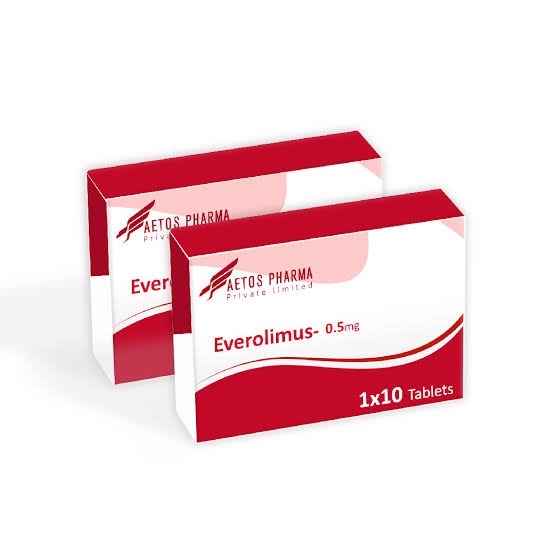
Everolimus
Everolimus
What is Everolimus?
Everolimus is an immunosuppressant medication primarily used in oncology and transplant medicine. It works by inhibiting the mTOR (mammalian target of rapamycin), a key protein kinase that regulates cell proliferation and growth. By blocking mTOR, everolimus helps in reducing cancer cell growth and proliferation and prevents organ rejection in transplant patients.
Side Effects
- Swollen glands in your neck, armpits, or groin, pain in your groin, lower back, or side
- Fever, chills, stuffy or runny nose, sore throat, body aches
- Sores, ulcers, or white patches on your lips, mouth, or throat
Warnings
- Oral routeThis medicine may cause birth defects if either partner is using it during conception or pregnancy. Tell your doctor right away if you or your partner becomes pregnant. Use an effective form of birth control during treatment with this medicine and for at least 8 weeks after your last dose. Male patients with female partners should use an effective form of birth control during treatment with Afinitor® or Afinitor® Disperz and for 4 weeks after the last dose.
- Do not breastfeed during treatment with Afinitor® or Afinitor® Disperz and for 2 weeks after your last dose.
- Tell your doctor if you have kidney disease, liver disease, lung or breathing problems, any type of infection (including hepatitis B), diabetes, high cholesterol, or a history of skin cancer or lymphoma. Tell your doctor if you have a lactose intolerance, Lapp lactase deficiency, or a glucose-galactose malabsorption. Also, tell your doctor if you have had a heart transplant, if you are having a surgery or other procedures, or if you had or are planning to receive a radiation treatment.
- Keep all medicine out of the reach of children. Never share your medicine with anyone.
- This medicine may cause the following problems:Increased risk of cancer (including skin cancer, lymphoma)Increased risk of serious infectionsInterstitial lung disease or non-infectious pneumonitis (inflammation of the lungs)Angioedema (severe swelling, when used with an ACE inhibitor)Kidney problemsSlow wound healingDiabetesHigh cholesterol in the bloodLiver problemsIncreased risk of blood clots in the transplanted kidney or liverWorsening side effects from radiation treatmentThrombotic microangiopathy (damage in the smallest blood vessels), hemolytic uremic syndrome, and thrombotic thrombocytopenic purpura
Prescription savings · · · ·
What is Everolimus ?
Everolimus is an immunosuppressant medication primarily used in oncology and transplant medicine. It works by inhibiting the mTOR (mammalian target of rapamycin), a key protein kinase that regulates cell proliferation and growth. By blocking mTOR, everolimus helps in reducing cancer cell growth and proliferation and prevents organ rejection in transplant patients.
- Swollen glands in your neck, armpits, or groin, pain in your groin, lower back, or side
- Fever, chills, stuffy or runny nose, sore throat, body aches
- Sores, ulcers, or white patches on your lips, mouth, or throat
- Allergic reaction: Itching or hives, swelling in your face or hands, swelling or tingling in your mouth or throat, chest tightness, trouble breathing
- Blurred vision, increased hunger, thirst, or urination, unexplained weight loss
- Chest pain, trouble breathing, cough, fast, slow, uneven, or pounding heartbeat
- Decrease in how much or how often you urinate, painful urination, cloudy bloody urine
- Dark urine or pale stools, loss of appetite, nausea, vomiting, stomach pain, yellow skin or eyes
- Rapid weight gain, swelling in your hands, ankles, or feet
- Unusual bleeding, bruising, or weakness
- Oral routeThis medicine may cause birth defects if either partner is using it during conception or pregnancy. Tell your doctor right away if you or your partner becomes pregnant. Use an effective form of birth control during treatment with this medicine and for at least 8 weeks after your last dose. Male patients with female partners should use an effective form of birth control during treatment with Afinitor® or Afinitor® Disperz and for 4 weeks after the last dose.
- Do not breastfeed during treatment with Afinitor® or Afinitor® Disperz and for 2 weeks after your last dose.
- Tell your doctor if you have kidney disease, liver disease, lung or breathing problems, any type of infection (including hepatitis B), diabetes, high cholesterol, or a history of skin cancer or lymphoma. Tell your doctor if you have a lactose intolerance, Lapp lactase deficiency, or a glucose-galactose malabsorption. Also, tell your doctor if you have had a heart transplant, if you are having a surgery or other procedures, or if you had or are planning to receive a radiation treatment.
- Keep all medicine out of the reach of children. Never share your medicine with anyone.
- This medicine may cause the following problems:Increased risk of cancer (including skin cancer, lymphoma)Increased risk of serious infectionsInterstitial lung disease or non-infectious pneumonitis (inflammation of the lungs)Angioedema (severe swelling, when used with an ACE inhibitor)Kidney problemsSlow wound healingDiabetesHigh cholesterol in the bloodLiver problemsIncreased risk of blood clots in the transplanted kidney or liverWorsening side effects from radiation treatmentThrombotic microangiopathy (damage in the smallest blood vessels), hemolytic uremic syndrome, and thrombotic thrombocytopenic purpura
- This medicine may make you bleed, bruise, or get infections more easily. Take precautions to prevent illness and injury. Wash your hands often.
- This medicine could cause infertility. Talk with your doctor before using this medicine if you plan to have children.
- Oral routeMedicines used to treat cancer are very strong and can have many side effects. Before receiving this medicine, make sure you understand all the risks and benefits. It is important for you to work closely with your doctor during your treatment.
- This medicine may make your skin more sensitive to sunlight. Wear sunscreen. Do not use sunlamps or tanning beds.
- Your doctor will do lab tests at regular visits to check on the effects of this medicine. Keep all appointments.
- Keep all medicine out of the reach of children. Never share your medicine with anyone.
Everolimus Coupons & Prices
Everolimus

Weight-loss medication, prescribed online
Licensed U.S. providers · No insurance needed · Shipped to your door
Looking for an everolimus coupon? Everolimus is the generic form of the brand-name drugs Afinitor, Afinitor Disperz, and Zortress. Because it is a specialty medication, the cash price can vary widely from one pharmacy to the next, so it pays to compare before you fill. Rx.com checks prices across more than 60,000 U.S. pharmacies and gives you a free discount coupon you can use at the counter, whether or not you have insurance. Enter your ZIP above to see today's price near you.
What is everolimus and how does it work?
Everolimus is an mTOR inhibitor, a type of kinase inhibitor that slows the growth of certain cells. In cancer care it is sold under the brand names Afinitor and Afinitor Disperz. It is used to treat advanced hormone-receptor-positive, HER2-negative breast cancer (given with exemestane); advanced neuroendocrine tumors of the pancreas, gastrointestinal tract, or lung; advanced kidney cancer (renal cell carcinoma) after other treatments have failed; kidney tumors (renal angiomyolipoma) linked to tuberous sclerosis complex (TSC); a type of brain tumor called subependymal giant cell astrocytoma (SEGA) with TSC; and, for Afinitor Disperz, certain TSC-associated partial-onset seizures.
The same active ingredient is also sold as Zortress, which is used in transplant medicine to help prevent the body from rejecting a kidney or liver graft. Zortress is taken alongside a reduced dose of a calcineurin inhibitor such as cyclosporine or tacrolimus, plus corticosteroids. Important: Afinitor and Zortress are not interchangeable. They are approved for different conditions and use different dosing, so your prescription will specify which one is right for you.
Everolimus cost and savings without insurance
Everolimus is available as an FDA-approved generic, which generally costs less than the brand-name versions. Even so, prices for this specialty drug can differ substantially between pharmacies in the same area, so comparing is the single best way to keep your out-of-pocket cost down. Rx.com lets you compare the cash price across more than 60,000 pharmacies and print or show a free coupon at checkout. This works whether you are uninsured, underinsured, or simply paying less with a coupon than with your plan. Enter your ZIP above to see today's price near you.
If you are prescribed a brand-name version, the manufacturer Novartis offers a copay savings program for eligible, commercially insured patients through its official Afinitor website. Eligibility and terms vary and government-insured patients typically do not qualify, so check the program details directly. A manufacturer copay card and an Rx.com coupon cannot be combined, but you can use whichever gives you the lower price on a given fill.
Related medications and alternatives
Everolimus belongs to the mTOR inhibitor class. A closely related option your care team may discuss is sirolimus, another mTOR inhibitor used in transplant care. In breast cancer, everolimus is paired with the aromatase inhibitor exemestane. In transplant regimens it is combined with a calcineurin inhibitor such as tacrolimus or cyclosporine. The brand-name equivalents of everolimus itself are Afinitor (oncology) and Zortress (transplant).
Only your prescriber can decide which medication and combination fit your diagnosis. This is background information, not medical advice, and you should not switch or stop any therapy on your own.
Safety and side effects
The transplant product Zortress carries an FDA boxed warning noting an increased risk of cancers (including lymphoma and skin cancer) and serious infections from immunosuppression; a risk of kidney graft blood-clot (thrombosis), usually within the first 30 days, that can lead to loss of the graft; greater kidney toxicity when combined with full-dose calcineurin inhibitors; and increased deaths reported in a heart transplant trial, so it is not recommended for heart transplant patients.
Across both uses, everolimus can cause non-infectious pneumonitis or lung inflammation, serious and opportunistic infections, angioedema (especially when taken with ACE inhibitor blood-pressure drugs), slow or impaired wound healing, mouth sores (stomatitis), high blood sugar and high cholesterol, low blood counts, and reduced kidney function. It can harm an unborn baby, so effective contraception is required, and live vaccines should be avoided during treatment. This is a summary, not a complete list. Talk with your doctor or pharmacist about your full medical history, other medicines, and any side effects you notice.
This Everolimus information was written and reviewed against authoritative U.S. medical sources — MedlinePlus (U.S. National Library of Medicine), DailyMed, and FDA prescribing information — and checked for accuracy. It is provided for education and is not a substitute for professional medical advice.
Verify the official label: Everolimus on DailyMed (FDA)
Reviewed against FDA labeling · Last reviewed July 2026
Related Drugs
Browse more medications: starting with E · full A-Z directory · by condition · common drugs
Medical disclaimer: This information is provided for general educational purposes only and is not medical advice. It is not a substitute for professional diagnosis or treatment. Always consult a licensed physician, pharmacist, or other qualified healthcare provider before starting, stopping, or changing any medication or treatment. Never disregard professional medical advice or delay seeking it because of something you read here. If you think you may have a medical emergency, call your doctor or 911 immediately.


