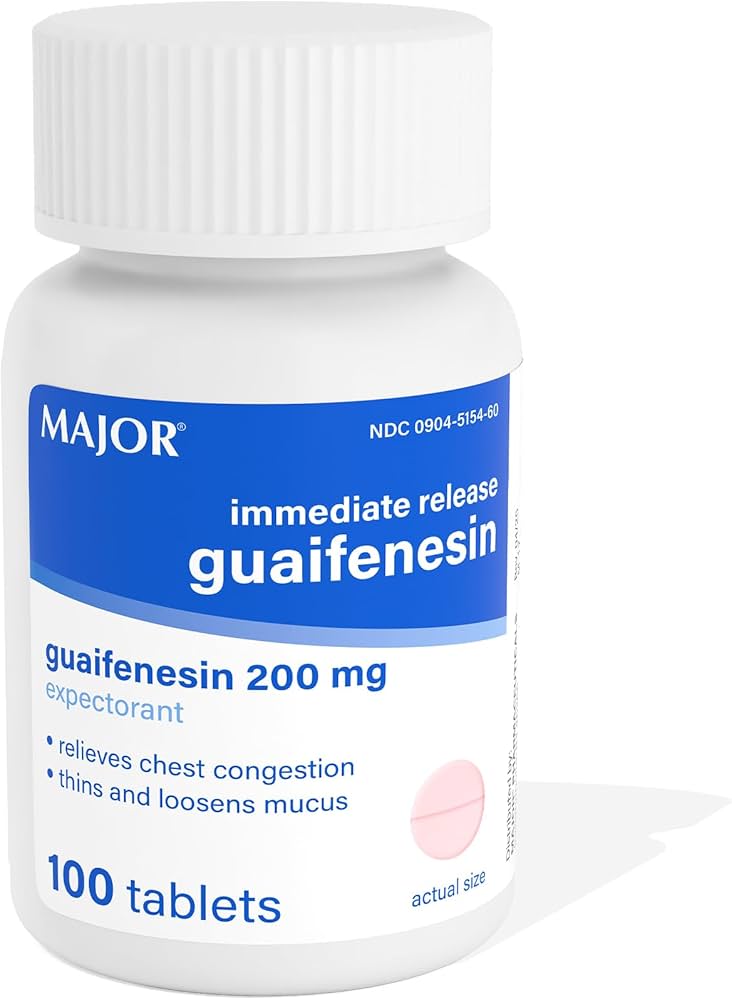
Guaifenesin
Guaifenesin
What is Guaifenesin?
Guaifenesin is an over-the-counter expectorant that helps loosen and thin mucus in the airways, making it easier to cough up congestion. It is commonly used to relieve chest congestion caused by colds, bronchitis, and other respiratory illnesses. Learn about Guaifenesin uses, dosage, side effects, and how to take it safely.
Side Effects
- Cough that lasts longer than 7 days.
- Cough with fever, skin rash, or ongoing headache.
Warnings
- This medicine may contain alcohol.
- If you are pregnant or breast feeding, ask your doctor or pharmacist before using this medicine.
- If your cough is caused by asthma, emphysema, bronchitis, or smoking, talk to your doctor before using this medicine.
Prescription savings · · · ·
What is Guaifenesin ?
Guaifenesin is an over-the-counter expectorant that helps loosen and thin mucus in the airways, making it easier to cough up congestion. It is commonly used to relieve chest congestion caused by colds, bronchitis, and other respiratory illnesses. Learn about Guaifenesin uses, dosage, side effects, and how to take it safely.
- Cough that lasts longer than 7 days.
- Cough with fever, skin rash, or ongoing headache.
- This medicine may contain alcohol.
- If you are pregnant or breast feeding, ask your doctor or pharmacist before using this medicine.
- If your cough is caused by asthma, emphysema, bronchitis, or smoking, talk to your doctor before using this medicine.
Guaifenesin Coupons & Prices
Guaifenesin

4 ED medications in one dose
Apomorphine, sildenafil, tadalafil & vardenafil · One sublingual dose · Free express shipping
Guaifenesin prices by dosage
Lowest cash price with a free Rx.com coupon vs. the average retail price.
| Dosage | Quantity | Retail price | Rx.com price |
|---|---|---|---|
| 100 tablets · Bottle | 30 | — | $9.39 |
| 100gm of · Bottle | 60 | $63.29 | $57.27 |
| 500gm of · Bottle | 40 | — | $39.85 |
Cash prices near ZIP 77433; updated regularly. Actual pharmacy price may vary.
Guaifenesin is an over-the-counter expectorant sold under brand names like Mucinex and Robitussin Chest Congestion, as well as a generic version; a free rx.com guaifenesin coupon lets you compare prices before you buy, since even OTC medicines can be priced differently pharmacy to pharmacy.
What Is Guaifenesin and How Does It Work?
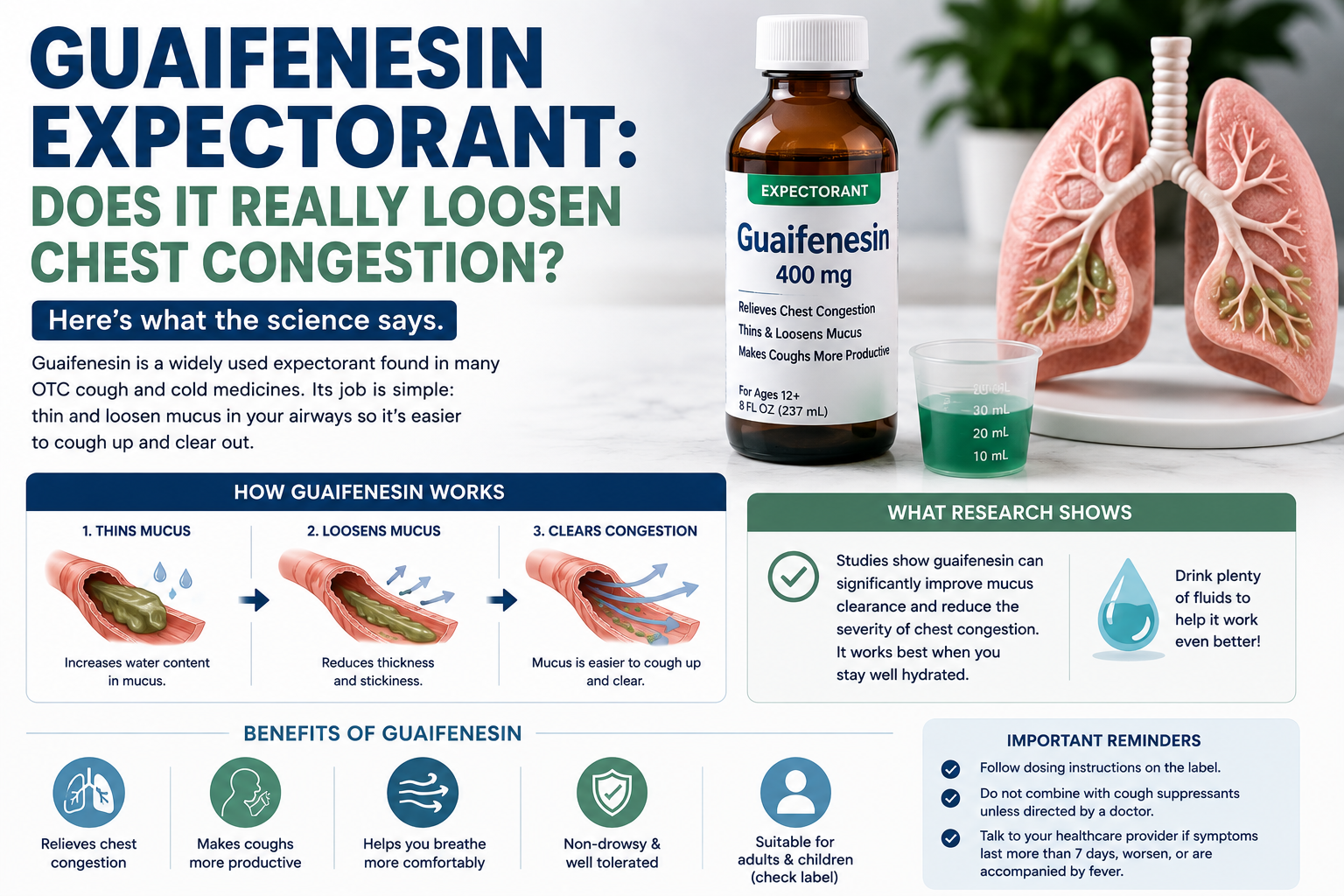
Guaifenesin is an expectorant approved under the FDA's OTC monograph to relieve chest congestion. It works by thinning and loosening mucus (phlegm) in the airways, which makes coughs more productive so mucus can be cleared more easily. It's also indicated to help loosen phlegm and thin bronchial secretions in people with stable chronic bronchitis.
Guaifenesin is sold both as a store or generic brand and under name brands including Mucinex, Robitussin Chest Congestion, Humibid, and Organidin NR. Because guaifenesin only manages the symptom of thick mucus, it does not treat the underlying cause of a cough or speed up recovery from a cold.
How to Save on Guaifenesin
Guaifenesin doesn't require a prescription, so you can pick it up directly off the shelf. But shelf price isn't the whole story: OTC medicines like guaifenesin can be priced differently from one pharmacy to the next, and in some cases buying with a prescription or using a coupon at checkout can lower the price compared to paying the posted shelf price.
Because a generic version of guaifenesin is available, comparing the generic against the brand-name options (Mucinex, Robitussin Chest Congestion, Humibid, Organidin NR) is one of the simplest ways to find the lower-cost option for the same active ingredient. Enter your ZIP above to see today's price at pharmacies near you.
Guaifenesin vs. Other Cough and Cold Options
Guaifenesin is often confused with combination products or other cough medicines, but they work differently:
- Mucinex DM combines guaifenesin with dextromethorphan, a cough suppressant that works on the brain's cough reflex rather than on mucus.
- Dextromethorphan alone quiets the urge to cough; it doesn't thin mucus the way guaifenesin does.
- Robitussin is a brand line that includes both plain-guaifenesin products (Chest Congestion) and combination formulas, so it's worth checking the label to see which active ingredients a specific Robitussin product contains.
- Pseudoephedrine is a decongestant that relieves nasal and sinus stuffiness through a different mechanism, and is sometimes combined with guaifenesin in the same product.
- Benzonatate is a prescription-only cough suppressant that numbs the cough reflex; it's an option some providers prescribe when OTC products aren't enough, but it works differently than guaifenesin's mucus-thinning action.
Guaifenesin Safety Information
Guaifenesin is generally well tolerated, and there is no FDA boxed warning for this OTC drug. The most commonly reported side effects are nausea, vomiting, stomach upset, dizziness, and headache.
Talk to a doctor before use if you have a cough with large amounts of phlegm, or a chronic breathing problem such as asthma, emphysema, or chronic bronchitis, or if you smoke. Guaifenesin should not be given to children under 4 years old. Stop use and see a doctor if your cough lasts more than 7 days, comes back, or is accompanied by fever, rash, or a persistent headache, since these can be signs of a more serious condition. This information is not a substitute for medical advice — check with your doctor or pharmacist about your specific situation, including any other medications you take.
This Guaifenesin information was written and reviewed against authoritative U.S. medical sources — MedlinePlus (U.S. National Library of Medicine), DailyMed, and FDA prescribing information — and checked for accuracy. It is provided for education and is not a substitute for professional medical advice.
Verify the official label: Guaifenesin on DailyMed (FDA)
Reviewed against FDA labeling · Last reviewed July 2026
Guaifenesin — Articles & Guides
Related Drugs
Browse more medications: starting with G · full A-Z directory · by condition · common drugs
Medical disclaimer: This information is provided for general educational purposes only and is not medical advice. It is not a substitute for professional diagnosis or treatment. Always consult a licensed physician, pharmacist, or other qualified healthcare provider before starting, stopping, or changing any medication or treatment. Never disregard professional medical advice or delay seeking it because of something you read here. If you think you may have a medical emergency, call your doctor or 911 immediately.


