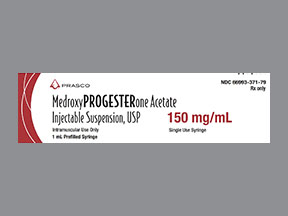
Medroxyprogesterone Acetate
medroxyPROGESTERone Acetate 10MG
What is Medroxyprogesterone Acetate?
If you are considering pregnancy prevention, you doctor might prescribe medroxyprogesterone acetate. In post-menopausal women, medroxyprogesterone acetate might be prescribed to prevent some uterine cancers. For endometriosis, doctors also prescribe medroxyprogesterone acetate.Side Effects
- Loss of vision, blurred vision
- Severe or unusual vaginal bleeding
- Numbness or weakness on one side of your body, sudden or severe headache, problems with speech or walking, pain in your lower leg (calf)
Warnings
- It is not safe to take this medicine during pregnancy. It could harm an unborn baby. Tell your doctor right away if you become pregnant.
- Tell your doctor if you are breastfeeding or if you have kidney disease, heart disease, asthma, diabetes, endometriosis, high blood pressure, high cholesterol, lupus, porphyria, migraines, thyroid problems, or a history of seizures or cancer. Tell your doctor if you smoke.
- This medicine may increase your risk for the following: Blood clots, which could lead to stroke or heart attackDementia (when used with estrogen in women older than 65)Breast or endometrial cancer (when used with estrogen)
- Tell any doctor who treats you that you use this medicine. You may need to stop taking it before you have surgery or if you need to be on bedrest.
- Tell any doctor or dentist who treats you that you are using this medicine. This medicine may affect certain medical test results.
Prescription savings · · · ·
What is Medroxyprogesterone Acetate ?
If you are considering pregnancy prevention, you doctor might prescribe medroxyprogesterone acetate. In post-menopausal women, medroxyprogesterone acetate might be prescribed to prevent some uterine cancers. For endometriosis, doctors also prescribe medroxyprogesterone acetate.- Loss of vision, blurred vision
- Severe or unusual vaginal bleeding
- Numbness or weakness on one side of your body, sudden or severe headache, problems with speech or walking, pain in your lower leg (calf)
- Sudden and severe stomach pain, nausea, vomiting, fever, lightheadedness
- Rapid weight gain, swelling in your hands, ankles, or feet
- Allergic reaction: Itching or hives, swelling in your face or hands, swelling or tingling in your mouth or throat, chest tightness, trouble breathing
- Breast lump, pain, or tenderness
- Chest pain, trouble breathing, coughing up blood
- Yellow skin or eyes
- It is not safe to take this medicine during pregnancy. It could harm an unborn baby. Tell your doctor right away if you become pregnant.
- Tell your doctor if you are breastfeeding or if you have kidney disease, heart disease, asthma, diabetes, endometriosis, high blood pressure, high cholesterol, lupus, porphyria, migraines, thyroid problems, or a history of seizures or cancer. Tell your doctor if you smoke.
- This medicine may increase your risk for the following: Blood clots, which could lead to stroke or heart attackDementia (when used with estrogen in women older than 65)Breast or endometrial cancer (when used with estrogen)
- Tell any doctor who treats you that you use this medicine. You may need to stop taking it before you have surgery or if you need to be on bedrest.
- Tell any doctor or dentist who treats you that you are using this medicine. This medicine may affect certain medical test results.
- Your doctor will check your progress and the effects of this medicine at regular visits. Keep all appointments.
- Keep all medicine out of the reach of children. Never share your medicine with anyone.
- Sudden and severe stomach pain, nausea, vomiting, fever, lightheadedness
- Yellow skin or eyes
Medroxyprogesterone Acetate Coupons & Prices
medroxyPROGESTERone Acetate 10MG
Weight-loss medication, prescribed online
Licensed U.S. providers · No insurance needed · Shipped to your door
Looking for a medroxyprogesterone acetate coupon? Medroxyprogesterone acetate is a widely available generic progestin, so it is already one of the lower-cost hormone medicines — but the cash price still varies a lot from one pharmacy to the next, which is why comparing before you fill matters. Rx.com checks live prices across more than 60,000 U.S. pharmacies so you can find today's lowest cash price on the oral tablets (brand Provera) or the injectable forms (Depo-Provera). Enter your ZIP above to see today's price and a discount coupon you can show at the pharmacy counter.
What is medroxyprogesterone acetate and how does it work?
Medroxyprogesterone acetate is a synthetic progestin — a man-made form of the hormone progesterone. It is used in several forms. The oral tablet (sold under the brand Provera) treats secondary amenorrhea (absent periods) and abnormal uterine bleeding caused by hormonal imbalance, and it helps protect the lining of the uterus (reducing endometrial hyperplasia) in postmenopausal women who are also taking conjugated estrogens. The long-acting injectable forms (Depo-Provera CI given into the muscle, and Depo-SubQ Provera 104 given under the skin) are used as contraception; the SubQ 104 form is also approved to manage endometriosis-associated pain. A higher-dose oral form is used for the palliative treatment of certain inoperable, recurrent, or metastatic endometrial or kidney (renal) cancers.
By supplying progestin, the medicine mimics the effects of natural progesterone on the uterus and, in the injectable contraceptive forms, prevents ovulation. Your prescriber chooses the specific form and dose for your situation.
How much does medroxyprogesterone acetate cost without insurance?
Because medroxyprogesterone acetate is available as a generic, it is generally an affordable medication even without insurance. The catch is that pharmacies set their own cash prices, and the same prescription can cost noticeably more at one store than another nearby. That gap is exactly why it pays to compare rather than fill at the first pharmacy you try. There is no manufacturer copay savings card for the generic, so a pharmacy discount coupon is usually the most reliable way to lower the cash price.
Rx.com compares live cash prices across more than 60,000 pharmacies and shows a free discount coupon for the pharmacy near you. Prices change often, so enter your ZIP above to see today's price for your specific form and quantity — oral tablets, the intramuscular injection, or the subcutaneous injection may each price differently.
Related medicines and alternatives
Medroxyprogesterone is one of several progestin and progesterone options. Which one fits depends on why it is being prescribed — cycle regulation, endometrial protection during hormone therapy, contraception, or another use — and that is a decision for your prescriber. Related products you can compare on Rx.com include:
- Provera — the oral tablet brand of medroxyprogesterone acetate.
- Depo-Provera — the long-acting injectable form of the same drug.
- Norethindrone — another progestin used for menstrual and contraceptive purposes.
- Progesterone — micronized natural progesterone.
- Megestrol acetate — a related progestin.
Do not switch products on your own; ask your prescriber or pharmacist which form and dose is right for you.
Safety, warnings, and side effects
The injectable forms carry an FDA boxed warning for loss of bone mineral density that increases the longer the medicine is used and may not fully reverse after stopping; Depo-Provera CI is not recommended for longer than two years as birth control unless other methods are not suitable. In December 2025 the FDA added a warning that repeated or long-term use of injectable medroxyprogesterone is linked to an increased risk of intracranial meningioma (a usually non-cancerous brain-lining tumor). When medroxyprogesterone is combined with estrogen in postmenopausal hormone therapy, Women's Health Initiative findings show increased risks of cardiovascular events (heart attack, stroke), blood clots in the legs or lungs, breast cancer, and probable dementia — so it should not be used to prevent heart disease or dementia.
Medroxyprogesterone should not be used if you are pregnant or think you might be, have undiagnosed abnormal vaginal bleeding, have a current or past blood-clotting disorder, have liver problems, or have known or suspected breast or genital cancer. Common side effects can include weight gain, mood changes or depression, breakthrough bleeding, and delayed return to fertility after the injection. This information is educational and is not medical advice — talk with your doctor or pharmacist about your personal risks and report any concerning symptoms.
This Medroxyprogesterone Acetate information was written and reviewed against authoritative U.S. medical sources — MedlinePlus (U.S. National Library of Medicine), DailyMed, and FDA prescribing information — and checked for accuracy. It is provided for education and is not a substitute for professional medical advice.
Verify the official label: Medroxyprogesterone Acetate on DailyMed (FDA)
Reviewed against FDA labeling · Last reviewed July 2026
Related Drugs
Browse more medications: starting with M · full A-Z directory · by condition · common drugs
Medical disclaimer: This information is provided for general educational purposes only and is not medical advice. It is not a substitute for professional diagnosis or treatment. Always consult a licensed physician, pharmacist, or other qualified healthcare provider before starting, stopping, or changing any medication or treatment. Never disregard professional medical advice or delay seeking it because of something you read here. If you think you may have a medical emergency, call your doctor or 911 immediately.


