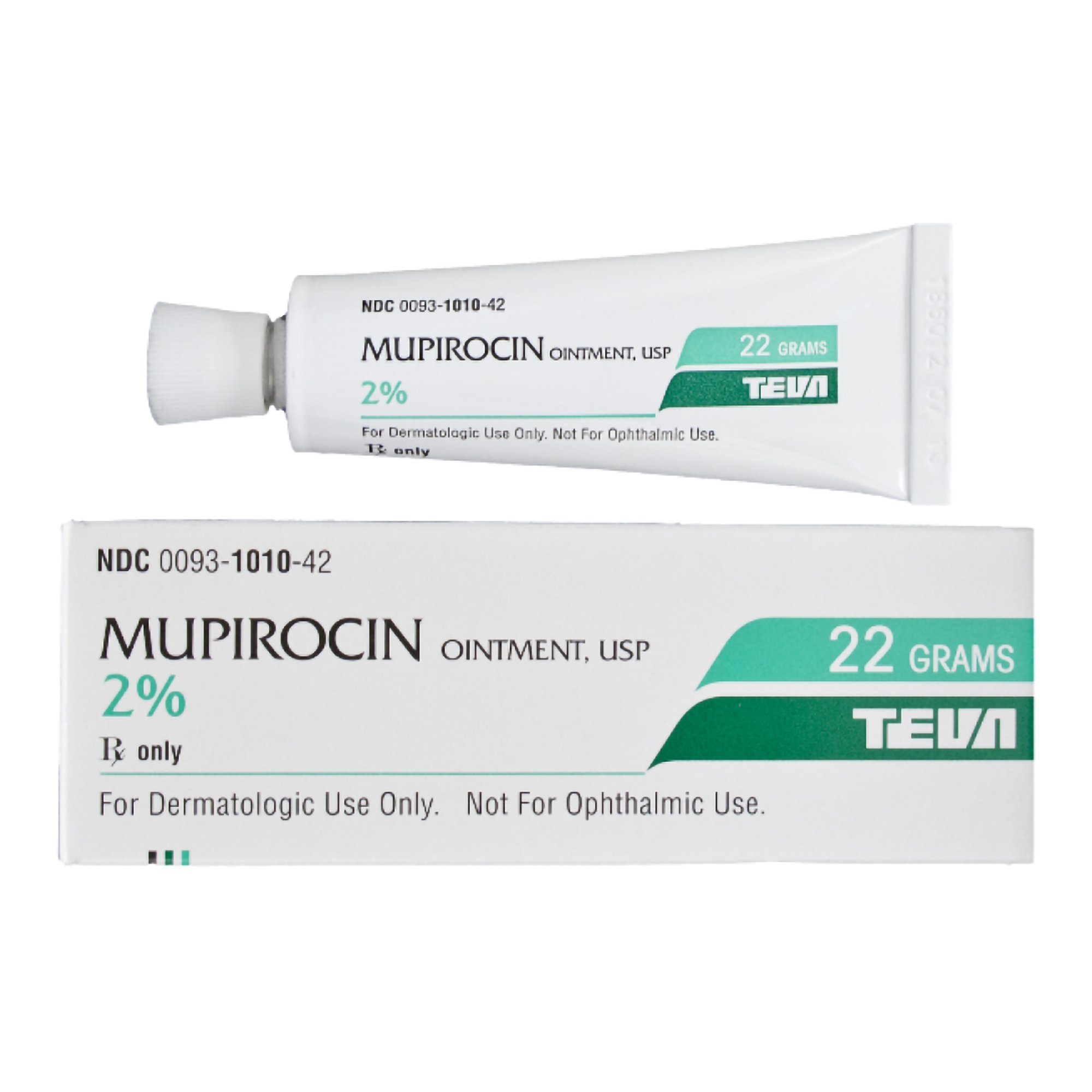
Mupirocin
Mupirocin
What is Mupirocin?
Mupirocin (Bactroban) is a prescription topical antibiotic used to treat bacterial skin infections, including impetigo and infected cuts, scrapes, and wounds caused by susceptible bacteria. It works by stopping bacterial growth, helping clear infections and promote skin healing.
Side Effects
- Allergic reaction: Itching or hives, swelling in your face or hands, swelling or tingling in your mouth or throat, chest tightness, trouble breathing
- Severe diarrhea that may be bloody, stomach cramps or pain
- Severe skin rash, burning, or itching
Warnings
- Call your doctor if your symptoms do not improve or if they get worse.
- Keep all medicine out of the reach of children. Never share your medicine with anyone.
- Tell your doctor if you are pregnant or breastfeeding, or if you have kidney disease.
- This medicine can cause diarrhea. Call your doctor if the diarrhea becomes severe, does not stop, or is bloody. Do not take any medicine to stop diarrhea until you have talked to your doctor. Diarrhea can occur 2 months or more after you stop taking this medicine.
- Topical application routeDo not use this medicine to treat a skin problem your doctor has not examined.
Prescription savings · · · ·
What is Mupirocin ?
Mupirocin (Bactroban) is a prescription topical antibiotic used to treat bacterial skin infections, including impetigo and infected cuts, scrapes, and wounds caused by susceptible bacteria. It works by stopping bacterial growth, helping clear infections and promote skin healing.
- Allergic reaction: Itching or hives, swelling in your face or hands, swelling or tingling in your mouth or throat, chest tightness, trouble breathing
- Severe diarrhea that may be bloody, stomach cramps or pain
- Severe skin rash, burning, or itching
- Call your doctor if your symptoms do not improve or if they get worse.
- Keep all medicine out of the reach of children. Never share your medicine with anyone.
- Tell your doctor if you are pregnant or breastfeeding, or if you have kidney disease.
- This medicine can cause diarrhea. Call your doctor if the diarrhea becomes severe, does not stop, or is bloody. Do not take any medicine to stop diarrhea until you have talked to your doctor. Diarrhea can occur 2 months or more after you stop taking this medicine.
- Topical application routeDo not use this medicine to treat a skin problem your doctor has not examined.
Mupirocin Coupons & Prices
Mupirocin

Weight-loss medication, prescribed online
Licensed U.S. providers · No insurance needed · Shipped to your door
Looking for a mupirocin coupon? Mupirocin is a prescription topical antibiotic used for certain skin infections. The topical ointment and cream are available as low-cost generics (the Bactroban and Centany brands of these topical forms have been discontinued in the U.S.). Even so, the cash price for the same tube can vary widely from one pharmacy to the next, so it pays to compare. Rx.com checks prices at more than 60,000 pharmacies so you can find today's lowest price near you. Enter your ZIP above to see the current price and coupon at pharmacies close to you.
What is mupirocin and how does it work?
Mupirocin is a topical antibacterial derived from pseudomonic acid (it is also known as pseudomonic acid A). It works by binding to a bacterial enzyme called isoleucyl-tRNA synthetase, which stops the bacteria from making the proteins they need to grow. It is FDA-approved as an ointment to treat impetigo caused by Staphylococcus aureus and Streptococcus pyogenes, and as a cream to treat secondarily infected traumatic skin lesions such as small cuts, sutured wounds, and abrasions caused by those same bacteria.
A separate 2% nasal ointment (sold under the Bactroban Nasal brand) is approved to clear MRSA colonization from the nose in patients 12 and older and in healthcare workers, as part of a comprehensive infection-control program. Note that the branded Bactroban Nasal product was discontinued in the U.S. in 2018, so the nasal form may not always be available to fill. Doctors also commonly prescribe mupirocin off-label for conditions like folliculitis, minor bacterial skin infections, and MRSA decolonization protocols. Your prescriber will decide whether it's right for your situation.
How much does mupirocin cost without insurance?
Because the topical forms of mupirocin are available as generics, they're generally affordable compared with brand-name drugs. That said, generic doesn't automatically mean the same price everywhere. Cash prices for the identical tube can differ substantially between pharmacies, even ones just a few miles apart, which is exactly why comparing before you fill matters.
Rx.com compares mupirocin prices across more than 60,000 U.S. pharmacies and shows you a free coupon you can use whether or not you have insurance. Prices change often and are shown live, so enter your ZIP above to see today's price near you rather than relying on an out-of-date figure.
Mupirocin alternatives and related medications
Mupirocin is one of several topical treatments used for skin and minor wound infections. If you're comparing options your prescriber may consider, related medications include:
- Bactroban — the brand name for mupirocin; the topical generic you'd fill today is the same active ingredient.
- Retapamulin — another topical antibiotic used for impetigo.
- Fusidic acid — a topical antibiotic used for certain skin infections.
- Clindamycin — an antibiotic available in topical and oral forms.
- Neosporin — an over-the-counter triple-antibiotic ointment used for minor cuts and scrapes.
The right choice depends on the type of infection and the bacteria involved, so talk with your doctor or pharmacist about which fits your needs. You can compare prices on any of these at Rx.com.
Mupirocin safety and side effects
Mupirocin has no boxed warning. It is for external, topical use only and should be kept away from the eyes. Because the ointment contains polyethylene glycol (PEG), it shouldn't be used on large open wounds or where a lot of PEG could be absorbed into the body, particularly in people with moderate-to-severe kidney problems. For topical impetigo, treatment is usually limited to about 10 days, and the label advises checking with your prescriber if there's no response within 3 to 5 days. (The nasal course is shorter—about 5 days.) Prolonged or repeated use can allow non-susceptible organisms (including fungi) to overgrow and can encourage antibiotic resistance, so follow your prescriber's directions on how long to use it.
The most common side effects are local reactions at the application site, such as burning, stinging, itching, or rash. Stop using it and contact your provider if you develop sensitization, severe irritation, or a severe allergic reaction. Superinfection and rare cases of C. difficile-associated diarrhea have been reported. This information is educational and not a substitute for medical advice—follow your prescriber's instructions and ask your doctor or pharmacist about your specific situation.
This Mupirocin information was written and reviewed against authoritative U.S. medical sources — MedlinePlus (U.S. National Library of Medicine), DailyMed, and FDA prescribing information — and checked for accuracy. It is provided for education and is not a substitute for professional medical advice.
Verify the official label: Mupirocin on DailyMed (FDA)
Reviewed against FDA labeling · Last reviewed July 2026
Mupirocin — Articles & Guides

Related Drugs
Browse more medications: starting with M · full A-Z directory · by condition · common drugs
Medical disclaimer: This information is provided for general educational purposes only and is not medical advice. It is not a substitute for professional diagnosis or treatment. Always consult a licensed physician, pharmacist, or other qualified healthcare provider before starting, stopping, or changing any medication or treatment. Never disregard professional medical advice or delay seeking it because of something you read here. If you think you may have a medical emergency, call your doctor or 911 immediately.


