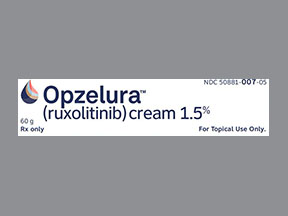
Opzelura
Opzelura 60GM of 1.5%
What is Opzelura?
Opzelura is a topical medication used to treat certain skin conditions. It helps reduce inflammation and may improve the appearance of the skin affected by these conditions.Side Effects
- Allergic reaction: Itching or hives, swelling in your face or hands, swelling or tingling in your mouth or throat, chest tightness, trouble breathing
- Fever, chills, cough, stuffy or runny nose, sore throat, body aches
- Sores, reddish patch or irritated area, shiny bump, or pink growth on the skin
Warnings
- Tell your doctor if you are pregnant, or if you have liver disease (including hepatitis B or C), heart or blood vessel disease, any type of infection (including tuberculosis, shingles), diabetes, lung disease, high cholesterol, a weak immune system, or a history of skin cancer. Tell your doctor if you are a current or past smoker.
- Topical application routeDo not use this medicine to treat a skin problem your doctor has not examined.
- This medicine may cause the following problems:Increased risk of serious infections (bacterial, fungal, viral), including herpes infection or shinglesIncreased risk of cancer, including lymphoma, skin cancerIncreased risk of serious heart or blood vessel problems, including heart attack or strokeIncreased risk of blood clots (including deep vein thrombosis, pulmonary embolism, arterial thrombosis), especially in patients with rheumatoid arthritis who are 50 years of age and older and with a heart or blood vessel diseaseHigh cholesterol or fats in the blood
- This medicine may make your skin more sensitive to sunlight. Wear sunscreen. Do not use sunlamps or tanning beds.
- Call your doctor if your symptoms do not improve or if they get worse.
Prescription savings · · · ·
What is Opzelura ?
Opzelura is a topical medication used to treat certain skin conditions. It helps reduce inflammation and may improve the appearance of the skin affected by these conditions.- Allergic reaction: Itching or hives, swelling in your face or hands, swelling or tingling in your mouth or throat, chest tightness, trouble breathing
- Fever, chills, cough, stuffy or runny nose, sore throat, body aches
- Sores, reddish patch or irritated area, shiny bump, or pink growth on the skin
- Chest pain that may spread to your arms, jaw, back, or neck, coughing up blood, trouble breathing, nausea, unusual sweating, fainting
- Pain in the ear, change in hearing
- Black, tarry stools, swollen glands, weight loss, yellow skin and eyes
- Numbness or weakness in your arm or leg, or on one side of your body, pain in your lower leg
- Unusual bleeding, bruising, or weakness
- Change in how much or how often you urinate, bloody or cloudy urine, lower back or side pain
- Sudden or severe headache, problems with vision, speech, or walking
- Tell your doctor if you are pregnant, or if you have liver disease (including hepatitis B or C), heart or blood vessel disease, any type of infection (including tuberculosis, shingles), diabetes, lung disease, high cholesterol, a weak immune system, or a history of skin cancer. Tell your doctor if you are a current or past smoker.
- Topical application routeDo not use this medicine to treat a skin problem your doctor has not examined.
- This medicine may cause the following problems:Increased risk of serious infections (bacterial, fungal, viral), including herpes infection or shinglesIncreased risk of cancer, including lymphoma, skin cancerIncreased risk of serious heart or blood vessel problems, including heart attack or strokeIncreased risk of blood clots (including deep vein thrombosis, pulmonary embolism, arterial thrombosis), especially in patients with rheumatoid arthritis who are 50 years of age and older and with a heart or blood vessel diseaseHigh cholesterol or fats in the blood
- This medicine may make your skin more sensitive to sunlight. Wear sunscreen. Do not use sunlamps or tanning beds.
- Call your doctor if your symptoms do not improve or if they get worse.
- This medicine may make you bleed, bruise, or get infections more easily. Take precautions to prevent illness and injury. Wash your hands often.
- Keep all medicine out of the reach of children. Never share your medicine with anyone.
- Do not breastfeed during treatment and for at least 4 weeks after the last dose.
- Your doctor will do lab tests at regular visits to check on the effects of this medicine. Keep all appointments.
Opzelura Coupons & Prices
Opzelura 60GM of 1.5%
4 ED medications in one dose
Apomorphine, sildenafil, tadalafil & vardenafil · One sublingual dose · Free express shipping
Looking for an Opzelura coupon? Opzelura (ruxolitinib) is a brand-name topical cream and the first topical JAK inhibitor approved in the U.S. Because there is no generic version yet, out-of-pocket cost can be high. Rx.com offers a free cash discount coupon you can use at the pharmacy counter whether or not you have insurance. Enter your ZIP above to see today's price on Opzelura at pharmacies near you, and read on to compare your savings options.
What is Opzelura and how does it work?
Opzelura is a prescription cream whose active ingredient is ruxolitinib, a topical Janus kinase (JAK) inhibitor. It is not a steroid. Instead of using a corticosteroid, it works by blocking JAK enzymes in the skin that drive the inflammation and immune signaling behind certain skin conditions. It was the first topical JAK inhibitor approved in the United States.
Opzelura is FDA-approved for two uses: the short-term and non-continuous chronic treatment of mild to moderate atopic dermatitis (eczema) in non-immunocompromised patients 2 years and older whose disease is not well controlled with other topical prescription therapies (or when those are not advisable); and the treatment of nonsegmental vitiligo in patients 12 years and older. Because it is absorbed into the body, use is limited to no more than 20% of your body surface area, with a cap on how much cream you use each week. Always follow the amounts your prescriber sets.
Opzelura cost: manufacturer savings card vs. Rx.com cash coupon
There is no FDA-approved generic for Opzelura, so it is only sold as the brand and price is the main hurdle. The manufacturer, Incyte, runs an official copay savings program (details at opzelura.com). Like most drugmaker copay cards, it is generally limited to people with commercial (private) insurance, and its terms and eligibility can change, so read the fine print. Patients who are uninsured, or who are covered by Medicare, Medicaid, or other government plans, usually do not qualify for that card.
That is where an Rx.com cash coupon helps. Our free coupon is a cash-price discount, not insurance, so it works whether you are uninsured, on Medicare, or if the manufacturer card is declined. You cannot combine a cash coupon with your insurance on the same fill, so it pays to compare both. Incyte also offers a patient assistance program for eligible patients who cannot afford their medication; ask your prescriber's office or check the manufacturer's site. Enter your ZIP above to see today's Opzelura cash price near you.
Opzelura alternatives and related treatments
Opzelura is one of several non-steroid and prescription options for eczema and related skin conditions. Whether an alternative is right for you depends on your diagnosis, age, and how much of your skin is involved. Talk with your provider before switching, and do not use these off-label.
- Eucrisa (crisaborole) — a non-steroid topical ointment for mild to moderate atopic dermatitis.
- Elidel (pimecrolimus) and Protopic (tacrolimus) — topical calcineurin inhibitors, another non-steroid class for eczema.
- Dupixent (dupilumab) — an injectable biologic for moderate to severe atopic dermatitis.
- Rinvoq (upadacitinib) — an oral JAK inhibitor for moderate to severe atopic dermatitis.
Opzelura should not be used together with therapeutic biologics, other JAK inhibitors, or potent immunosuppressants, so tell your prescriber about everything you take.
Safety and side effects
Opzelura carries a boxed warning shared by the JAK inhibitor class. Based on studies of oral JAK inhibitors in rheumatoid arthritis, these medicines have been linked to serious infections (including tuberculosis and bacterial, fungal, and viral infections, some fatal), higher risk of death from any cause, certain cancers (including lymphoma and skin cancers), major cardiovascular events such as heart attack and stroke, and blood clots (including DVT and PE). Your provider should test you for TB before you start. This is general information, not medical advice, so review your own risks with your prescriber.
The most common side effects reported with Opzelura are local skin reactions where the cream is applied, such as acne, itching, and redness, along with common-cold symptoms (nasopharyngitis), headache, urinary tract infection, and fever. Do not use it with therapeutic biologics, other JAK inhibitors, or potent immunosuppressants. Call your provider if you develop signs of infection or other concerning symptoms.
This Opzelura information was written and reviewed against authoritative U.S. medical sources — MedlinePlus (U.S. National Library of Medicine), DailyMed, and FDA prescribing information — and checked for accuracy. It is provided for education and is not a substitute for professional medical advice.
Verify the official label: Opzelura on DailyMed (FDA)
Reviewed against FDA labeling · Last reviewed July 2026
Related Drugs
Browse more medications: starting with O · full A-Z directory · by condition · common drugs
Medical disclaimer: This information is provided for general educational purposes only and is not medical advice. It is not a substitute for professional diagnosis or treatment. Always consult a licensed physician, pharmacist, or other qualified healthcare provider before starting, stopping, or changing any medication or treatment. Never disregard professional medical advice or delay seeking it because of something you read here. If you think you may have a medical emergency, call your doctor or 911 immediately.


