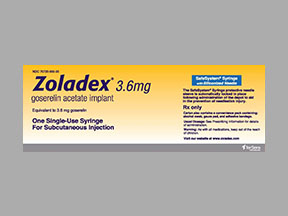
Zoladex
Zoladex 3.6MG
What is Zoladex?
Zoladex (goserelin) is a synthetic hormone that acts as a gonadotropin-releasing hormone (GnRH) agonist, used primarily in the treatment of hormone-sensitive cancers such as prostate cancer in men and breast cancer in pre- and peri-menopausal women. It works by suppressing the production of sex hormones (testosterone and estrogen), thereby inhibiting the growth of hormone-dependent tumors. Zoladex is administered via a subcutaneous implant that gradually releases medication over a 1-month or 3-month period.Side Effects
- Allergic reaction: Itching or hives, swelling in your face or hands, swelling or tingling in your mouth or throat, chest tightness, trouble breathing
- Change in how much or how often you urinate, bloody or cloudy urine, painful urination
- Chest pain that may spread, trouble breathing, nausea, unusual sweating, fainting
Warnings
- Your doctor will check your progress and the effects of this medicine at regular visits. Keep all appointments.
- This medicine may cause the following problems:Loss of bone densityIncreased risk of diabetes, heart attack, or stroke in menHeart rhythm problems, including QT prolongationChanges in mood or behavior
- For women: You will stop having monthly periods during treatment with this medicine. This is not an effective form of birth control. Tell your doctor if you continue to have normal periods while receiving this medicine.
- Injection routeMedicines used to treat cancer are very strong and can have many side effects. Before receiving this medicine, make sure you understand all the risks and benefits. It is important for you to work closely with your doctor during your treatment.
- Tell any doctor or dentist who treats you that you are using this medicine. This medicine may affect certain medical test results.
Prescription savings · · · ·
What is Zoladex ?
Zoladex (goserelin) is a synthetic hormone that acts as a gonadotropin-releasing hormone (GnRH) agonist, used primarily in the treatment of hormone-sensitive cancers such as prostate cancer in men and breast cancer in pre- and peri-menopausal women. It works by suppressing the production of sex hormones (testosterone and estrogen), thereby inhibiting the growth of hormone-dependent tumors. Zoladex is administered via a subcutaneous implant that gradually releases medication over a 1-month or 3-month period.- Allergic reaction: Itching or hives, swelling in your face or hands, swelling or tingling in your mouth or throat, chest tightness, trouble breathing
- Change in how much or how often you urinate, bloody or cloudy urine, painful urination
- Chest pain that may spread, trouble breathing, nausea, unusual sweating, fainting
- Depression, mood, or behavior changes
- Fast, pounding, or uneven heartbeat, dizziness, lightheadedness
- Numbness or weakness on one side of your body, sudden or severe headache, problems with vision, speech, or walking
- Rapid weight gain, swelling in your hands, ankles, or feet
- Stomach pain or bloating, dizziness, trouble breathing, confusion
- Your doctor will check your progress and the effects of this medicine at regular visits. Keep all appointments.
- This medicine may cause the following problems:Loss of bone densityIncreased risk of diabetes, heart attack, or stroke in menHeart rhythm problems, including QT prolongationChanges in mood or behavior
- For women: You will stop having monthly periods during treatment with this medicine. This is not an effective form of birth control. Tell your doctor if you continue to have normal periods while receiving this medicine.
- Injection routeMedicines used to treat cancer are very strong and can have many side effects. Before receiving this medicine, make sure you understand all the risks and benefits. It is important for you to work closely with your doctor during your treatment.
- Tell any doctor or dentist who treats you that you are using this medicine. This medicine may affect certain medical test results.
- Injection routeIt is not safe to take this medicine during pregnancy. It could harm an unborn baby. Tell your doctor right away if you become pregnant.
- Use a nonhormonal form of birth control (including condoms, vaginal spermicides, cervical caps, or a diaphragm) to prevent pregnancy while you are receiving this medicine and for at least 12 weeks after treatment.
- Tell your doctor if you are breastfeeding, or if you have bone cancer, diabetes, heart or blood vessel problems, heart rhythm problems (including long QT syndrome), a history of depression, or a family history of osteoporosis. Tell your doctor if you drink alcohol or use tobacco. Tell your doctor if you have any unusual vaginal bleeding.
Zoladex Coupons & Prices
Zoladex 3.6MG
Weight-loss medication, prescribed online
Licensed U.S. providers · No insurance needed · Shipped to your door
Zoladex prices by dosage
Lowest cash price with a free Rx.com coupon vs. the average retail price.
| Dosage | Quantity | Retail price | Rx.com price |
|---|---|---|---|
| 3.6mg · Implant | 1 | $1,709.77 | $1,158.08 |
Cash prices near ZIP 77433; updated regularly. Actual pharmacy price may vary.
If you're looking for a Zoladex coupon, Rx.com can show you a cash price on the goserelin acetate implant at pharmacies near you — useful whether you're uninsured, on Medicare, or your manufacturer copay card doesn't apply; enter your ZIP above to see today's price at nearby pharmacies.
What Is Zoladex and How Does It Work?
Zoladex (goserelin acetate) is a GnRH (gonadotropin-releasing hormone) agonist delivered as a small biodegradable implant placed just under the skin of the abdomen. It's FDA-approved in two implant strengths: a 3.6 mg implant given every 28 days, and a 10.8 mg implant given every 12 weeks — a separately FDA-approved product (first approved in the US in 1996) for the same prostate-cancer indications, not an off-label or convenience alternative. By steadily suppressing the pituitary-gonadal hormone signal, it lowers testosterone in men and estrogen in women over time. There is no generic version of Zoladex available in the US, so it is only sold under the brand name.
The FDA-approved uses are dosage-form and population specific: advanced prostate cancer (palliative therapy, available as either the 3.6 mg or 10.8 mg implant); in combination with flutamide — starting 8 weeks before and continuing during radiation therapy — for locally confined (Stage T2b-T4) prostate cancer (also available as either strength); advanced breast cancer in pre- or perimenopausal women (3.6 mg only); management of endometriosis (with or without other therapy) for up to 6 months in women 18 and older (3.6 mg only); and thinning of the uterine lining before endometrial ablation for dysfunctional uterine bleeding (3.6 mg only). It is also used off-label — not an FDA-approved indication — for ovarian suppression during chemotherapy in some fertility-preservation protocols and for managing precocious puberty; talk to your provider about whether an off-label use applies to you.
Zoladex Cost: Manufacturer Savings Card vs. the Rx.com Coupon
Zoladex has an official manufacturer savings program (search "Zoladex savings" or visit zoladex.com directly rather than following a link, since deep program pages can change) — like most manufacturer copay cards, it is generally limited to patients with commercial/private insurance, and terms, eligibility, and any dollar caps vary and can change, so confirm current details directly with the program.
If you're uninsured, on a government plan such as Medicare or Medicaid (which typically cannot use manufacturer copay cards), or your card is declined at the pharmacy counter, the Rx.com cash coupon is a fallback you can use instead. Because there's no generic goserelin implant, price differences mostly come down to which pharmacy stocks and dispenses it — enter your ZIP above to compare pharmacies near you.
How Zoladex Compares to Other Options
Zoladex is one of several GnRH-agonist implants and injections used for prostate cancer and, in some cases, endometriosis. Other GnRH agonists include Lupron and Eligard (both leuprolide-based depot injections). For prostate cancer specifically, some patients and prescribers instead use a GnRH antagonist — either Orgovyx, a daily oral tablet, or Firmagon, an injectable — which work by a different mechanism and don't carry the same initial testosterone-flare risk as agonists like Zoladex. In advanced breast cancer, hormonal therapies such as tamoxifen or letrozole may be used alongside or instead of ovarian suppression, depending on menopausal status and the specific treatment plan. Your oncologist or gynecologist is the right person to decide which approach fits your diagnosis.
Zoladex Safety Information
Zoladex does not carry a boxed warning, but its label includes several important warnings to know about. In the first weeks of treatment, hormone levels can briefly rise before falling ("tumor flare"), which may temporarily worsen bone pain, urinary symptoms, or spinal cord compression risk in prostate cancer, or increase bleeding in gynecologic use. Other warnings include hypercalcemia in patients with bone metastases, decreased bone mineral density with long-term use, rare hypersensitivity/anaphylactoid reactions to the implant, QT/QTc prolongation (a known effect of this drug class), higher blood sugar and cardiovascular risk (heart attack, stroke) in men on this type of hormone therapy, injection-site reactions from the implant needle, and a pregnancy contraindication — Zoladex is not for use in women who are or may become pregnant, except when it's being used for palliative treatment of advanced breast cancer under a doctor's care. This is general information, not medical advice; talk to your provider about how these risks apply to you.
This Zoladex information was written and reviewed against authoritative U.S. medical sources — MedlinePlus (U.S. National Library of Medicine), DailyMed, and FDA prescribing information — and checked for accuracy. It is provided for education and is not a substitute for professional medical advice.
Verify the official label: Zoladex on DailyMed (FDA)
Reviewed against FDA labeling · Last reviewed July 2026
Related Drugs
Browse more medications: starting with Z · full A-Z directory · by condition · common drugs
Medical disclaimer: This information is provided for general educational purposes only and is not medical advice. It is not a substitute for professional diagnosis or treatment. Always consult a licensed physician, pharmacist, or other qualified healthcare provider before starting, stopping, or changing any medication or treatment. Never disregard professional medical advice or delay seeking it because of something you read here. If you think you may have a medical emergency, call your doctor or 911 immediately.


