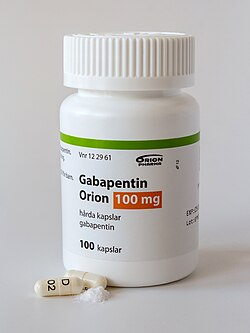
Gabapentin
Gabapentin 300MG
¿Qué es Gabapentin?
Gabapentina es un medicamento utilizado para ayudar a controlar ciertos tipos de convulsiones en personas con epilepsia. También alivia el dolor de la neuralgia posherpética, que es el dolor que puede ocurrir después del herpes zóster. Su médico determinará la dosis adecuada para usted.Side Effects
- Unusual moods or behaviors, thoughts of hurting yourself, feeling depressed
- Rash, swollen or tender glands in the neck, armpit, or groin
- Blistering, peeling, red skin rash
Warnings
- Tell your doctor if you are pregnant or breastfeeding, or if you have kidney problems (including patients receiving dialysis) or lung problems. Tell your doctor if you have a history of depression or mental health problems.
- This medicine may cause the following problems:Drug reaction with eosinophilia and systemic symptoms (DRESS) or multiorgan hypersensitivity, which may damage the liver, kidney, blood, heart, or musclesChanges in mood or behavior, including suicidal thoughts or behaviorRespiratory depression (serious breathing problem that can be life-threatening), when used with narcotic pain medicines
- Do not stop using this medicine suddenly. Your doctor will need to slowly decrease your dose before you stop it completely.
- This medicine may make you dizzy or drowsy. Do not drive or do anything else that could be dangerous until you know how this medicine affects you.
- Tell any doctor or dentist who treats you that you are using this medicine. This medicine may affect certain medical test results.
Prescription savings · ·
¿Qué es Gabapentin ?
Gabapentina es un medicamento utilizado para ayudar a controlar ciertos tipos de convulsiones en personas con epilepsia. También alivia el dolor de la neuralgia posherpética, que es el dolor que puede ocurrir después del herpes zóster. Su médico determinará la dosis adecuada para usted.Source: MedlinePlus, Biblioteca Nacional de Medicina de EE. UU.
Gabapentin Cupones y Precios - Rx.com
Gabapentin 300MG

Weight-loss medication, prescribed online
Licensed U.S. providers · No insurance needed · Shipped to your door
Gabapentin prices by dosage
Lowest cash price with a free Rx.com coupon vs. the average retail price.
| Dosis | Cantidad | Retail price | Rx.com price |
|---|---|---|---|
| 100mg · Capsule | 90 | $43.79 | $8.59 |
| 200mg · Capsule | 90 | $1,414.99 | $507.02 |
| 300mg · Capsule | 90 | $154.90 | $11.98 |
| 400mg · Capsule | 90 | $103.99 | $13.59 |
Cash prices near ZIP 77433; updated regularly. Actual pharmacy price may vary.
¿Buscas un cupón para gabapentina? La gabapentina es la versión genérica de bajo costo de Neurontin, así que la mayoría de las personas nunca necesita una receta de marca para ahorrar. Aun así, el precio en efectivo por las mismas tabletas o cápsulas puede variar mucho de una farmacia a otra, y por eso es tan importante comparar. Rx.com revisa los precios en más de 60,000 farmacias para que puedas encontrar un precio más bajo cerca de ti. Ingresa tu código postal arriba para ver el precio de hoy e imprimir o enviarte por mensaje de texto un cupón de descuento gratis.
¿Qué es la gabapentina y cómo funciona?
La gabapentina es un medicamento anticonvulsivo (antiepiléptico) de la clase de los gabapentinoides. Es un análogo del GABA que actúa como ligando de los canales de calcio alfa-2-delta, lo que se cree que calma la señalización nerviosa hiperactiva. Está aprobada por la FDA para tratar la neuralgia posherpética (el dolor nervioso que puede persistir después del herpes zóster) y, como terapia complementaria, para ayudar a controlar las convulsiones de inicio parcial en adultos y niños de 3 años en adelante.
Los médicos también recetan ampliamente la gabapentina para otras afecciones a su criterio. Se vende bajo nombres de marca que incluyen Neurontin y la versión de liberación prolongada Gralise. Horizant (gabapentina enacarbilo) es una sal relacionada pero distinta y no es intercambiable con la gabapentina estándar.
¿Cuánto cuesta la gabapentina sin seguro?
La gabapentina está disponible como genérico, y los genéricos suelen ser mucho más baratos que los medicamentos de marca. Eso es una buena noticia para tu bolsillo, pero no significa que todas las farmacias cobren lo mismo. Los precios en efectivo para la misma receta de gabapentina pueden diferir significativamente entre farmacias cercanas, así que conviene comparar antes de surtirla.
Con un descuento gratis de Rx.com, es posible que pagues menos que el precio estándar en efectivo aunque no tengas seguro, o un precio que sea mejor que tu copago si lo tienes. Comparamos precios en tiempo real en más de 60,000 farmacias. Ingresa tu código postal arriba para ver el precio de hoy según tu concentración y cantidad, y luego muestra el cupón en el mostrador de la farmacia.
Gabapentina frente a nombres de marca y alternativas
Como la gabapentina genérica ya es asequible, la mayoría de las personas surte el genérico en lugar de una marca. Los equivalentes de marca incluyen Neurontin y la versión de liberación prolongada Gralise; Horizant es un producto relacionado de gabapentina enacarbilo que tu profesional de la salud puede elegir por razones específicas.
A veces se compara la gabapentina con la pregabalina (marca Lyrica), otro gabapentinoide de la misma clase de medicamentos. Son medicamentos diferentes y no son automáticamente intercambiables, así que solo tu profesional de la salud puede decidir cuál es el adecuado para ti. Si te recetaron un producto específico, compara su precio arriba antes de suponer que el genérico es tu única opción de bajo costo.
Seguridad y efectos secundarios de la gabapentina
Los efectos secundarios más comunes de la gabapentina son mareos, somnolencia, pérdida de la coordinación (ataxia) e hinchazón en las manos o los pies (edema periférico). Al igual que otros medicamentos antiepilépticos, conlleva una advertencia sobre pensamientos y conductas suicidas nuevos o que empeoran. Combinar la gabapentina con opioides u otros depresores del sistema nervioso central puede causar problemas respiratorios graves y potencialmente mortales, especialmente en adultos mayores o personas con función pulmonar reducida. Reacciones raras pero graves pueden incluir DRESS/hipersensibilidad multiorgánica y anafilaxia o angioedema. Por lo general es necesario reducir la dosis si tienes problemas renales, y existe cierto potencial de uso indebido en personas con antecedentes de abuso de sustancias.
No dejes de tomar la gabapentina de forma repentina. Suspenderla abruptamente puede desencadenar síndrome de abstinencia y, en personas que la toman para las convulsiones, un mayor riesgo de convulsiones, por lo que tu médico reducirá la dosis de forma gradual. Esta información no es un consejo médico. Habla con tu médico o farmacéutico sobre tu historial de salud y cualquier otro medicamento que tomes antes de comenzar o dejar la gabapentina.
La información sobre Gabapentin fue redactada y revisada con base en fuentes médicas autorizadas de EE. UU. (MedlinePlus, de la Biblioteca Nacional de Medicina de EE. UU.; DailyMed; y la información de prescripción de la FDA) y verificada para asegurar su precisión. Se ofrece con fines educativos y no sustituye el consejo médico profesional.
Consulte la etiqueta oficial: Gabapentin en DailyMed (FDA)
Revisado con base en el etiquetado de la FDA · Última revisión: julio de 2026
Gabapentin — Articles & Guides
6 articles
Medicamentos Relacionados
Browse more medications: starting with G · full A-Z directory · by condition · common drugs
Medical disclaimer: This information is provided for general educational purposes only and is not medical advice. It is not a substitute for professional diagnosis or treatment. Always consult a licensed physician, pharmacist, or other qualified healthcare provider before starting, stopping, or changing any medication or treatment. Never disregard professional medical advice or delay seeking it because of something you read here. If you think you may have a medical emergency, call your doctor or 911 immediately.


