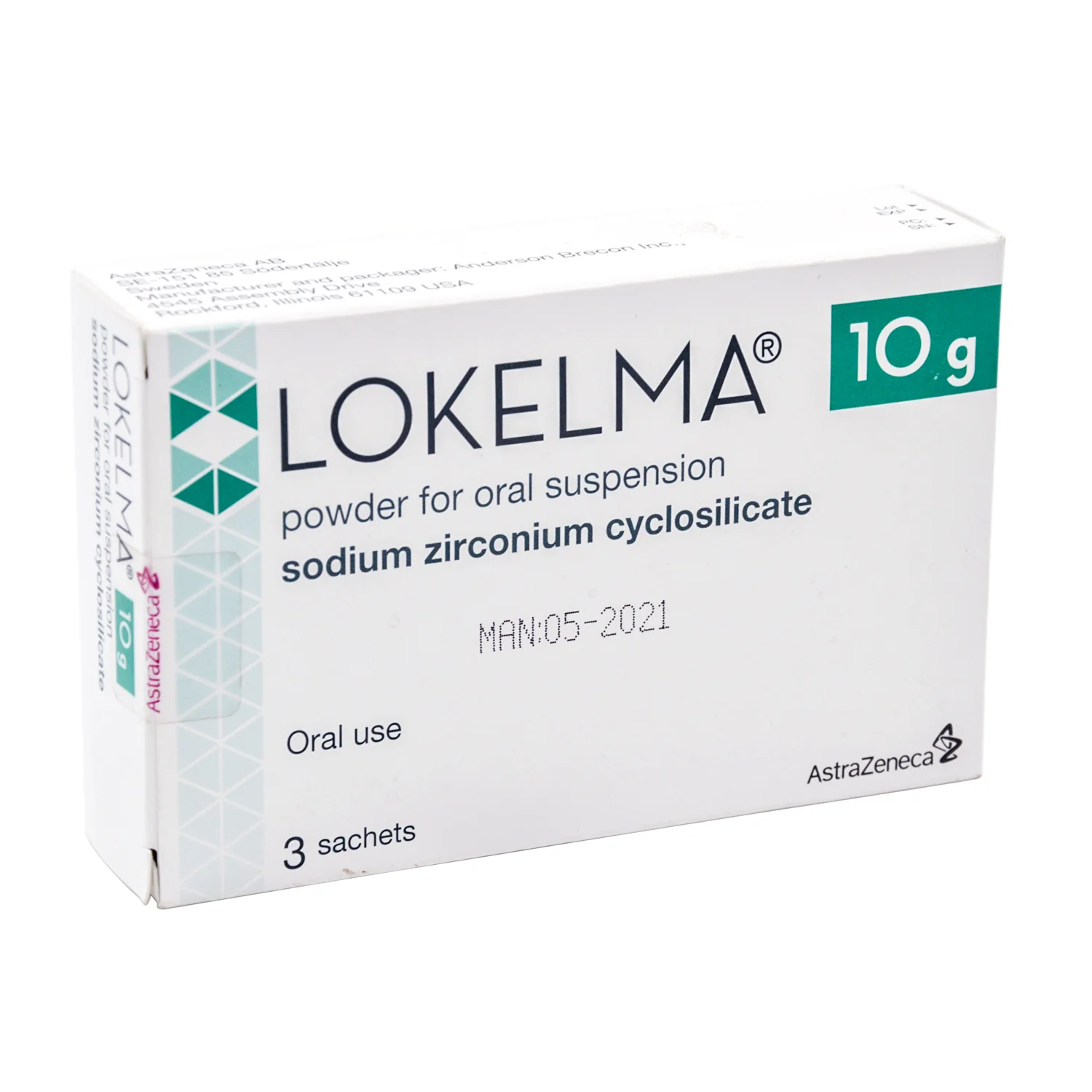
Lokelma
Lokelma
What is Lokelma?
Lokelma is a prescription medication used to treat hyperkalemia, a condition of high potassium levels in the blood. It works by binding to excess potassium in the gut, helping to lower potassium levels. Common side effects include gastrointestinal issues. For more information on cost, savings options, or to connect with a licensed provider, visit Rx.com.
Side Effects
- Rapid weight gain, swelling in your hands, ankles, or feet
- Dry mouth, increased thirst, muscle cramps, nausea or vomiting, uneven heartbeat
- Allergic reaction: Itching or hives, swelling in your face or hands, swelling or tingling in your mouth or throat, chest tightness, trouble breathing
Warnings
- Keep all medicine out of the reach of children. Never share your medicine with anyone.
- Tell your doctor if you are pregnant or breastfeeding, or if you have kidney disease (including patients on dialysis), heart failure, bowel blockage, or other bowel movement problems (including constipation or impaction). Tell your doctor if you have had surgery for a bowel movement disorder.
- This medicine may cause swelling in the different parts of your body. Talk to your doctor if you have any concerns.
- Your doctor will check your progress and the effects of this medicine at regular visits. Keep all appointments.
- Tell any doctor or dentist who treats you that you are using this medicine. This medicine may affect certain medical test results.
Prescription savings · · · ·
What is Lokelma ?
Lokelma is a prescription medication used to treat hyperkalemia, a condition of high potassium levels in the blood. It works by binding to excess potassium in the gut, helping to lower potassium levels. Common side effects include gastrointestinal issues. For more information on cost, savings options, or to connect with a licensed provider, visit Rx.com.
- Rapid weight gain, swelling in your hands, ankles, or feet
- Dry mouth, increased thirst, muscle cramps, nausea or vomiting, uneven heartbeat
- Allergic reaction: Itching or hives, swelling in your face or hands, swelling or tingling in your mouth or throat, chest tightness, trouble breathing
- Keep all medicine out of the reach of children. Never share your medicine with anyone.
- Tell your doctor if you are pregnant or breastfeeding, or if you have kidney disease (including patients on dialysis), heart failure, bowel blockage, or other bowel movement problems (including constipation or impaction). Tell your doctor if you have had surgery for a bowel movement disorder.
- This medicine may cause swelling in the different parts of your body. Talk to your doctor if you have any concerns.
- Your doctor will check your progress and the effects of this medicine at regular visits. Keep all appointments.
- Tell any doctor or dentist who treats you that you are using this medicine. This medicine may affect certain medical test results.
Lokelma Coupons & Prices
Lokelma
4 ED medications in one dose
Sildenafil, tadalafil, apomorphine & L-Citrulline · Works in ~15 min · Lasts up to 36 hours
Lokelma prices by dosage
Lowest cash price with a free Rx.com coupon vs. the average retail price.
| Dosage | Quantity | Retail price | Rx.com price |
|---|---|---|---|
| 1 packet · Packet | 1 | — | $33.93 |
Cash prices near ZIP 77433; updated regularly. Actual pharmacy price may vary.
Looking for a Lokelma coupon? Lokelma (sodium zirconium cyclosilicate) is a brand-only potassium binder used to treat hyperkalemia (high blood potassium) in adults, and there is no FDA-approved generic version of it yet, so the cash price can be a real burden. Enter your ZIP above to see today's Lokelma price at pharmacies near you and print or text yourself a free Rx.com discount coupon. Before you use our coupon, check AstraZeneca's own savings program first: it covers commercially insured patients and, separately, uninsured cash-paying patients, and it has no income requirement. If you are on Medicare, Medicaid, or another state or federally funded prescription program, you are not eligible for the manufacturer's program, and that is where a cash-price discount coupon can help.
What is Lokelma and how does it work?
Lokelma is the brand name for sodium zirconium cyclosilicate. It belongs to a group of medicines called potassium binders. It is a non-absorbed inorganic zirconium silicate that acts as a cation exchanger: rather than being absorbed into your bloodstream, it stays in the digestive tract, traps potassium there, and carries it out of the body in the stool. It is FDA-approved for the treatment of hyperkalemia (high blood potassium) in adults. It is not approved for use in children.
Lokelma comes as a powder for oral suspension that you mix in water and drink. For initial treatment, the label's recommended dose is 10 g three times a day for up to 48 hours. For continued treatment, the recommended dose is 10 g once daily, adjusted based on your serum potassium at intervals of one week or longer in 5 g increments; the label's recommended maintenance dose range runs from 5 g every other day up to 15 g daily. Patients on chronic hemodialysis have their own regimen: the label's recommended starting dose is 5 g once daily on non-dialysis days (a 10 g once-daily starting dose on non-dialysis days may be considered if serum potassium is greater than 6.5 mEq/L), with a recommended maintenance range of 5 g to 15 g once daily on non-dialysis days. One important limitation of use: Lokelma should not be used as an emergency treatment for life-threatening hyperkalemia because of its delayed onset of action. In clinical pharmacology studies, reductions in serum potassium were observed one hour after starting therapy, and potassium concentrations continued to decline over the 48-hour treatment period. Your prescriber decides your dose and schedule based on your potassium levels, so follow their instructions rather than adjusting on your own.
Lokelma cost: manufacturer savings program vs. the Rx.com cash coupon
Two very different discounts get called a "Lokelma coupon," and it helps to know which one you qualify for. AstraZeneca, the maker of Lokelma, runs an official savings program described on the manufacturer's own website (lokelma.com) and through its Access 360 support service. Unlike most brand-name copay cards, this one is not limited to people with commercial insurance: the program states that you may be eligible if you have commercial insurance that does not cover the full cost of your prescription, or if you are not insured and are responsible for the cost of your prescriptions. The program states there are no income requirements. What it excludes is government coverage: if you are enrolled in a state or federally funded prescription program, including Medicare Part D, Medicaid, Medigap, VA, DOD, or TRICARE, you may not use the program even if you ask to be processed as a cash-paying patient. Benefit limits, eligibility rules, and expiration terms vary and change over time, so check the manufacturer's site directly for current terms. AstraZeneca also runs patient-assistance programs through AZ&Me for patients who cannot afford their medicine and meet the program's requirements.
So if you are uninsured or paying cash, start with the manufacturer's program: for people who qualify, it is usually the cheapest path, and it costs nothing to check. The Rx.com coupon works differently. It is a cash-pay discount, not insurance and not a copay card, so it does not care what kind of coverage you have. That makes it useful in exactly the situations where the manufacturer's program does not apply: you are on Medicare, Medicaid, or another government prescription program, or you applied and were declined. You can only use one discount at a time (a cash coupon and insurance cannot be combined on the same fill), so it is worth pricing your options. Lokelma prices vary a lot from one pharmacy to the next, even within the same town, so enter your ZIP above to compare today's prices near you before you fill.
Is there a generic for Lokelma? Alternatives and comparisons
There is currently no FDA-approved generic sodium zirconium cyclosilicate on the US market. Lokelma is available only as the brand, which is the main reason it stays expensive and why checking the manufacturer's program and comparing pharmacy cash prices matter so much.
The other potassium binders your prescriber may discuss are different medicines, not substitutes you can swap at the pharmacy counter:
- Veltassa (patiromer) is also a newer potassium binder taken by mouth, but it is a different drug with its own dosing and label.
- Kayexalate (sodium polystyrene sulfonate) is the older resin-type binder that came long before these two.
Lokelma is often part of a bigger picture: high potassium can be linked to kidney disease, heart failure, and to medicines such as an ACE inhibitor like lisinopril, an ARB, or spironolactone, which can raise potassium levels. Some prescribers manage potassium in patients taking these medicines. Lokelma's only FDA-approved indication is the treatment of hyperkalemia in adults, and which binder is right for you is a decision for your prescriber, not a price comparison.
Lokelma safety: what to know
Lokelma does not carry a boxed warning. The most common adverse reaction reported with Lokelma was mild-to-moderate edema (swelling). Because each 5 g dose contains roughly 400 mg of sodium, Lokelma delivers a sodium load that can cause fluid retention and swelling. That matters most if you are at risk of fluid overload, such as with heart failure or kidney disease, or if you are on a salt-restricted diet; your prescriber may ask you to limit dietary sodium or may adjust your diuretic (water pill). Potassium can also drop too low (hypokalemia), which is why your doctor will check your blood potassium, especially while your dose is being adjusted. The label calls out hypokalemia in hemodialysis patients specifically: patients on hemodialysis may be prone to acute illnesses that increase the risk of hypokalemia, and the dose may need to be adjusted based on potassium levels.
The label also warns about gastrointestinal adverse events in patients with motility disorders. Lokelma has not been studied in patients with severe constipation, bowel obstruction, or impaction, including abnormal post-operative bowel motility, and the label advises avoiding use in those patients. Tell your prescriber about severe constipation, severe swelling, or any history of bowel obstruction before starting.
Lokelma can change stomach acidity and affect how some other oral medicines are absorbed. The label advises that, in general, other oral medications be taken at least 2 hours before or 2 hours after Lokelma. This is especially important for medicines whose absorption depends on stomach pH. Lokelma is also radiopaque, meaning it can show up on abdominal X-rays and may make imaging harder to read, so tell the technologist you take it. And remember, Lokelma is not for emergency treatment of life-threatening hyperkalemia. This page is general information, not medical advice. Talk with your doctor or pharmacist about your own situation.
This Lokelma information was written and reviewed against authoritative U.S. medical sources — MedlinePlus (U.S. National Library of Medicine), DailyMed, and FDA prescribing information — and checked for accuracy. It is provided for education and is not a substitute for professional medical advice.
Verify the official label: Lokelma on DailyMed (FDA)
Reviewed against FDA labeling · Last reviewed July 2026
Related Drugs
Browse more medications: starting with L · full A-Z directory · by condition · common drugs
Medical disclaimer: This information is provided for general educational purposes only and is not medical advice. It is not a substitute for professional diagnosis or treatment. Always consult a licensed physician, pharmacist, or other qualified healthcare provider before starting, stopping, or changing any medication or treatment. Never disregard professional medical advice or delay seeking it because of something you read here. If you think you may have a medical emergency, call your doctor or 911 immediately.


