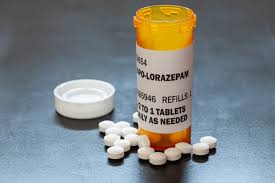
Lorazepam
LORazepam 0.5MG
What is Lorazepam?
Lorazepam is a prescription medication used to treat anxiety disorders, panic attacks, insomnia related to anxiety, and certain seizure conditions. Commonly sold under the brand name Ativan, Lorazepam belongs to a class of medications known as benzodiazepines and works by calming activity in the brain and nervous system. Learn about Lorazepam uses, dosage, side effects, risks, and important safety information.
Side Effects
- Allergic reaction: Itching or hives, swelling in your face or hands, swelling or tingling in your mouth or throat, chest tightness, trouble breathing
- Anxiety, depression, irritability, nervousness, unusual mood or behavior, thoughts of hurting yourself
- Blurred vision, change or loss of consciousness, dizziness, faintness, lightheadedness, problems with coordination or walking, unusual drowsiness
Warnings
- This medicine may make you drowsy. Do not drive or do anything else that could be dangerous until you know how this medicine affects you.
- This medicine may cause the following problems:Increased risk of overdose, which can be life-threateningRespiratory depression (serious breathing problem that can be life-threatening), especially when used with narcotic pain medicinesUnusual thoughts and behavior
- Tell your doctor if you are pregnant or planning to become pregnant. Using this medicine during the later part of a pregnancy may cause problems in your newborn baby (including sedation or withdrawal symptoms). Tell your doctor right away if you think you have become pregnant.
- Tell your doctor if you are breastfeeding or planning to breastfeed. This medicine passes into your breast milk and may cause problems in your baby. Talk to your doctor about the best way to feed your baby.
- This medicine can be habit-forming. Do not use more than your prescribed dose. Call your doctor if you think your medicine is not working.
Prescription savings · · · ·
What is Lorazepam ?
Lorazepam is a prescription medication used to treat anxiety disorders, panic attacks, insomnia related to anxiety, and certain seizure conditions. Commonly sold under the brand name Ativan, Lorazepam belongs to a class of medications known as benzodiazepines and works by calming activity in the brain and nervous system. Learn about Lorazepam uses, dosage, side effects, risks, and important safety information.
- Allergic reaction: Itching or hives, swelling in your face or hands, swelling or tingling in your mouth or throat, chest tightness, trouble breathing
- Anxiety, depression, irritability, nervousness, unusual mood or behavior, thoughts of hurting yourself
- Blurred vision, change or loss of consciousness, dizziness, faintness, lightheadedness, problems with coordination or walking, unusual drowsiness
- Worsening of depression
- Blue lips, fingernails, or skin, trouble breathing, chest pain
- Seizures
- Severe drowsiness or weakness, slow heartbeat
- This medicine may make you drowsy. Do not drive or do anything else that could be dangerous until you know how this medicine affects you.
- This medicine may cause the following problems:Increased risk of overdose, which can be life-threateningRespiratory depression (serious breathing problem that can be life-threatening), especially when used with narcotic pain medicinesUnusual thoughts and behavior
- Tell your doctor if you are pregnant or planning to become pregnant. Using this medicine during the later part of a pregnancy may cause problems in your newborn baby (including sedation or withdrawal symptoms). Tell your doctor right away if you think you have become pregnant.
- Tell your doctor if you are breastfeeding or planning to breastfeed. This medicine passes into your breast milk and may cause problems in your baby. Talk to your doctor about the best way to feed your baby.
- This medicine can be habit-forming. Do not use more than your prescribed dose. Call your doctor if you think your medicine is not working.
- Tell your doctor if you have kidney disease, liver disease, lung or breathing problems (including COPD, sleep apnea), or a history of drug or alcohol abuse, depression, mental problems, or seizures.
- Do not stop using this medicine suddenly. Your doctor will need to slowly decrease your dose before you stop it completely.
- Your doctor will do lab tests at regular visits to check on the effects of this medicine. Keep all appointments.
- Keep all medicine out of the reach of children. Never share your medicine with anyone.
Lorazepam Coupons & Prices
LORazepam 0.5MG

Weight-loss medication, prescribed online
Licensed U.S. providers · No insurance needed · Shipped to your door
Looking for a lorazepam coupon? Lorazepam is the low-cost generic form of Ativan, a benzodiazepine used to manage anxiety disorders. Because it's generic, it's usually inexpensive to pay for out of pocket — but the cash price can vary widely from one pharmacy to the next, so it pays to compare. Rx.com checks lorazepam prices across more than 60,000 pharmacies and gives you a free discount coupon you can use at the pharmacy counter, with or without insurance. Enter your ZIP above to see today's price near you.
What is lorazepam and how does it work?
Lorazepam is a benzodiazepine. It is FDA-approved for the management of anxiety disorders and for the short-term relief of anxiety symptoms, including anxiety associated with depressive symptoms. It works by calming activity in the brain and nervous system, which can ease feelings of anxiety and tension. An injectable form is used in hospitals for preoperative sedation, and the extended-release capsule (Loreev XR) is indicated for anxiety disorders.
Lorazepam is the generic name; it is sold under the brand names Ativan and Loreev XR. A generic version is widely available, which is one reason its cash price is often low. Your doctor decides whether lorazepam is appropriate for you and at what dose — this page is for price and general information, not medical advice.
How much does lorazepam cost without insurance?
Because lorazepam is a generic medication, it is generally one of the more affordable benzodiazepines to buy without insurance. The catch is that the cash price is not the same everywhere — two pharmacies in the same town can charge very different amounts for the exact same prescription. That's why comparing before you fill matters.
Rx.com compares lorazepam prices across more than 60,000 U.S. pharmacies and shows you a free discount coupon you can present at the counter. You don't need insurance to use it, and in some cases the discounted cash price can beat an insurance copay. To see the current price at pharmacies near you, enter your ZIP code above — prices are shown live on-page because they change over time.
Lorazepam vs. Ativan and other benzodiazepines
Lorazepam and Ativan are the same medicine — Ativan is simply the original brand name, and lorazepam is the generic. They contain the same active ingredient and work the same way. Choosing the generic is usually the more economical option, and Loreev XR is a once-daily extended-release form of lorazepam for anxiety disorders.
Lorazepam belongs to the same drug class as several other commonly prescribed benzodiazepines. If your doctor is weighing options, you may hear about:
- alprazolam (the generic for Xanax)
- clonazepam (the generic for Klonopin)
- diazepam (the generic for Valium)
These medications differ in how quickly they act and how long their effects last. Only your prescriber can decide which one is right for you — but whichever you're prescribed, you can compare its price on Rx.com.
Lorazepam safety and important warnings
Lorazepam carries FDA boxed warnings — the agency's strongest safety alerts. Taking it together with opioids or other central nervous system depressants can cause profound sedation, slowed breathing, coma, and death. Benzodiazepines also carry a risk of abuse, misuse, and addiction that can lead to overdose. In addition, physical dependence can develop, and stopping lorazepam abruptly or cutting the dose too quickly can trigger serious, potentially life-threatening withdrawal reactions — so any change should be a gradual taper guided by your doctor.
Common side effects include drowsiness, dizziness, weakness, and unsteadiness. Avoid alcohol while taking lorazepam. Older adults should use extra caution because of the added risk of falls and confusion, and use during pregnancy calls for careful discussion with your provider. This information is a general summary and not a substitute for professional medical advice — talk with your doctor or pharmacist about your specific situation, and never start or stop lorazepam on your own.
This Lorazepam information was written and reviewed against authoritative U.S. medical sources — MedlinePlus (U.S. National Library of Medicine), DailyMed, and FDA prescribing information — and checked for accuracy. It is provided for education and is not a substitute for professional medical advice.
Verify the official label: Lorazepam on DailyMed (FDA)
Reviewed against FDA labeling · Last reviewed July 2026
Related Drugs
Browse more medications: starting with L · full A-Z directory · by condition · common drugs
Medical disclaimer: This information is provided for general educational purposes only and is not medical advice. It is not a substitute for professional diagnosis or treatment. Always consult a licensed physician, pharmacist, or other qualified healthcare provider before starting, stopping, or changing any medication or treatment. Never disregard professional medical advice or delay seeking it because of something you read here. If you think you may have a medical emergency, call your doctor or 911 immediately.


