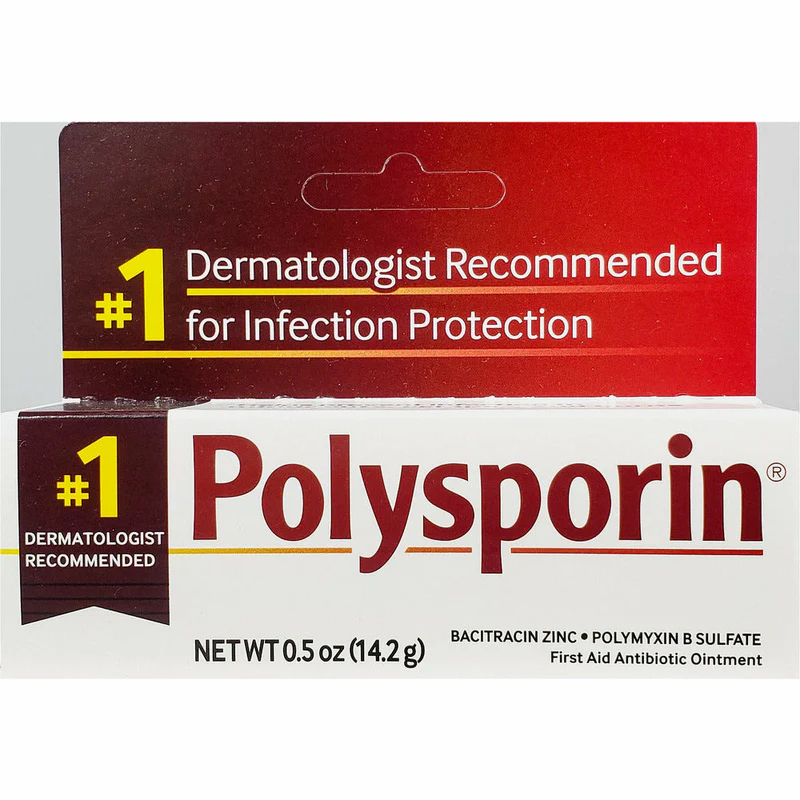
Polysporin
Polysporin
What is Polysporin?
Polysporin is a first aid antibiotic ointment that helps prevent infections in minor cuts, scrapes, and burns. It contains two active ingredients that work together to fight bacteria and promote healing.
Side Effects
- Signs of wound or skin infection: increasing pain, redness, swelling, or drainage of fluid or pus that is cloudy, brown, green, or foul-smelling.
- New or worsening skin rash.
- Allergic reaction: Itching or hives, swelling in your face or hands, swelling or tingling in your mouth or throat, chest tightness, trouble breathing
Warnings
- Some antibacterial skin medicines may cause discoloring of the skin, hair, nails, or may stain clothing.
- Make sure any doctor who treats you knows that you are using this medicine. Some antibacterial skin medicines may cause problems with certain medical tests.
- Make sure your doctor knows if you are pregnant or breast feeding, or if you have a tuberculosis infection of the skin. Make sure your doctor knows if you have had an allergic reaction to any antibiotic or topical medicine, such as hydrocortisone, iodochlorhydroxyquin, bacitracin, neomycin, or polymyxin B.
- Call your doctor if your symptoms do not improve or if they get worse.
- Unexplained fever.
Prescription savings · · · ·
What is Polysporin ?
Polysporin is a first aid antibiotic ointment that helps prevent infections in minor cuts, scrapes, and burns. It contains two active ingredients that work together to fight bacteria and promote healing.
- Signs of wound or skin infection: increasing pain, redness, swelling, or drainage of fluid or pus that is cloudy, brown, green, or foul-smelling.
- New or worsening skin rash.
- Allergic reaction: Itching or hives, swelling in your face or hands, swelling or tingling in your mouth or throat, chest tightness, trouble breathing
- New or worsening redness, burning, itching, or swelling in the area where the medicine is applied.
- Unexplained fever.
- Some antibacterial skin medicines may cause discoloring of the skin, hair, nails, or may stain clothing.
- Make sure any doctor who treats you knows that you are using this medicine. Some antibacterial skin medicines may cause problems with certain medical tests.
- Make sure your doctor knows if you are pregnant or breast feeding, or if you have a tuberculosis infection of the skin. Make sure your doctor knows if you have had an allergic reaction to any antibiotic or topical medicine, such as hydrocortisone, iodochlorhydroxyquin, bacitracin, neomycin, or polymyxin B.
- Call your doctor if your symptoms do not improve or if they get worse.
- Unexplained fever.
Polysporin Coupons & Prices
Polysporin
No Prescription Needed
Polysporin is available over the counter — order online or pick up at a pharmacy near you.
Where to Buy Polysporin
No prescription needed. Purchase online or in-store.
4 ED medications in one dose
Apomorphine, sildenafil, tadalafil & vardenafil · One sublingual dose · Free express shipping
Polysporin prices by dosage
Lowest cash price with a free Rx.com coupon vs. the average retail price.
| Dosage | Quantity | Retail price | Rx.com price |
|---|---|---|---|
| 14.2gm of 500-10000unit/gm · Tube Of Ointment | 14.2 | — | $9.51 |
| 28.3gm of 500-10000unit/gm · Tube Of Ointment | 28.3 | $18.99 | $12.26 |
Cash prices near ZIP 77433; updated regularly. Actual pharmacy price may vary.
Looking for a Polysporin coupon? Polysporin is an over-the-counter "double antibiotic" first-aid ointment (bacitracin zinc and polymyxin B sulfate) used to help prevent infection in minor cuts, scrapes, and burns. Because it is neomycin-free, it is a common alternative for people who react to triple-antibiotic ointments. Even though it is sold without a prescription, some pharmacies price it lower with a free Rx.com discount coupon, or when your provider writes it as a prescription. Enter your ZIP above to see today's price at pharmacies near you.
What is Polysporin and how does it work?
Polysporin is a topical antibiotic ointment that combines two medicines: bacitracin (a polypeptide antibiotic) and polymyxin B (a polymyxin antibiotic). Together they help stop the growth of bacteria on the skin, which lowers the chance of infection while a minor wound heals. It is most often sold as Polysporin First Aid Antibiotic Ointment and is meant for external use only on minor cuts, scrapes, and burns.
A key difference from triple-antibiotic ointments is that Polysporin does not contain neomycin, so it is a frequent choice for people who are allergic or sensitive to neomycin. Note that a separate prescription ophthalmic (eye) ointment with bacitracin and polymyxin B also exists for superficial bacterial eye infections; that is a different product from the skin ointment and should only be used as directed by a provider. Polysporin does not treat deep or serious wounds.
How to save on Polysporin with an Rx.com coupon
Polysporin is available over the counter, so you can buy it off the shelf. But prices vary a lot from store to store, and some pharmacies ring it up cheaper when you present a free Rx.com discount coupon at the pharmacy counter, or when your provider writes it as a prescription. There is no manufacturer copay card for an OTC item like this, so the discount coupon is the simplest way to compare.
To check, enter your ZIP code above to see today's price at pharmacies near you and print, text, or show the coupon at checkout. Prices change, so it is worth comparing the shelf price against the couponed pharmacy price before you buy.
Polysporin vs. Neosporin and other alternatives
The most common comparison is Polysporin versus Neosporin. Both are first-aid antibiotic ointments, but Neosporin is a "triple antibiotic" that adds neomycin, while Polysporin is a "double antibiotic" with just bacitracin and polymyxin B. Because neomycin is a frequent cause of skin allergy, many people who react to Neosporin are steered toward Polysporin instead.
Related options your provider or pharmacist may mention include:
- Bacitracin alone, a single-ingredient antibiotic ointment.
- Neomycin, polymyxin B, and bacitracin, the triple-antibiotic combination.
- Mupirocin, a prescription topical antibiotic used for certain skin infections.
A generic version of the double-antibiotic ointment is available, and it works the same as the Polysporin brand. Ask your pharmacist which option fits your needs and budget.
Safety and how to use it
Polysporin skin ointment is for external use only. Do not use it in the eyes, and do not apply it over large or deep wounds, puncture wounds, animal bites, or serious burns. Clean the area, apply a small amount one to three times a day as directed on the label, and you may cover it with a sterile bandage. Stop use and check with a healthcare provider if the condition persists or gets worse after about a week, or if a rash or other allergic reaction develops.
Contact allergic dermatitis to bacitracin and/or polymyxin B can occur, and rare cases of serious allergic reaction (anaphylaxis) to bacitracin have been reported. Prolonged use may also allow non-susceptible germs to overgrow. This is general information, not medical advice. Follow the package directions and talk with your provider or pharmacist about your specific situation, especially before using it on children or over a large area.
This Polysporin information was written and reviewed against authoritative U.S. medical sources — MedlinePlus (U.S. National Library of Medicine), DailyMed, and FDA prescribing information — and checked for accuracy. It is provided for education and is not a substitute for professional medical advice.
Verify the official label: Polysporin on DailyMed (FDA)
Reviewed against FDA labeling · Last reviewed July 2026
Related Drugs
Browse more medications: starting with P · full A-Z directory · by condition · common drugs
Medical disclaimer: This information is provided for general educational purposes only and is not medical advice. It is not a substitute for professional diagnosis or treatment. Always consult a licensed physician, pharmacist, or other qualified healthcare provider before starting, stopping, or changing any medication or treatment. Never disregard professional medical advice or delay seeking it because of something you read here. If you think you may have a medical emergency, call your doctor or 911 immediately.


