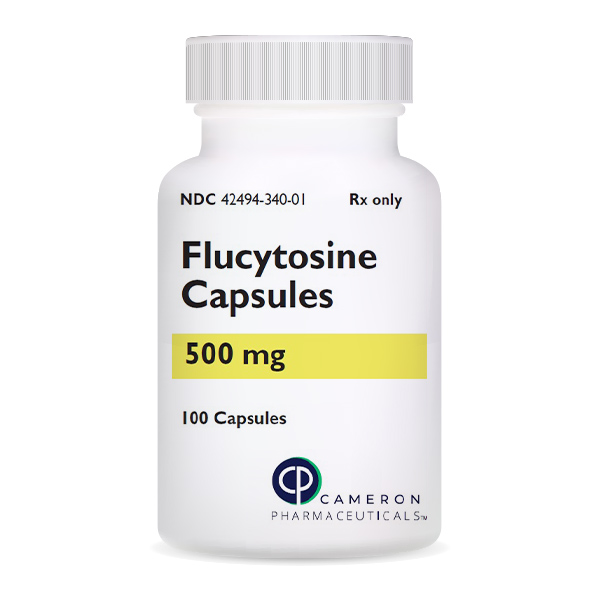
Flucytosine
Flucytosine
¿Qué es Flucytosine?
Ancobon es un medicamento antifúngico que se prescribe a los pacientes para tratar infecciones fúngicas graves. Flucitosina es la versión genérica de Ancobon. El precio promedio de Ancobon es de aproximadamente $8,031 por un suministro de 100 cápsulas orales de 250 mg. Una manera fácil de ahorrar en el costo de la receta de Ancobon es usar la tarjeta de cupón gratuita de Singlecare en cualquiera de nuestras farmacias participantes en EE. UU. para recibir ahorros de hasta el 80%.Side Effects
- Numbness, tingling, or burning pain in your hands, arms, legs, or feet
- Unusual bleeding, bruising, or weakness
- Rapid weight gain, swelling in your hands, ankles, or feet
Warnings
- Tell your doctor if you are pregnant or breastfeeding, or if you have kidney disease, liver disease, blood or bone marrow problems, or a weak immune system.
- Your doctor will do lab tests at regular visits to check on the effects of this medicine. Keep all appointments.
- Keep all medicine out of the reach of children. Never share your medicine with anyone.
- If this medicine makes you dizzy or drowsy, avoid driving or using machinery.
- Yellowing of your skin or eyes
Prescription savings · ·
¿Qué es Flucytosine ?
Ancobon es un medicamento antifúngico que se prescribe a los pacientes para tratar infecciones fúngicas graves. Flucitosina es la versión genérica de Ancobon. El precio promedio de Ancobon es de aproximadamente $8,031 por un suministro de 100 cápsulas orales de 250 mg. Una manera fácil de ahorrar en el costo de la receta de Ancobon es usar la tarjeta de cupón gratuita de Singlecare en cualquiera de nuestras farmacias participantes en EE. UU. para recibir ahorros de hasta el 80%.Flucytosine Cupones y Precios - Rx.com
Flucytosine
4 ED medications in one dose
Sildenafil, tadalafil, apomorphine & L-Citrulline · Works in ~15 min · Lasts up to 36 hours
Flucytosine prices by dosage
Lowest cash price with a free Rx.com coupon vs. the average retail price.
| Dosis | Cantidad | Retail price | Rx.com price |
|---|---|---|---|
| 250mg · Capsule | 100 | $6,985.99 | $919.14 |
| 500mg · Capsule | 60 | $11,473.96 | $1,212.60 |
Cash prices near ZIP 77433; updated regularly. Actual pharmacy price may vary.
Usa un cupón de flucitosina gratis de Rx.com para comparar precios en efectivo en más de 60,000 farmacias antes de surtir tu receta. La flucitosina (nombre de marca Ancobon) es un antifúngico de venta con receta en cápsulas que se usa para tratar infecciones graves causadas por cepas susceptibles de Candida y Cryptococcus. Su etiqueta de la FDA indica que se use en combinación con anfotericina B para la candidiasis y la criptococosis sistémicas, porque puede surgir resistencia cuando la flucitosina se usa sola. Está disponible como genérico, y lo que pagas sin seguro puede variar de una farmacia a otra, así que vale la pena consultar más de una. Ingresa tu código postal arriba para ver el precio de hoy cerca de ti e imprimir, enviar por mensaje de texto o por correo electrónico tu cupón.
¿Qué es la flucitosina y cómo funciona?
La flucitosina es un antifúngico antimetabolito de pirimidina fluorada. Una vez que entra en la célula fúngica, se convierte en 5-fluorouracilo, que interfiere con la producción de ADN y ARN del hongo. Sin esos componentes básicos, el hongo no puede crecer ni multiplicarse. Viene en cápsulas orales de 250 mg y 500 mg, y la dosis se basa en el peso corporal (la etiqueta describe de 50 a 150 mg/kg por día, divididos en dosis cada 6 horas), con dosis más bajas o intervalos más largos para las personas cuyos riñones no eliminan el medicamento con normalidad.
La etiqueta indica la flucitosina únicamente para infecciones graves causadas por cepas susceptibles de Candida o Cryptococcus. Para Candida, la etiqueta describe el tratamiento eficaz de la septicemia, la endocarditis y las infecciones del sistema urinario, y señala que ensayos limitados en infecciones pulmonares justifican su uso. Para Cryptococcus, la etiqueta describe el tratamiento eficaz de la meningitis y las infecciones pulmonares, y señala que los estudios en septicemia criptocócica e infecciones del tracto urinario son limitados, aunque se han reportado buenas respuestas. La etiqueta también indica que la flucitosina se use en combinación con anfotericina B para la candidiasis y la criptococosis sistémicas debido a la aparición de resistencia. La flucitosina no se usa para infecciones fúngicas superficiales o menores como las de las uñas, la piel o las infecciones comunes por levaduras.
Costo y cupones de flucitosina sin seguro
La flucitosina se vende tanto bajo el nombre de marca Ancobon (Bausch Health) como en forma de cápsula de flucitosina genérica de varios fabricantes. La flucitosina no es un medicamento rutinario de alto volumen, y los precios en efectivo para la misma concentración y cantidad de cápsulas pueden variar entre una farmacia de cadena, una farmacia de supermercado y una farmacia independiente de la misma ciudad. Los precios varían según la farmacia, así que la única manera de saber lo que realmente pagarías es comparar.
Para quienes pagan en efectivo, los pasos prácticos son preguntar a tu prescriptor y farmacéutico qué versión se está dispensando, comparar farmacias y llevar un cupón de descuento. El cupón gratuito de Rx.com compara precios en efectivo en más de 60,000 farmacias de EE. UU. Ingresa tu código postal arriba para ver el precio de hoy cerca de ti. Un cupón no es un seguro, es un precio con descuento en efectivo, y no puedes combinarlo con el beneficio de tu seguro en la misma compra, así que vale la pena consultar ambos y usar el que sea más bajo. Si el costo es un obstáculo, díselo a tu equipo de atención antes de saltarte o espaciar las dosis, porque la flucitosina está pensada para tomarse como parte de un régimen combinado y las dosis omitidas pueden permitir que se desarrolle resistencia.
Flucitosina frente a otros antifúngicos
La flucitosina no está pensada para ser un antifúngico independiente. Su etiqueta de la FDA indica que se use en combinación con anfotericina B para la candidiasis y la criptococosis sistémicas, porque puede surgir resistencia a la flucitosina cuando se usa sola. Así que la comparación honesta no es "flucitosina u otra cosa", sino dónde encaja la flucitosina dentro de un régimen que diseñe tu equipo de enfermedades infecciosas.
Otros antifúngicos que tu prescriptor puede usar, solos o en secuencia, actúan mediante un mecanismo diferente al de la flucitosina:
- Fluconazol: un azol que se usa comúnmente después de la terapia de inducción para consolidar y mantener el tratamiento de la enfermedad criptocócica.
- Itraconazol y voriconazol: antifúngicos azoles usados para otras infecciones fúngicas sistémicas.
- Ketoconazol: un azol oral más antiguo que ahora se reserva para situaciones limitadas debido a su perfil de seguridad.
Cuál es el adecuado depende del organismo, del sitio de la infección, de tu función renal y hepática, y de tus otros medicamentos. Esa decisión le corresponde a tu prescriptor, no a una comparación de precios.
Seguridad, advertencias y monitoreo
La flucitosina lleva una advertencia en recuadro, y el recuadro en sí es breve: úsese con extrema precaución en pacientes con función renal deteriorada, y es esencial un monitoreo estrecho del estado hematológico, renal y hepático de todos los pacientes. El medicamento se elimina principalmente por los riñones y se acumula cuando estos no funcionan bien, razón por la cual el ajuste de la dosis y el monitoreo de laboratorio son tan importantes.
En otras partes de la etiqueta, en las secciones de Advertencias y Reacciones Adversas, se describe que la flucitosina causa toxicidad de la médula ósea: bajo número de glóbulos blancos (leucopenia), bajo número de plaquetas (trombocitopenia), anemia aplásica y agranulocitosis, que pueden ser irreversibles y pueden ser mortales, especialmente en personas inmunodeprimidas o que han recibido radiación o quimioterapia mielosupresora. La flucitosina está contraindicada si eres alérgico a ella y en personas con deficiencia completa conocida de dihidropirimidina deshidrogenasa (DPD), porque la flucitosina se convierte en 5-fluorouracilo y la deficiencia de DPD aumenta mucho el riesgo de llagas graves en la boca, diarrea, bajo número de neutrófilos y toxicidad nerviosa. Otras reacciones graves reportadas incluyen daño hepático y necrosis hepática, enterocolitis grave, toxicidad cardíaca y paro respiratorio. Los efectos secundarios comunes son náuseas, vómitos, diarrea, dolor de estómago y erupción cutánea. La flucitosina puede dañar al feto y debe evitarse durante el embarazo a menos que el beneficio supere claramente el riesgo. Esta página es información general, no consejo médico: toma flucitosina solo como se te haya recetado, acude a todas tus citas de laboratorio y llama a tu proveedor de inmediato si presentas fiebre, dolor de garganta, moretones o sangrado inusuales, coloración amarilla de la piel o los ojos, o diarrea grave.
La información sobre Flucytosine fue redactada y revisada con base en fuentes médicas autorizadas de EE. UU. (MedlinePlus, de la Biblioteca Nacional de Medicina de EE. UU.; DailyMed; y la información de prescripción de la FDA) y verificada para asegurar su precisión. Se ofrece con fines educativos y no sustituye el consejo médico profesional.
Consulte la etiqueta oficial: Flucytosine en DailyMed (FDA)
Revisado con base en el etiquetado de la FDA · Última revisión: julio de 2026
Medicamentos Relacionados
Browse more medications: starting with F · full A-Z directory · by condition · common drugs
Medical disclaimer: This information is provided for general educational purposes only and is not medical advice. It is not a substitute for professional diagnosis or treatment. Always consult a licensed physician, pharmacist, or other qualified healthcare provider before starting, stopping, or changing any medication or treatment. Never disregard professional medical advice or delay seeking it because of something you read here. If you think you may have a medical emergency, call your doctor or 911 immediately.


