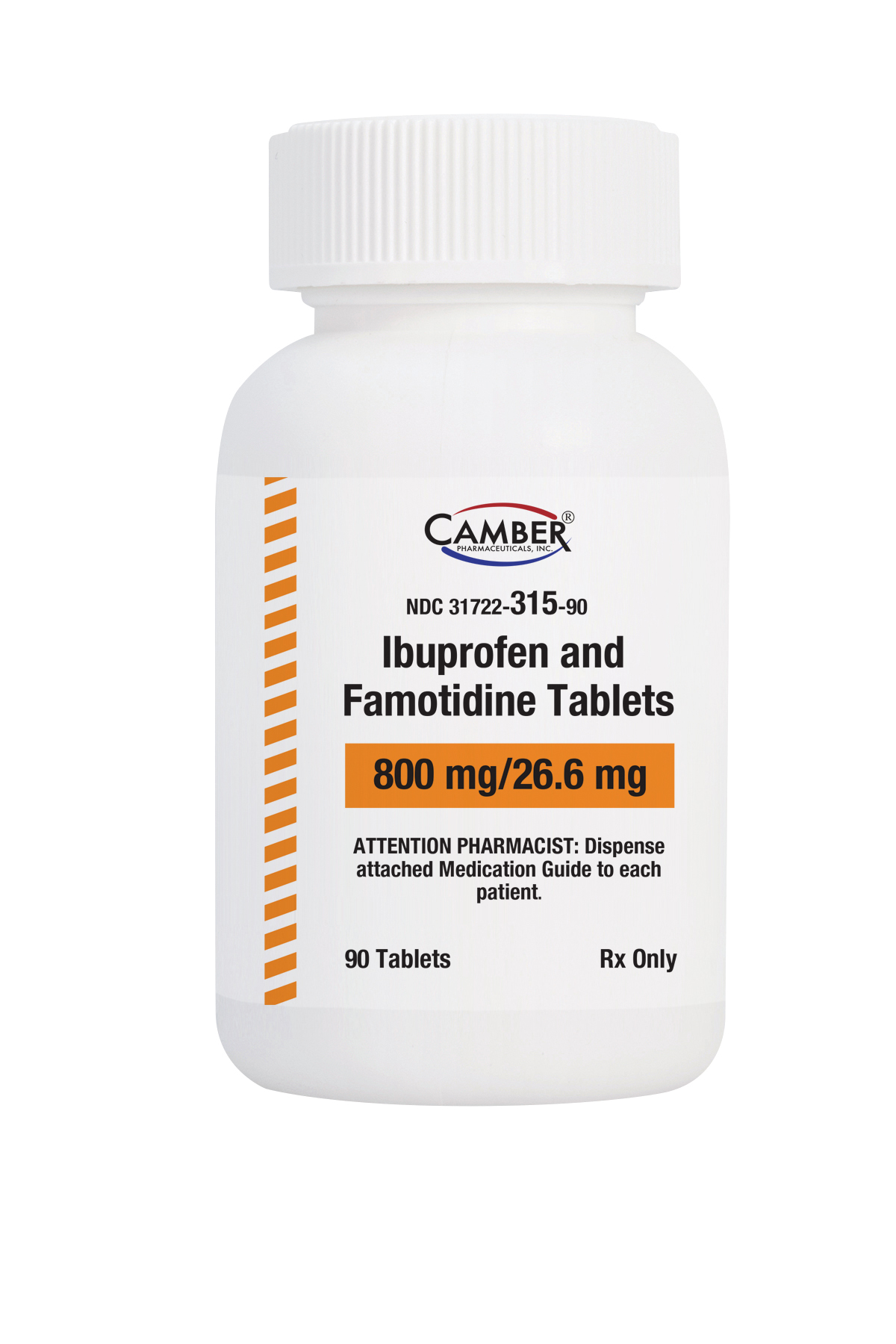
Ibuprofen-Famotidine
ibuprofen-famotidine
What is Ibuprofen-Famotidine?
Ibuprofen-Famotidine is a combination medication that pairs ibuprofen, a nonsteroidal anti-inflammatory drug (NSAID), with famotidine, an H2-receptor antagonist, to provide pain relief while reducing the risk of developing gastrointestinal ulcers and bleeding commonly associated with NSAID use. This dual-action formula is particularly beneficial for patients requiring long-term NSAID therapy who are at higher risk for gastric complications.
Side Effects
- Bloody or black, tarry stools, severe stomach pain, vomiting blood or material that looks like coffee grounds
- Decrease in how much or how often you urinate, rapid weight gain, swelling in your hands, ankles, or feet
- Numbness or weakness on one side of your body, sudden or severe headache, problems with vision, speech, or walking
Warnings
- This medicine may cause a delay in ovulation for women and may affect their ability to have children. If you plan to have children, talk with your doctor before using this medicine.
- This medicine may cause the following problems:Increased risk of blood clots, heart attack, stroke, or heart failureStomach or bowel problems (including bleeding, ulcers, or perforation)High blood pressureLiver problemsKidney problemsSerious skin reactions, including exfoliative dermatitis, Stevens-Johnson syndrome, toxic epidermal necrolysis, and drug reaction with eosinophilia and systemic symptoms (DRESS)SeizuresChanges in vision
- Tell your doctor if you are breastfeeding or if you have kidney disease, liver disease, asthma, bleeding problems, heart or blood vessel problems, heart failure, a recent heart attack, high blood pressure, lupus, or a history of ulcers or other digestive problems. Tell your doctor if you smoke or drink alcohol.
- Tell your doctor if you are pregnant. Do not use this medicine during the later part of pregnancy, unless your doctor says it is okay.
- Unusual bleeding, bruising or weakness
Prescription savings · · · ·
What is Ibuprofen-Famotidine ?
Ibuprofen-Famotidine is a combination medication that pairs ibuprofen, a nonsteroidal anti-inflammatory drug (NSAID), with famotidine, an H2-receptor antagonist, to provide pain relief while reducing the risk of developing gastrointestinal ulcers and bleeding commonly associated with NSAID use. This dual-action formula is particularly beneficial for patients requiring long-term NSAID therapy who are at higher risk for gastric complications.
- Bloody or black, tarry stools, severe stomach pain, vomiting blood or material that looks like coffee grounds
- Decrease in how much or how often you urinate, rapid weight gain, swelling in your hands, ankles, or feet
- Numbness or weakness on one side of your body, sudden or severe headache, problems with vision, speech, or walking
- Fast, slow, or pounding heartbeat
- Seizures
- Allergic reaction: Itching or hives, swelling in your face or hands, swelling or tingling in your mouth or throat, chest tightness, trouble breathing
- Unusual bleeding, bruising or weakness
- Chest pain that may spread, trouble breathing, coughing up blood, unusual sweating, fainting
- Dark urine or pale stools, nausea, vomiting, loss of appetite, yellow skin or eyes
- Blistering, peeling, red skin rash
- Fever, neck pain, or stiff neck
- This medicine may cause a delay in ovulation for women and may affect their ability to have children. If you plan to have children, talk with your doctor before using this medicine.
- This medicine may cause the following problems:Increased risk of blood clots, heart attack, stroke, or heart failureStomach or bowel problems (including bleeding, ulcers, or perforation)High blood pressureLiver problemsKidney problemsSerious skin reactions, including exfoliative dermatitis, Stevens-Johnson syndrome, toxic epidermal necrolysis, and drug reaction with eosinophilia and systemic symptoms (DRESS)SeizuresChanges in vision
- Tell your doctor if you are breastfeeding or if you have kidney disease, liver disease, asthma, bleeding problems, heart or blood vessel problems, heart failure, a recent heart attack, high blood pressure, lupus, or a history of ulcers or other digestive problems. Tell your doctor if you smoke or drink alcohol.
- Tell your doctor if you are pregnant. Do not use this medicine during the later part of pregnancy, unless your doctor says it is okay.
- Unusual bleeding, bruising or weakness
- Keep all medicine out of the reach of children. Never share your medicine with anyone.
- Seizures
- Severe stomach pain, vomiting blood, bloody, black or tarry stools
- Sudden or severe headache, or problems with vision, speech, or walking
- Your doctor will do lab tests at regular visits to check on the effects of this medicine. Keep all appointments.
- Tell any doctor or dentist who treats you that you are using this medicine. This medicine may affect certain medical test results.
Ibuprofen-Famotidine Coupons & Prices
ibuprofen-famotidine

4 ED medications in one dose
Sildenafil, tadalafil, apomorphine & L-Citrulline · Works in ~15 min · Lasts up to 36 hours
Ibuprofen-Famotidine prices by dosage
Lowest cash price with a free Rx.com coupon vs. the average retail price.
| Dosage | Quantity | Retail price | Rx.com price |
|---|---|---|---|
| 800-26.6mg · Tablet | 90 | $1,043.99 | $83.71 |
Cash prices near ZIP 77433; updated regularly. Actual pharmacy price may vary.
An ibuprofen-famotidine coupon from Rx.com can lower what you pay at the pharmacy counter for this prescription combination tablet, sold under the brand name Duexis before that brand was discontinued in the United States in August 2023. A generic version of ibuprofen and famotidine is available. Cash prices for the same prescription can differ a great deal from one pharmacy to the next, even within the same town, which is why comparing is worth the minute it takes. Rx.com compares prices at more than 60,000 pharmacies, so enter your ZIP code above to see today's price near you.
What is ibuprofen and famotidine, and how does it work?
Ibuprofen and famotidine is a fixed-dose combination tablet that puts two familiar medicines together. Ibuprofen is a nonsteroidal anti-inflammatory drug (an NSAID, and a nonselective COX inhibitor) that eases pain, swelling, and stiffness. Famotidine is a histamine H2-receptor antagonist, the same kind of medicine used to reduce stomach acid. In this tablet, the famotidine is included only to help lower the risk of stomach ulcers from the ibuprofen. It does not add any extra pain relief.
The FDA-approved uses for this tablet are relief of the signs and symptoms of rheumatoid arthritis and osteoarthritis, and decreasing the risk of developing upper gastrointestinal ulcers (in the stomach and/or the first part of the small intestine) in people taking ibuprofen for those two conditions. It is not indicated for the initial treatment of sudden, acute pain, because the ibuprofen in this formulation is absorbed more slowly. The label also notes that the controlled studies did not run beyond six months, and that the ulcer-risk studies mainly enrolled patients under 65 without a prior history of GI ulcer. Your prescriber decides whether this combination fits your situation.
What it costs without insurance, and how to pay less
There is no manufacturer savings card for this medicine, and the Duexis brand is no longer marketed in the U.S. (the FDA's March 2024 Federal Register notice confirmed the brand was not withdrawn for safety or effectiveness reasons, which allows generics to be approved). If you are paying cash, the price you are quoted depends heavily on which pharmacy you walk into. Prices vary widely by pharmacy, so comparing before you fill is the single most useful thing you can do. Enter your ZIP above to see today's price and bring the coupon to the counter.
One honest note worth knowing: this is a single tablet made of two drugs that are also sold on their own. Prescription-strength ibuprofen is available as a generic, and famotidine is available generically both by prescription and over the counter. The combination tablet has historically been priced well above what the two separate components cost. That does not mean it is the wrong choice for you, but it is a fair question to ask your prescriber: would taking generic ibuprofen plus famotidine separately be appropriate in my case? Do not make that switch on your own. Ask first.
Alternatives and related medicines to discuss with your prescriber
Other options exist for arthritis pain, each with its own trade-offs on stomach and heart risk. Your prescriber may consider a plain NSAID such as naproxen, meloxicam, or diclofenac, or the COX-2 selective NSAID celecoxib. If stomach protection is the goal, another approach is an NSAID paired with an acid-reducing medicine, either as a separate omeprazole prescription or as another combination product like esomeprazole and naproxen.
Because prices move independently for each of these, the cheapest option near you is not always the one you would guess. Compare each candidate on Rx.com before you decide with your prescriber. This page is information, not medical advice, and the right choice depends on your history, especially any past ulcers, bleeding, kidney problems, or heart disease.
Safety information you should know
This medicine carries a two-part boxed warning, the FDA's most serious warning. First, cardiovascular thrombotic events: NSAIDs increase the risk of serious cardiovascular events including heart attack and stroke, which can be fatal. That risk may start early in treatment and may grow with longer use. It must not be used around the time of coronary artery bypass graft (CABG) surgery. Second, gastrointestinal bleeding, ulceration, and perforation: NSAIDs increase the risk of serious stomach and intestinal bleeding, ulcers, and perforation, which can be fatal and can happen at any time without warning symptoms. Older adults and people with a prior ulcer or GI bleed are at greater risk. Importantly, the famotidine in this tablet reduces but does not eliminate that risk.
Do not take this medicine if you are allergic to ibuprofen or famotidine, if you have had asthma, hives, or another allergic-type reaction after aspirin or another NSAID, if you are having CABG surgery, or if you are hypersensitive to other H2-receptor antagonists (cross-sensitivity can occur). Other important label warnings include liver injury (rarely fatal liver failure), high blood pressure and worsening heart failure or swelling, kidney problems and high potassium (avoid in advanced kidney disease), anaphylaxis, serious skin reactions such as Stevens-Johnson syndrome and toxic epidermal necrolysis, anemia and other blood effects, masking of fever and inflammation, and nervous system effects including aseptic meningitis. Avoid use from about 20 weeks of pregnancy on because of risks to the baby's kidneys and amniotic fluid, and avoid from 30 weeks on because of premature closure of the ductus arteriosus. Tell your prescriber and pharmacist about everything you take, especially low-dose aspirin (ibuprofen can interfere with its heart-protective effect), blood thinners or antiplatelet drugs, SSRIs or SNRIs, ACE inhibitors, ARBs, beta-blockers, diuretics, lithium, methotrexate, cyclosporine, or pemetrexed. The most common side effects reported more often than with ibuprofen alone are nausea, diarrhea, constipation, upper stomach pain, and headache. Use the lowest effective dose for the shortest time needed. Because the two drugs are combined in one fixed tablet, the famotidine cannot be dose-adjusted on its own, which matters for people with moderate to severe kidney impairment. This is a summary, not medical advice, and it is not a complete list. Read the label and talk with your provider or pharmacist.
This Ibuprofen-Famotidine information was written and reviewed against authoritative U.S. medical sources — MedlinePlus (U.S. National Library of Medicine), DailyMed, and FDA prescribing information — and checked for accuracy. It is provided for education and is not a substitute for professional medical advice.
Verify the official label: Ibuprofen-Famotidine on DailyMed (FDA)
Reviewed against FDA labeling · Last reviewed July 2026
Related Drugs
Browse more medications: starting with I · full A-Z directory · by condition · common drugs
Medical disclaimer: This information is provided for general educational purposes only and is not medical advice. It is not a substitute for professional diagnosis or treatment. Always consult a licensed physician, pharmacist, or other qualified healthcare provider before starting, stopping, or changing any medication or treatment. Never disregard professional medical advice or delay seeking it because of something you read here. If you think you may have a medical emergency, call your doctor or 911 immediately.


